-
Shop
- Advanced Technologies
- AI Skills
- Bathroom
- Best-Sellers
- Car Accessories
- Confidence
- Dating & Social Skills
- Digital Resources
- AI & Technology
- Beauty
- Budgeting & Saving
- Car Buying & Ownership
- Cozy Feast Collection
- Electronics & Technology
- Entrepreneurship & Business Growth
- Financial Education
- Financial Independence
- Financial Mindset & Psychology
- Goal Setting
- Home Styling & Organization
- Kitchen & Recipes
- Leadership
- Mindfulness
- Mindset
- Online Business
- Parenting & Child Development
- Personal Style & Fashion
- Pet Lifestyle & Wellness
- Positive Thinking
- Sleep Improvement
- Smart Life with AI
- Stress Management & Relaxation
- Travel Planning
- Wellness
- Yoga & Fitness
- Yoga & Mind-Body Practices
- Education & Learning
- Family & Parenting
- Fashion
- Accessories
- Alexander McQueen
- Bags
- Bags & Wallets
- Balenciaga
- Belts
- Blazers
- Bottega Veneta
- Bottoms
- Brunello Cucinelli
- Burberry
- Chanel
- Chloé
- Dior
- Dolce & Gabbana
- Dresses
- Etro
- Fendi
- Gucci
- Hats & Hair Accessories
- Hoodies & Sweatshirts
- Jacquemus
- Jewelry
- Jil Sander
- Kiton
- Luggage
- Miu Miu
- Off-White
- Outerwear
- Prada
- Rick Owens
- Saint Laurent
- Shoes
- Socks & Tights
- Sweaters & Cardigans
- The Row
- Tom Ford
- Tops & Shirts
- Valentino
- Valentino Garavani
- Versace
- Vivienne Westwood
- Watches
- Fashion Accessories
- Furniture
- Gadgets
- Health & Beauty
- Health & Wellness
- Home & Garden
- Home Decor
- Home Electronics
- Home Supplies
- Kids & Babies
- Kitchen
- Kitchen Best-Sellers
- Lighting
- Patio, Lawn & Garden
- Personal Growth
- Pet Care
- Pet Supplies
- Pets
- Sport & Outdoors
- Super Deals
- Travel
- Travel & Adventure
- Wealth
- Popular
- Best deals
Declutter Sentimental Papers Without the Guilt
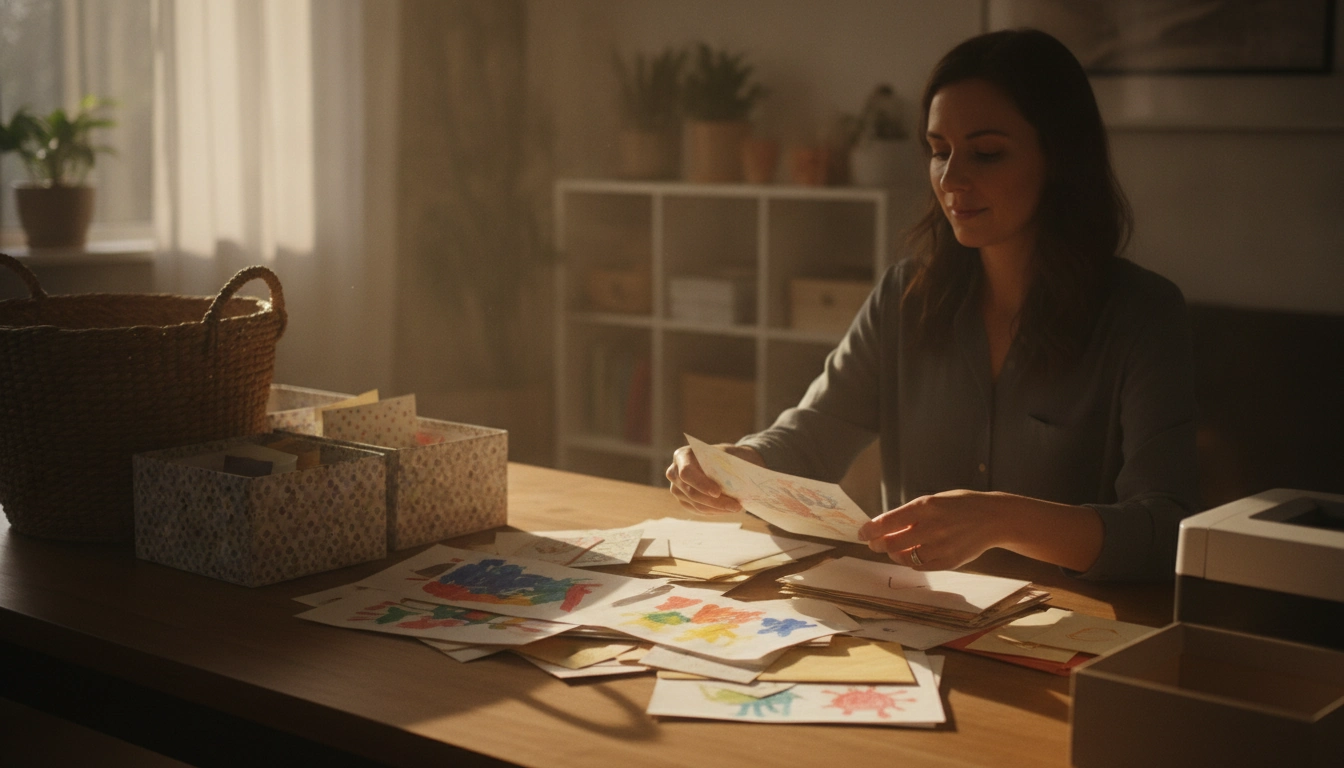
What should you do with sentimental papers (cards, kids’ artwork, letters) when decluttering?
Start by separating sentimental paper from everyday paper. Mixing birthday cards and old letters into the same “paper pile” as bills and flyers makes decluttering feel impossible, because the emotional items slow down every decision. Give sentimental papers their own short, protected process.
1) Choose a small, defined container first
Pick one keepsake box, a slim file bin, or a single binder. Your container is the limit. If everything can’t fit, it forces easy prioritizing: keep the pieces that still spark a clear memory, not duplicates or items you “should” keep.
2) Sort fast using three piles
Make three stacks: “Keep Original,” “Digitize Then Recycle,” and “Let Go.” Keep originals for items with texture, handwriting, or drawings that feel meaningful in person. Digitize items that matter for the message but not the physical paper (many greeting cards, school notices, long letters). Let go of items with generic notes, unclear origin, or guilt-only value.
3) Digitize for easy access (and less bulk)
Take clear photos or scan, then store by year and person (example: “Kids/2022/Art” or “Family/Grandma/Letters”). Consider saving only the front cover of cards plus one representative page of long notes. If you use a daily/weekly paper routine, your sentimental items won’t get swept back into active paperwork—keep them outside the regular filing system.
4) Curate instead of keeping everything
A good rule: keep the best sample, not every sample. For kids’ artwork, save a few favorites per season or school year and recycle the rest. For cards, keep the ones with a personal message; recycle the blank-signature ones.
For practical routines that prevent paper from building up again, see the main guide: paper and mail control with daily/weekly filing routines.
FAQ
How do I store sentimental papers long-term without damaging them?
Use acid-free folders or sleeves, keep items out of direct sunlight, and store in a dry, stable place. Avoid basements or attics where humidity and temperature swings can cause yellowing and mold.













Leave a comment