-
Shop
- Advanced Technologies
- AI Skills
- Bathroom
- Best-Sellers
- Car Accessories
- Confidence
- Dating & Social Skills
- Digital Resources
- AI & Technology
- Beauty
- Budgeting & Saving
- Car Buying & Ownership
- Cozy Feast Collection
- Electronics & Technology
- Entrepreneurship & Business Growth
- Financial Education
- Financial Independence
- Financial Mindset & Psychology
- Goal Setting
- Home Styling & Organization
- Kitchen & Recipes
- Leadership
- Mindfulness
- Mindset
- Online Business
- Parenting & Child Development
- Personal Style & Fashion
- Pet Lifestyle & Wellness
- Positive Thinking
- Sleep Improvement
- Smart Life with AI
- Stress Management & Relaxation
- Travel Planning
- Wellness
- Yoga & Fitness
- Yoga & Mind-Body Practices
- Education & Learning
- Family & Parenting
- Fashion
- Accessories
- Alexander McQueen
- Bags
- Bags & Wallets
- Balenciaga
- Belts
- Blazers
- Bottega Veneta
- Bottoms
- Brunello Cucinelli
- Burberry
- Chanel
- Chloé
- Dior
- Dolce & Gabbana
- Dresses
- Etro
- Fendi
- Gucci
- Hats & Hair Accessories
- Hoodies & Sweatshirts
- Jacquemus
- Jewelry
- Jil Sander
- Kiton
- Luggage
- Miu Miu
- Off-White
- Outerwear
- Prada
- Rick Owens
- Saint Laurent
- Shoes
- Socks & Tights
- Sweaters & Cardigans
- The Row
- Tom Ford
- Tops & Shirts
- Valentino
- Valentino Garavani
- Versace
- Vivienne Westwood
- Watches
- Fashion Accessories
- Furniture
- Gadgets
- Health & Beauty
- Health & Wellness
- Home & Garden
- Home Decor
- Home Electronics
- Home Supplies
- Kids & Babies
- Kitchen
- Kitchen Best-Sellers
- Lighting
- Patio, Lawn & Garden
- Personal Growth
- Pet Care
- Pet Supplies
- Pets
- Sport & Outdoors
- Super Deals
- Travel
- Travel & Adventure
- Wealth
- Popular
- Best deals
Best Ergonomic Vertical Mouse: What to Look For
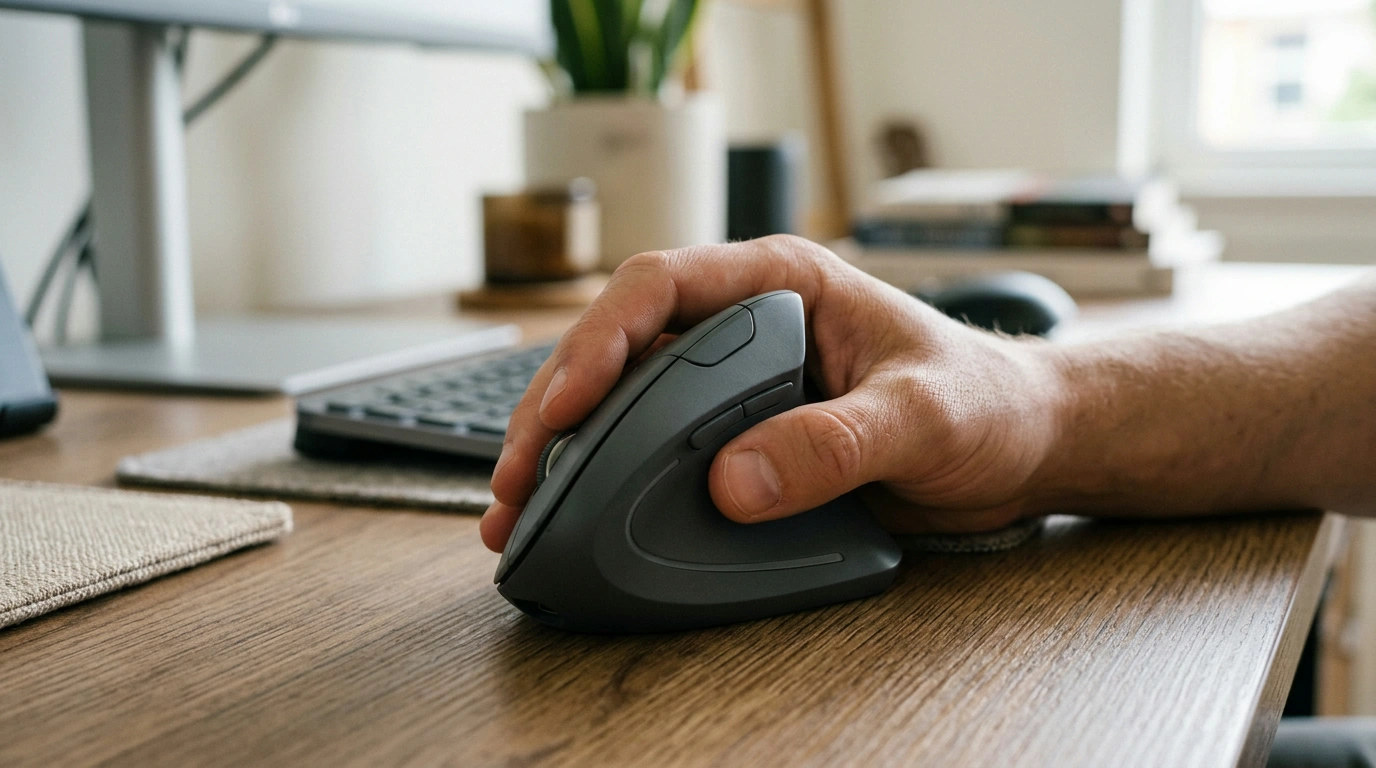
What is the best ergonomic vertical mouse?
The best ergonomic vertical mouse is one that keeps your hand comfortable, fits your grip, and gives you the control you need for everyday work. For a practical wireless option, we recommend considering our wireless vertical ergonomic mouse with speed roller and DPI adjustment. Its vertical shape encourages a handshake-style grip, while adjustable pointer sensitivity lets you tailor cursor movement to your tasks.
No single mouse fits every hand or work setup. The right choice should feel natural after you place your hand on it, with the buttons and scroll wheel easy to reach without stretching your fingers.
Why choose a vertical mouse?
A vertical mouse positions your hand differently from a conventional flat mouse. That more upright grip can feel comfortable if you spend long stretches navigating documents, browsing, or working across spreadsheets. It may take a few days to get used to the shape, especially if you have used a traditional mouse for years.
Comfort is personal, and a vertical design is not a treatment for pain. If you have persistent discomfort, numbness, or tingling, consult a qualified healthcare professional.
What features matter most?
Comfortable reach
Your fingers should rest naturally on the main buttons, and your thumb should have support without being forced into an awkward position. A mouse that feels too bulky or too small can make precise movement more tiring.
Adjustable DPI
DPI adjustment changes how far the pointer moves in response to mouse movement. A higher setting can help you cross a large screen quickly, while a lower setting can make careful selections easier. Our recommended mouse includes this adjustment so you can choose a sensitivity that suits you.
Convenient scrolling and connectivity
A responsive scroll wheel is useful when you move through long pages or documents. Wireless operation also helps keep your workspace clear of a mouse cable. Choose a connection that works with the devices you use most often.
How should you set up your mouse?
Keep the mouse close to your keyboard so you do not have to reach outward. Let your forearm rest comfortably, keep your wrist as neutral as possible, and move from your arm rather than repeatedly bending your wrist. Take regular breaks and change positions throughout the day.
FAQ
How long does it take to get used to a vertical mouse?
Some people adjust within a few days, while others need more time. Start with familiar tasks and adjust the pointer speed until movement feels comfortable and controlled.
Recommended for you



Is a Vertical Mouse Really More Ergonomic?
Nov 20, 2026
How Much Should a Stainless Steel Necklace Cost?
Nov 20, 2026













Leave a comment