-
Shop
- Advanced Technologies
- AI Skills
- Bathroom
- Best-Sellers
- Car Accessories
- Confidence
- Dating & Social Skills
- Digital Resources
- AI & Technology
- Beauty
- Budgeting & Saving
- Car Buying & Ownership
- Cozy Feast Collection
- Electronics & Technology
- Entrepreneurship & Business Growth
- Financial Education
- Financial Independence
- Financial Mindset & Psychology
- Goal Setting
- Home Styling & Organization
- Kitchen & Recipes
- Leadership
- Mindfulness
- Mindset
- Online Business
- Parenting & Child Development
- Personal Style & Fashion
- Pet Lifestyle & Wellness
- Positive Thinking
- Sleep Improvement
- Smart Life with AI
- Stress Management & Relaxation
- Travel Planning
- Wellness
- Yoga & Fitness
- Yoga & Mind-Body Practices
- Education & Learning
- Family & Parenting
- Fashion
- Accessories
- Alexander McQueen
- Bags
- Bags & Wallets
- Balenciaga
- Belts
- Blazers
- Bottega Veneta
- Bottoms
- Brunello Cucinelli
- Burberry
- Chanel
- Chloé
- Dior
- Dolce & Gabbana
- Dresses
- Etro
- Fendi
- Gucci
- Hats & Hair Accessories
- Hoodies & Sweatshirts
- Jacquemus
- Jewelry
- Jil Sander
- Kiton
- Luggage
- Miu Miu
- Off-White
- Outerwear
- Prada
- Rick Owens
- Saint Laurent
- Shoes
- Socks & Tights
- Sweaters & Cardigans
- The Row
- Tom Ford
- Tops & Shirts
- Valentino
- Valentino Garavani
- Versace
- Vivienne Westwood
- Watches
- Fashion Accessories
- Furniture
- Gadgets
- Health & Beauty
- Health & Wellness
- Home & Garden
- Home Decor
- Home Electronics
- Home Supplies
- Kids & Babies
- Kitchen
- Kitchen Best-Sellers
- Lighting
- Patio, Lawn & Garden
- Personal Growth
- Pet Care
- Pet Supplies
- Pets
- Sport & Outdoors
- Super Deals
- Travel
- Travel & Adventure
- Wealth
- Popular
- Best deals
Bad Coolant Temperature Sensor: Symptoms and Next Steps

What happens if your coolant temperature sensor goes bad?
A failing coolant temperature sensor can give your vehicle’s computer an inaccurate reading of engine temperature. That can affect how the engine runs, when the cooling fan turns on, and what you see on the temperature gauge or dashboard. The symptoms depend on whether the sensor reports a temperature that is too hot, too cold, or changes erratically.
What symptoms should you watch for?
You may notice a check engine light, a temperature gauge that behaves unusually, hard starting, rough idling, poor fuel economy, or a cooling fan that runs at the wrong time. A bad reading can cause the computer to use an inappropriate fuel mixture, especially during a cold start. On some vehicles, the fan may run continuously or fail to come on when needed.
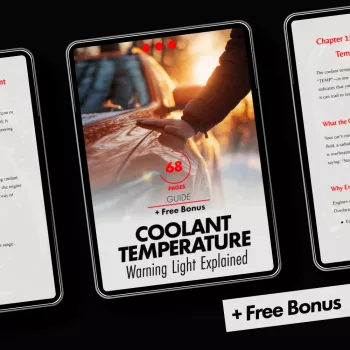
These symptoms do not prove the sensor is bad. Low coolant, damaged wiring, a faulty thermostat, and other cooling-system problems can cause similar behavior. If your coolant temperature warning light comes on, treat it as a possible overheating issue rather than assuming the sensor is at fault. Our coolant temperature warning light guide covers what to do next.
Can you keep driving?
If the temperature warning light is on, the gauge is in the hot range, or you see steam, pull over safely and shut off the engine. Let it cool before inspecting anything under the hood. Never remove a radiator or coolant reservoir cap while the system is hot; pressurized coolant can cause serious burns.
If the only symptom is a check engine light and the vehicle otherwise runs normally, avoid putting off a diagnosis. An incorrect temperature reading can mask a real cooling problem or lead to poor running and extra fuel use. Our team recommends getting the trouble codes read and having the sensor, its connector and wiring, and the cooling system checked before buying a replacement.
How do you choose a replacement sensor?
Choose a coolant temperature sensor specified for your vehicle’s year, make, model, and engine. Similar-looking sensors can have different connectors or operating ranges. Confirm whether you need the sensor itself or a separate temperature sender for the dashboard gauge, since some vehicles use both. Once the cause is confirmed, replacing the correct part—and addressing any coolant or wiring issue found alongside it—gives you a better chance of fixing the problem the first time.
FAQ
Can a bad coolant temperature sensor cause overheating?
It can contribute to overheating if its faulty reading prevents the cooling fan from operating when needed. It can also give you a misleading temperature reading, so have the cooling system checked rather than relying on the gauge alone.















Leave a comment