-
Shop
- Advanced Technologies
- AI Skills
- Bathroom
- Best-Sellers
- Car Accessories
- Confidence
- Dating & Social Skills
- Digital Resources
- AI & Technology
- Beauty
- Budgeting & Saving
- Car Buying & Ownership
- Cozy Feast Collection
- Electronics & Technology
- Entrepreneurship & Business Growth
- Financial Education
- Financial Independence
- Financial Mindset & Psychology
- Goal Setting
- Home Styling & Organization
- Kitchen & Recipes
- Leadership
- Mindfulness
- Mindset
- Online Business
- Parenting & Child Development
- Personal Style & Fashion
- Pet Lifestyle & Wellness
- Positive Thinking
- Sleep Improvement
- Smart Life with AI
- Stress Management & Relaxation
- Travel Planning
- Wellness
- Yoga & Fitness
- Yoga & Mind-Body Practices
- Education & Learning
- Family & Parenting
- Fashion
- Accessories
- Alexander McQueen
- Bags
- Bags & Wallets
- Balenciaga
- Belts
- Blazers
- Bottega Veneta
- Bottoms
- Brunello Cucinelli
- Burberry
- Chanel
- Chloé
- Dior
- Dolce & Gabbana
- Dresses
- Etro
- Fendi
- Gucci
- Hats & Hair Accessories
- Hoodies & Sweatshirts
- Jacquemus
- Jewelry
- Jil Sander
- Kiton
- Luggage
- Miu Miu
- Off-White
- Outerwear
- Prada
- Rick Owens
- Saint Laurent
- Shoes
- Socks & Tights
- Sweaters & Cardigans
- The Row
- Tom Ford
- Tops & Shirts
- Valentino
- Valentino Garavani
- Versace
- Vivienne Westwood
- Watches
- Fashion Accessories
- Furniture
- Gadgets
- Health & Beauty
- Health & Wellness
- Home & Garden
- Home Decor
- Home Electronics
- Home Supplies
- Kids & Babies
- Kitchen
- Kitchen Best-Sellers
- Lighting
- Patio, Lawn & Garden
- Personal Growth
- Pet Care
- Pet Supplies
- Pets
- Sport & Outdoors
- Super Deals
- Travel
- Travel & Adventure
- Wealth
- Popular
- Best deals
Lighting a Room Without Ceiling Lights: Best Options
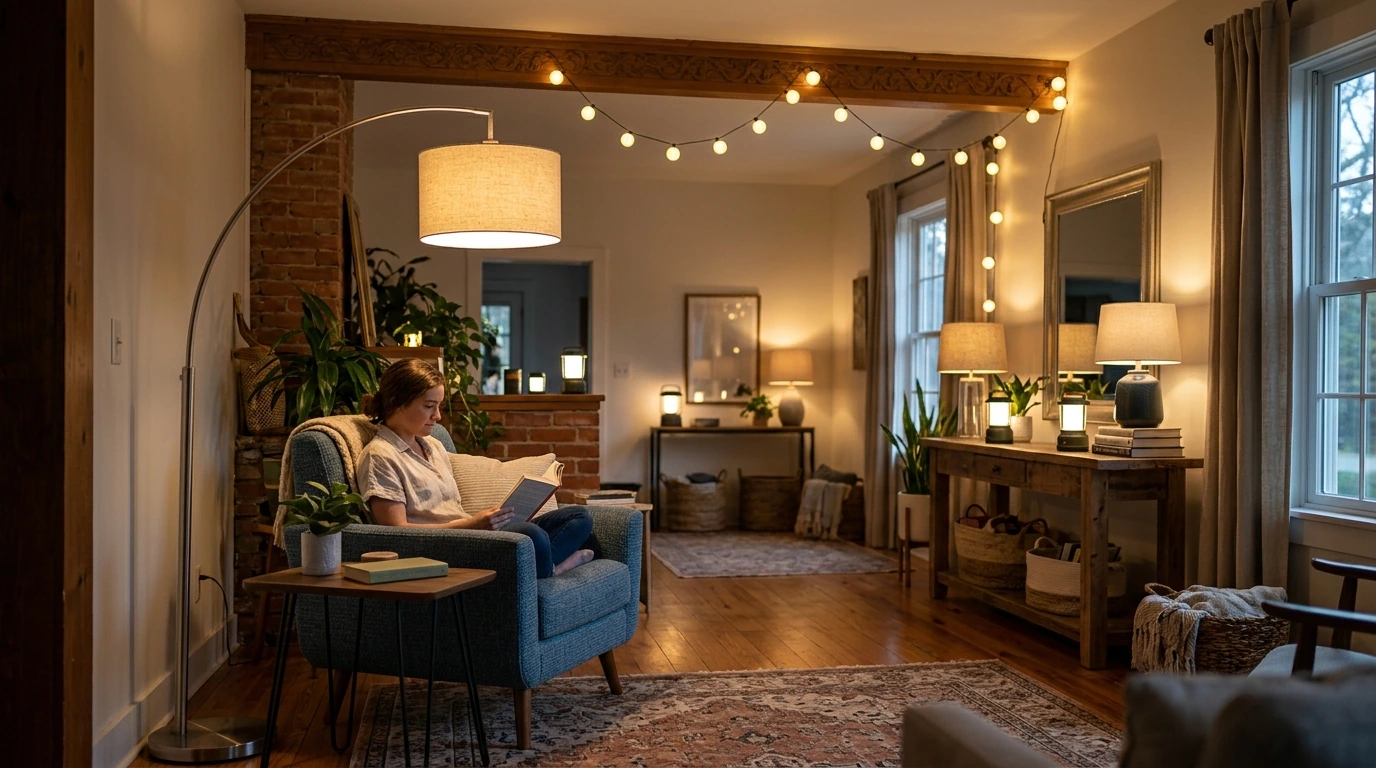
What are some good lighting options for a room without ceiling lights?
When a room has no overhead fixture, the goal is to build light from the ground up using a few dependable sources. Our team recommends combining ambient, task, and accent lighting so you can brighten the whole space, work comfortably, and still create a warm mood at night.
Floor lamps for instant ambient light
A tall floor lamp is usually the fastest way to replace “missing” ceiling light. Look for a torchiere-style shade that bounces light upward for a softer, room-filling glow, or a multi-head floor lamp if you want to aim light toward a sofa, reading chair, or corner.
Table lamps to balance the room
Two table lamps placed on opposite sides of a room (or on a console and side table) help eliminate harsh shadows. Choose shades that diffuse light rather than clear glass, and use matching bulb color temperatures so the room doesn’t look patchy or mismatched.
Plug-in wall sconces to free up surfaces
Plug-in sconces are a smart option when end tables are small or you want light at eye level. Mount them beside a bed, above a console, or flanking a mirror, then manage cords neatly with paintable cord covers for a clean look.
Swag pendants and plug-in ceiling drops (no hardwiring)
If you want a “ceiling light” effect without electrical work, swag pendants use a hook and a cord to position light where you need it. They work well over a dining table, in a reading nook, or centered in a living room, especially with a dimmable bulb for flexibility.
LED strips and picture lights for subtle accents
For gentle nighttime glow, add LED strip lighting behind a TV, under shelves, or along a headboard. Picture lights and small spotlights can highlight artwork and create depth so the room feels more finished, not flat.
To put it all together with bulb choices and placement, see our complete guide: https://bestsellis.com/guide-balanced-home-lighting-layers-bulbs-placement-tips/.
FAQ
How do I make a room feel brighter without adding more lamps?
Use higher-lumen bulbs in your existing lamps, switch to lighter lamp shades, and place lights so they bounce off walls rather than pointing only downward. Keeping window areas clear and adding a mirror opposite a light source also helps spread illumination.
Recommended for you



1800 Lumens for a Living Room: Is It Enough?
Oct 10, 2026
Do All Light Bulbs Work With Dimmer Switches?
Oct 10, 2026













Leave a comment