-
Shop
- Advanced Technologies
- AI Skills
- Bathroom
- Best-Sellers
- Car Accessories
- Confidence
- Dating & Social Skills
- Digital Resources
- AI & Technology
- Beauty
- Budgeting & Saving
- Car Buying & Ownership
- Cozy Feast Collection
- Electronics & Technology
- Entrepreneurship & Business Growth
- Financial Education
- Financial Independence
- Financial Mindset & Psychology
- Goal Setting
- Home Styling & Organization
- Kitchen & Recipes
- Leadership
- Mindfulness
- Mindset
- Online Business
- Parenting & Child Development
- Personal Style & Fashion
- Pet Lifestyle & Wellness
- Positive Thinking
- Sleep Improvement
- Smart Life with AI
- Stress Management & Relaxation
- Travel Planning
- Wellness
- Yoga & Fitness
- Yoga & Mind-Body Practices
- Education & Learning
- Family & Parenting
- Fashion
- Accessories
- Alexander McQueen
- Bags
- Bags & Wallets
- Balenciaga
- Belts
- Blazers
- Bottega Veneta
- Bottoms
- Brunello Cucinelli
- Burberry
- Chanel
- Chloé
- Dior
- Dolce & Gabbana
- Dresses
- Etro
- Fendi
- Gucci
- Hats & Hair Accessories
- Hoodies & Sweatshirts
- Jacquemus
- Jewelry
- Jil Sander
- Kiton
- Luggage
- Miu Miu
- Off-White
- Outerwear
- Prada
- Rick Owens
- Saint Laurent
- Shoes
- Socks & Tights
- Sweaters & Cardigans
- The Row
- Tom Ford
- Tops & Shirts
- Valentino
- Valentino Garavani
- Versace
- Vivienne Westwood
- Watches
- Fashion Accessories
- Furniture
- Gadgets
- Health & Beauty
- Health & Wellness
- Home & Garden
- Home Decor
- Home Electronics
- Home Supplies
- Kids & Babies
- Kitchen
- Kitchen Best-Sellers
- Lighting
- Patio, Lawn & Garden
- Personal Growth
- Pet Care
- Pet Supplies
- Pets
- Sport & Outdoors
- Super Deals
- Travel
- Travel & Adventure
- Wealth
- Popular
- Best deals
Is a Higher mm Lens Better? Focal Length Explained
Is a higher mm lens better?
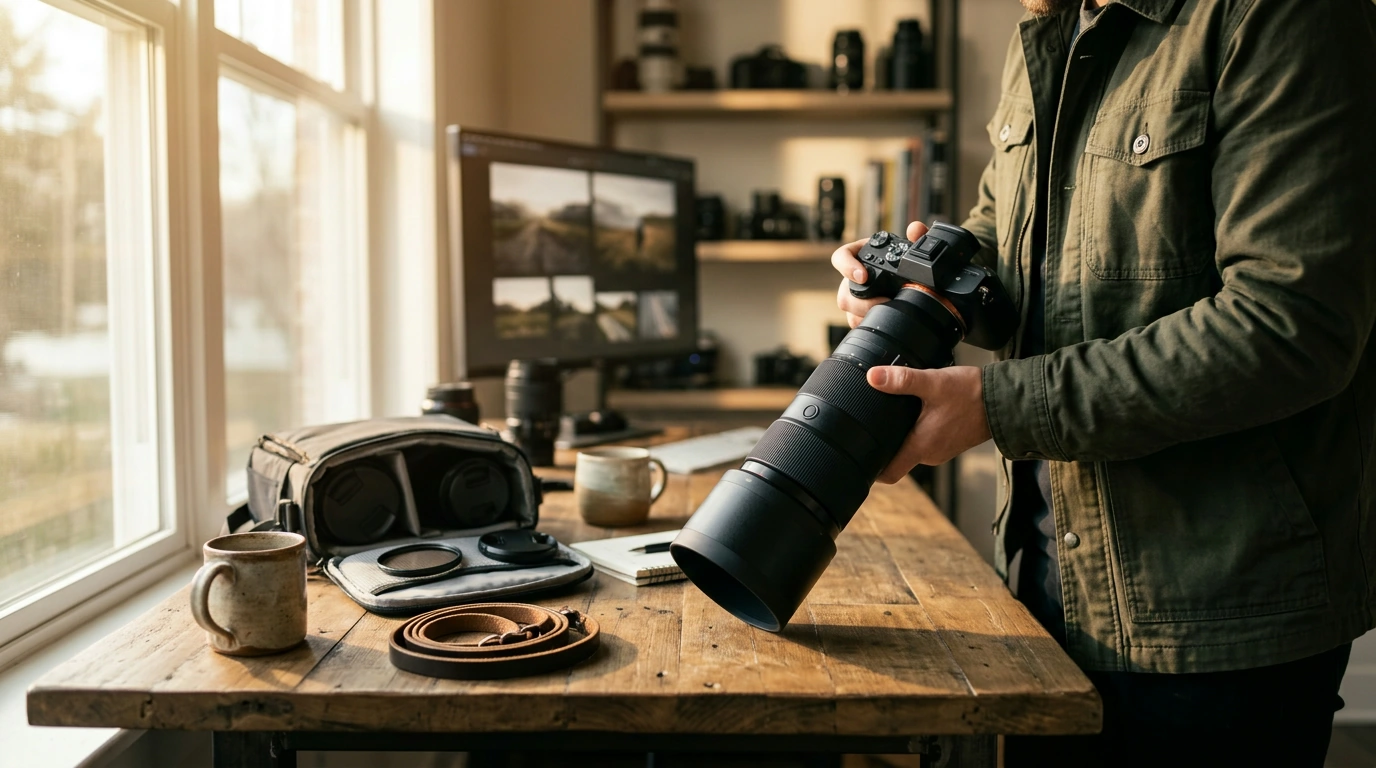
No. A higher millimeter number describes a longer focal length, not a better lens. It gives you a narrower angle of view, so a distant subject appears larger in the frame. The best focal length depends on what you want to photograph, how much room you have, and the perspective you prefer.
A 24mm lens, for example, captures a wider scene than a 50mm lens from the same camera position. An 85mm lens captures a tighter view, which can be useful for portraits when you have space to step back.
What does a higher focal length change?
Focal length affects how much of a scene fits in your frame. A shorter lens can include a room or landscape, while a longer lens helps isolate a subject or fill the frame with something farther away.
Your camera position matters too. If you move back with a longer lens to keep a person the same size in the frame, the background can appear larger relative to the subject. This effect comes from the change in distance, not from the focal length alone.
Camera sensor size also affects the field of view. The same 50mm lens frames more tightly on an APS-C camera than on a full-frame camera.
Which focal length should you choose?
- 24mm to 35mm: Useful for interiors, travel, and portraits that include more surroundings. Moving very close to a face can exaggerate nearby features.
- 50mm: A versatile choice for everyday subjects and portraits, especially when you want a balance between the person and the setting.
- 85mm and longer: Helpful for tighter portraits and distant subjects, provided you have enough working distance.
These examples assume a full-frame camera. On a crop-sensor camera, each lens gives a narrower field of view, so you may need a shorter focal length for a similar composition.
What else matters when choosing a lens?
Maximum aperture, autofocus or manual focus, lens compatibility, size, and optical performance all matter alongside focal length. A wide maximum aperture can help blur backgrounds and admit more light, but focusing accurately becomes more demanding when the aperture is wide open.
If you are considering a fast manual-focus portrait lens, explore our 50mm f/0.95 manual portrait lens guide for practical wide-open shooting tips.
FAQ
Does a wider aperture always create a blurry background?
A wider aperture can increase background blur, but the result also depends on focal length and the distances between your camera, subject, and background. Moving your subject farther from the background can make the blur more noticeable.
Recommended for you


What Is the Downside of Black Mulch? Heat and More
Nov 19, 2026













Leave a comment