-
Shop
- Advanced Technologies
- AI Skills
- Bathroom
- Best-Sellers
- Car Accessories
- Confidence
- Dating & Social Skills
- Digital Resources
- AI & Technology
- Beauty
- Budgeting & Saving
- Car Buying & Ownership
- Cozy Feast Collection
- Electronics & Technology
- Entrepreneurship & Business Growth
- Financial Education
- Financial Independence
- Financial Mindset & Psychology
- Goal Setting
- Home Styling & Organization
- Kitchen & Recipes
- Leadership
- Mindfulness
- Mindset
- Online Business
- Parenting & Child Development
- Personal Style & Fashion
- Pet Lifestyle & Wellness
- Positive Thinking
- Sleep Improvement
- Smart Life with AI
- Stress Management & Relaxation
- Travel Planning
- Wellness
- Yoga & Fitness
- Yoga & Mind-Body Practices
- Education & Learning
- Family & Parenting
- Fashion
- Accessories
- Alexander McQueen
- Bags
- Bags & Wallets
- Balenciaga
- Belts
- Blazers
- Bottega Veneta
- Bottoms
- Brunello Cucinelli
- Burberry
- Chanel
- Chloé
- Dior
- Dolce & Gabbana
- Dresses
- Etro
- Fendi
- Gucci
- Hats & Hair Accessories
- Hoodies & Sweatshirts
- Jacquemus
- Jewelry
- Jil Sander
- Kiton
- Luggage
- Miu Miu
- Off-White
- Outerwear
- Prada
- Rick Owens
- Saint Laurent
- Shoes
- Socks & Tights
- Sweaters & Cardigans
- The Row
- Tom Ford
- Tops & Shirts
- Valentino
- Valentino Garavani
- Versace
- Vivienne Westwood
- Watches
- Fashion Accessories
- Furniture
- Gadgets
- Health & Beauty
- Health & Wellness
- Home & Garden
- Home Decor
- Home Electronics
- Home Supplies
- Kids & Babies
- Kitchen
- Kitchen Best-Sellers
- Lighting
- Patio, Lawn & Garden
- Personal Growth
- Pet Care
- Pet Supplies
- Pets
- Sport & Outdoors
- Super Deals
- Travel
- Travel & Adventure
- Wealth
- Popular
- Best deals
50mm F0.95 Manual Portrait Lens: Wide-Open Tips
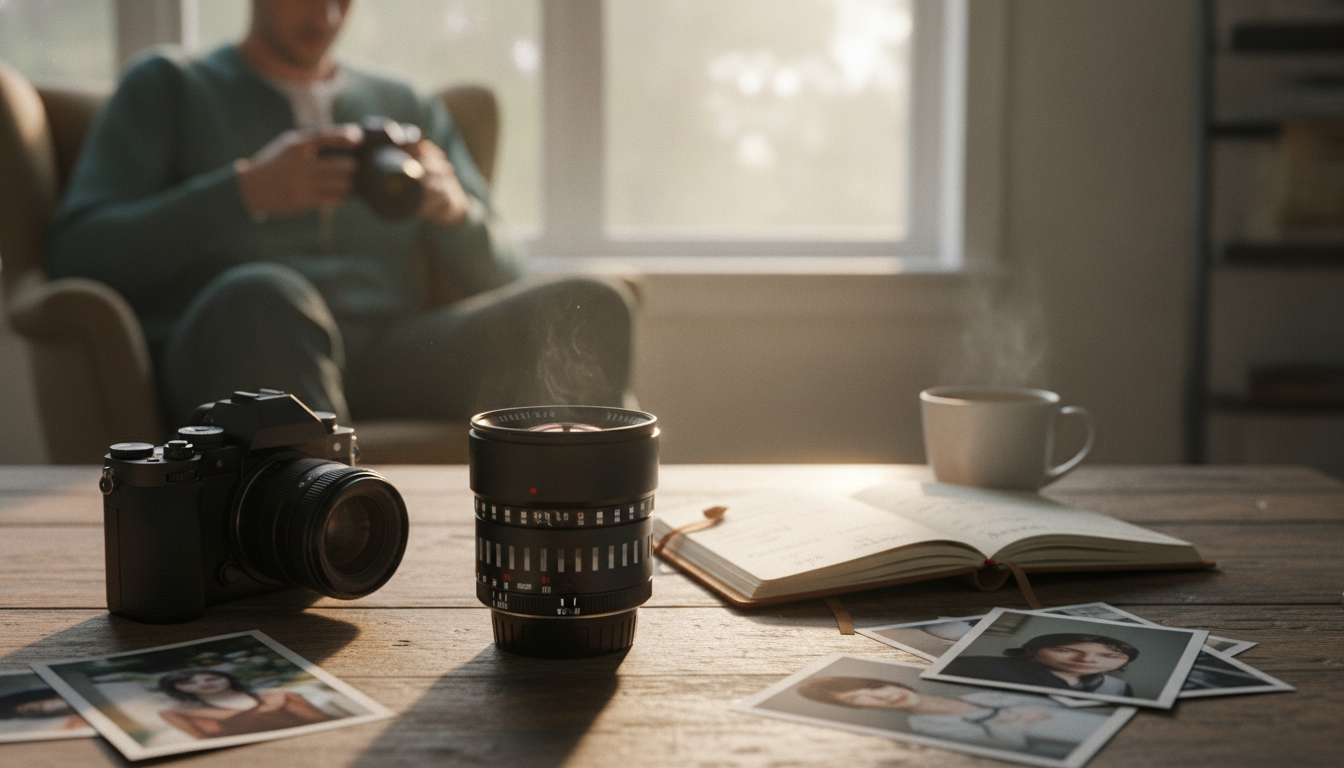
50mm F0.95 Manual Portrait Lens for APS-C and Micro Four Thirds: What It’s Like to Shoot Wide Open
A 50mm F0.95 manual lens is built for photographers who want extreme background separation, low-light flexibility, and a hands-on focusing experience. With an aperture this large, portraits can take on a distinctive “wide-open” character—creamy blur, bold subject isolation, and a look that’s more artistic than clinical. The tradeoff is that technique matters more: depth of field becomes razor thin, and manual focusing needs a repeatable workflow to keep eyes sharp. For more guidance, see Viltrox AF 90mm f/2.2 EVO: Perfect for Portraits – Ricks Reviews.
Who This Lens Fits Best
- Portrait shooters who prioritize subject isolation and a soft background
- Low-light photographers working indoors or at dusk without pushing ISO too far
- Creators who enjoy manual control for deliberate, slower-paced shooting
- Mirrorless users comfortable with focus peaking, magnification, and manual exposure
What F0.95 Changes in Portraits
- Very shallow depth of field: at close distances, eyelashes can be sharp while the iris falls out of focus. If you want a clearer technical overview of why this happens, see depth of field and how acceptable sharpness relates to the circle of confusion.
- Strong separation in cluttered environments: busy streets, tight rooms, and textured walls become less distracting when the background melts away.
- More light gathered: compared to typical portrait primes, F0.95 can help keep shutter speeds higher indoors, reducing motion blur from subtle subject movement.
- Wide-open “character”: many ultra-fast lenses look different at maximum aperture than they do stopped down. Expect a more stylized rendering at F0.95 and a more uniform look as you close the iris.
Field of View on APS-C vs Micro Four Thirds
“50mm” doesn’t feel identical across camera formats. On APS-C, it lands in a classic short-tele portrait perspective—natural facial proportions with comfortable working distance. On Micro Four Thirds, the angle of view tightens further, which can be ideal for headshots but can feel restrictive in small rooms. For a format refresher, Micro Four Thirds is summarized well here: Micro Four Thirds system. For further reading, see Comparison of image quality, color accuracy, and resolution … – PMC.
| Camera format | Angle of view feel | Typical portrait use | Working distance notes |
|---|---|---|---|
| APS-C | Short tele | Head-and-shoulders, half-body | Comfortable indoors if space allows a few steps back |
| Micro Four Thirds | Tighter tele | Headshots, compressed backgrounds | Often requires more distance; great outdoors or in larger rooms |
Manual Focus Workflow That Actually Works at F0.95
Wide-open portraits aren’t about speed; they’re about process. A consistent routine improves your hit rate more than chasing “perfect” settings.
- Magnify, then refine: use focus magnification for the first frame to nail the nearest eye, then switch to peaking for small corrections as the subject shifts.
- Focus the nearest eye: at portrait distances, the front eye should be the anchor point. If the head turns slightly, re-check focus rather than relying on one-and-done.
- Minimize recomposing up close: large recompositions can move the focus plane off the eye. Instead, keep the framing close to final before focusing.
- Use faster shutter speeds than you think: even gentle breathing or “portrait sway” can look like missed focus at F0.95. If light allows, prioritize a higher shutter speed before lowering ISO too aggressively.
- Stop down for conversation portraits: if your subject is talking, laughing, or leaning in and out, F1.2–F2 can feel dramatically more reliable with only a modest change in look.
Aperture Choices: When to Shoot Wide Open vs Stopped Down
- F0.95: best for dreamy separation, stylized blur, and dim interiors where shutter speed matters. It’s also great for turning messy backgrounds into soft color and light.
- F1.4–F2: a practical sweet spot for sharper rendering and a more forgiving depth of field—often the easiest place to start for dependable portraits.
- F2.8–F4: useful for environmental portraits where you want both eyes and more facial structure to stay consistently sharp, especially with slight head movement.
- Groups: stopping down is usually required to keep multiple faces acceptably in focus; consider aligning people on the same plane and increasing your distance.
Handling and Build Considerations for Manual Portrait Lenses
Low-Light Portrait Tips for Consistent Results
Product Snapshot
Where to Find It (and Related Tools)
- 50mm F0.95 Large Aperture Manual Portrait Lens for APS-C and M43 Cameras ($351.01)
- AI for Small Business Toolkit – 5-in-1 Digital Download Bundle ($430.99)
- Choosing the Right Payment Solution for Your Business: Stripe vs Square Which Is Better – Complete eBook Guide for Small Business Owners ($15.99)
FAQ
Is a 50mm F0.95 practical for portraits, or is it too hard to focus?
It’s practical if you treat it as a precision tool: focus on the nearest eye, use magnification and peaking, and avoid heavy recomposing at close distance. For moving subjects, stopping down slightly (around F1.2–F2) can dramatically improve consistency.
Will this lens work for video on APS-C or Micro Four Thirds cameras?
Yes, it can work well for video because manual focus and manual aperture allow controlled focus pulls and stable exposure choices. Smooth results depend on technique and camera features like focus aids and any in-body stabilization your camera provides.
What’s the best aperture to start with for sharp, reliable portraits?
Start around F1.4–F2 for a balance of separation and a more forgiving depth of field, then use F0.95 when you specifically want the wide-open look or need extra light. Your distance to the subject and how much they move should guide the final choice.
Recommended for you
Clean 100% Suede Shoes Safely: Brush, Erase, Protect
Jun 27, 2026










Leave a comment