-
Shop
- Advanced Technologies
- AI Skills
- Bathroom
- Best-Sellers
- Car Accessories
- Confidence
- Dating & Social Skills
- Digital Resources
- AI & Technology
- Beauty
- Budgeting & Saving
- Car Buying & Ownership
- Cozy Feast Collection
- Electronics & Technology
- Entrepreneurship & Business Growth
- Financial Education
- Financial Independence
- Financial Mindset & Psychology
- Goal Setting
- Home Styling & Organization
- Kitchen & Recipes
- Leadership
- Mindfulness
- Mindset
- Online Business
- Parenting & Child Development
- Personal Style & Fashion
- Pet Lifestyle & Wellness
- Positive Thinking
- Sleep Improvement
- Smart Life with AI
- Stress Management & Relaxation
- Travel Planning
- Wellness
- Yoga & Fitness
- Yoga & Mind-Body Practices
- Education & Learning
- Family & Parenting
- Fashion
- Accessories
- Alexander McQueen
- Bags
- Bags & Wallets
- Balenciaga
- Belts
- Blazers
- Bottega Veneta
- Bottoms
- Brunello Cucinelli
- Burberry
- Chanel
- Chloé
- Dior
- Dolce & Gabbana
- Dresses
- Etro
- Fendi
- Gucci
- Hats & Hair Accessories
- Hoodies & Sweatshirts
- Jacquemus
- Jewelry
- Jil Sander
- Kiton
- Luggage
- Miu Miu
- Off-White
- Outerwear
- Prada
- Rick Owens
- Saint Laurent
- Shoes
- Socks & Tights
- Sweaters & Cardigans
- The Row
- Tom Ford
- Tops & Shirts
- Valentino
- Valentino Garavani
- Versace
- Vivienne Westwood
- Watches
- Fashion Accessories
- Furniture
- Gadgets
- Health & Beauty
- Health & Wellness
- Home & Garden
- Home Decor
- Home Electronics
- Home Supplies
- Kids & Babies
- Kitchen
- Kitchen Best-Sellers
- Lighting
- Patio, Lawn & Garden
- Personal Growth
- Pet Care
- Pet Supplies
- Pets
- Sport & Outdoors
- Super Deals
- Travel
- Travel & Adventure
- Wealth
- Popular
- Best deals
Protect Metal Yard Art: Clean, Seal & Prevent Rust
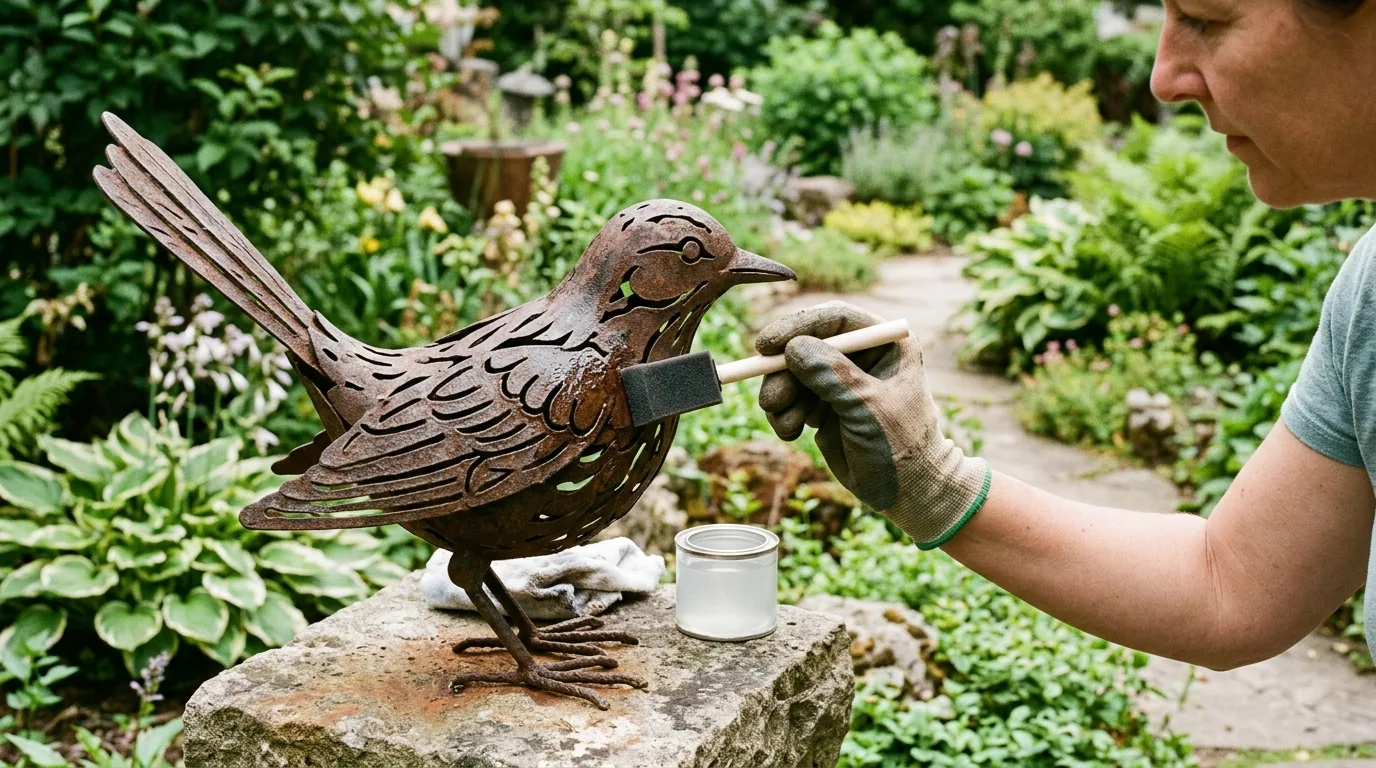
How to protect metal yard art?
Metal yard art looks best when it’s kept clean, sealed, and positioned to minimize constant moisture. Our team recommends starting with a quick assessment: is the piece painted, powder-coated, or bare metal? Each finish benefits from slightly different care, but the goal is always the same—block water and oxygen from reaching the metal.
1) Clean first (so coatings can actually stick)
Rinse off dirt and pollen, then wash with mild soap and water. For light surface rust, use a nylon brush or fine steel wool and wipe clean. Let the piece dry fully—especially around seams, scrolls, and welded joints where water hides.
2) Stop rust early with spot treatment
If you find orange rust, remove the loose material until you reach stable metal. Then apply a rust converter or rust-inhibiting metal primer to the affected area before painting or sealing. This prevents “rust bloom” from returning under a new topcoat.
3) Seal or repaint for a weather barrier
For painted pieces, touch up chips promptly: prime any exposed metal, then use an outdoor enamel or rust-resistant metal paint. For decorative pieces where you want to preserve the existing look, a clear outdoor metal sealer can help—choose a product designed for UV exposure to reduce yellowing and peeling.
4) Place it like you want it to last
Keep metal art out of constant sprinkler spray and away from soil contact. Elevate stakes or bases with gravel, pavers, or a small concrete pad so the lowest points don’t sit wet. If you’re near the coast or use de-icing salts, rinse the piece occasionally to remove corrosive residue.
5) Seasonal habits that prevent most damage
Before winter or the rainy season, do a quick wash-and-inspect, then seal any new chips. If you can, store smaller items in a dry shed or garage during the harshest months. For larger installations, cover only when airflow is possible—trapped moisture under tight plastic can accelerate corrosion.
If you enjoy ornate metalwork, our team also put together a helpful guide on classic wrought iron styling and care: antique European wrought iron floral wall art guide.
FAQ
Can you leave metal yard art outside year-round?
Yes, if it’s sealed and maintained, but you’ll get the longest life by keeping it out of standing water and touching up chips quickly. In harsh winters or coastal air, occasional rinsing and an annual re-seal or repaint makes a big difference.
Recommended for you


Round Smart Nightstands for Calm Nordic Bedrooms
Oct 11, 2026












Leave a comment