-
Shop
- Advanced Technologies
- AI Skills
- Bathroom
- Best-Sellers
- Car Accessories
- Confidence
- Dating & Social Skills
- Digital Resources
- AI & Technology
- Beauty
- Budgeting & Saving
- Car Buying & Ownership
- Cozy Feast Collection
- Electronics & Technology
- Entrepreneurship & Business Growth
- Financial Education
- Financial Independence
- Financial Mindset & Psychology
- Goal Setting
- Home Styling & Organization
- Kitchen & Recipes
- Leadership
- Mindfulness
- Mindset
- Online Business
- Parenting & Child Development
- Personal Style & Fashion
- Pet Lifestyle & Wellness
- Positive Thinking
- Sleep Improvement
- Smart Life with AI
- Stress Management & Relaxation
- Travel Planning
- Wellness
- Yoga & Fitness
- Yoga & Mind-Body Practices
- Education & Learning
- Family & Parenting
- Fashion
- Accessories
- Alexander McQueen
- Bags
- Bags & Wallets
- Balenciaga
- Belts
- Blazers
- Bottega Veneta
- Bottoms
- Brunello Cucinelli
- Burberry
- Chanel
- Chloé
- Dior
- Dolce & Gabbana
- Dresses
- Etro
- Fendi
- Gucci
- Hats & Hair Accessories
- Hoodies & Sweatshirts
- Jacquemus
- Jewelry
- Jil Sander
- Kiton
- Luggage
- Miu Miu
- Off-White
- Outerwear
- Prada
- Rick Owens
- Saint Laurent
- Shoes
- Socks & Tights
- Sweaters & Cardigans
- The Row
- Tom Ford
- Tops & Shirts
- Valentino
- Valentino Garavani
- Versace
- Vivienne Westwood
- Watches
- Fashion Accessories
- Furniture
- Gadgets
- Health & Beauty
- Health & Wellness
- Home & Garden
- Home Decor
- Home Electronics
- Home Supplies
- Kids & Babies
- Kitchen
- Kitchen Best-Sellers
- Lighting
- Patio, Lawn & Garden
- Personal Growth
- Pet Care
- Pet Supplies
- Pets
- Sport & Outdoors
- Super Deals
- Travel
- Travel & Adventure
- Wealth
- Popular
- Best deals
How to Layer Clothing for Cold Weather: A Practical Guide
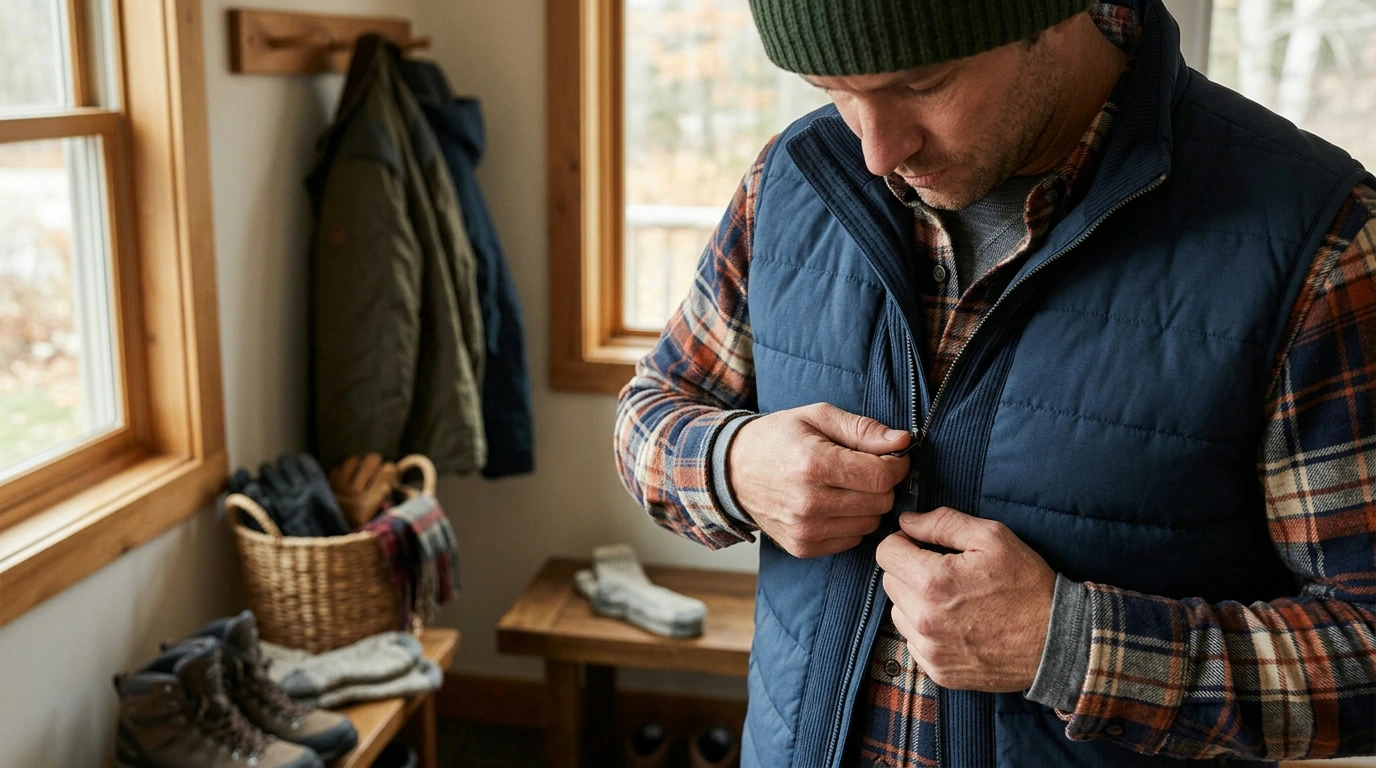
How do you properly layer clothing for cold weather?
Cold-weather layering works by managing moisture, trapping warmth, and protecting you from wind and precipitation. We recommend starting with three adaptable layers: a moisture-wicking base layer, an insulating middle layer, and a protective outer layer. Adjust each one to your activity level and the conditions.
What should you wear as a base layer?
Choose a base layer that sits close to your skin without restricting movement. Merino wool and synthetic fabrics help move sweat away from your body, making them useful for both workouts and everyday wear. A lightweight top and bottom are often enough for active outings; choose heavier fabric when you expect to move slowly or stand outside.
Avoid relying on cotton next to your skin in cold, wet conditions. It absorbs moisture and can leave you feeling cold when your activity slows down.
How do you choose an insulating layer?
The middle layer holds warm air close to your body. Fleece is a versatile choice for active use because it is breathable and dries relatively quickly. A synthetic or down insulated jacket adds more warmth for colder conditions or breaks outdoors.
Choose insulation that fits comfortably over your base layer and under your shell. If you expect rain or sustained dampness, synthetic insulation is a practical option because it generally retains more warmth when wet than untreated down.
What should your outer layer do?
Your outer layer should match the weather. A wind-resistant jacket can be enough for dry, breezy conditions, while a waterproof, breathable shell offers more protection in rain or snow. Look for room to move your arms and zip the jacket over your insulating layer without compressing it.
For more guidance on exercising in rough weather, see our wind and rain workout checklist.
How can you keep layers comfortable throughout the day?
Start slightly cool if you will be moving, then open a zipper or remove a layer before you become sweaty. Add insulation when you stop. Our team also recommends warm socks, gloves, and a hat; choose footwear with appropriate traction and enough room for your toes to move.
FAQ
What is the 5-4-3-2-1 packing method for cold weather?
The 5-4-3-2-1 method is a flexible packing checklist that uses decreasing quantities of clothing categories; one version includes five tops, four bottoms, three accessories, two pairs of shoes, and one coat. Adapt the categories and quantities to your trip, laundry access, and expected weather rather than treating the numbers as a fixed rule.
Recommended for you


How to Dress for a Cold-Weather Workout
Nov 19, 2026
What Is Considered a Single-Parent Family?
Nov 19, 2026













Leave a comment