-
Shop
- Advanced Technologies
- AI Skills
- Bathroom
- Best-Sellers
- Car Accessories
- Confidence
- Dating & Social Skills
- Digital Resources
- AI & Technology
- Beauty
- Budgeting & Saving
- Car Buying & Ownership
- Cozy Feast Collection
- Electronics & Technology
- Entrepreneurship & Business Growth
- Financial Education
- Financial Independence
- Financial Mindset & Psychology
- Goal Setting
- Home Styling & Organization
- Kitchen & Recipes
- Leadership
- Mindfulness
- Mindset
- Online Business
- Parenting & Child Development
- Personal Style & Fashion
- Pet Lifestyle & Wellness
- Positive Thinking
- Sleep Improvement
- Smart Life with AI
- Stress Management & Relaxation
- Travel Planning
- Wellness
- Yoga & Fitness
- Yoga & Mind-Body Practices
- Education & Learning
- Family & Parenting
- Fashion
- Accessories
- Alexander McQueen
- Bags
- Bags & Wallets
- Balenciaga
- Belts
- Blazers
- Bottega Veneta
- Bottoms
- Brunello Cucinelli
- Burberry
- Chanel
- Chloé
- Dior
- Dolce & Gabbana
- Dresses
- Etro
- Fendi
- Gucci
- Hats & Hair Accessories
- Hoodies & Sweatshirts
- Jacquemus
- Jewelry
- Jil Sander
- Kiton
- Luggage
- Miu Miu
- Off-White
- Outerwear
- Prada
- Rick Owens
- Saint Laurent
- Shoes
- Socks & Tights
- Sweaters & Cardigans
- The Row
- Tom Ford
- Tops & Shirts
- Valentino
- Valentino Garavani
- Versace
- Vivienne Westwood
- Watches
- Fashion Accessories
- Furniture
- Gadgets
- Health & Beauty
- Health & Wellness
- Home & Garden
- Home Decor
- Home Electronics
- Home Supplies
- Kids & Babies
- Kitchen
- Kitchen Best-Sellers
- Lighting
- Patio, Lawn & Garden
- Personal Growth
- Pet Care
- Pet Supplies
- Pets
- Sport & Outdoors
- Super Deals
- Travel
- Travel & Adventure
- Wealth
- Popular
- Best deals
Wind & Rain Workout Checklist: Safer Storm Training
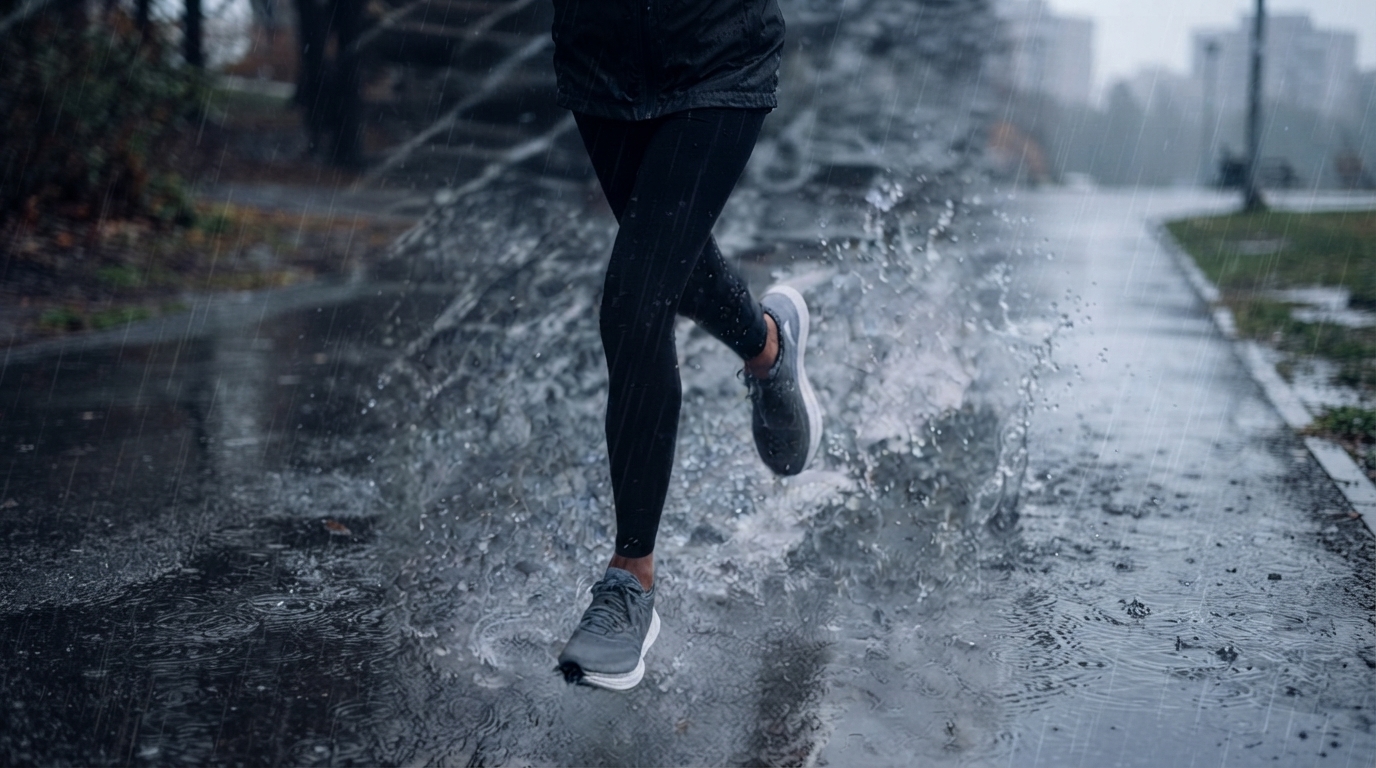
Wind & Rain Workout Survival Checklist: Smart Training for Stormy Conditions
Wind and rain can turn an ordinary outdoor workout into a real safety problem—slick surfaces, reduced visibility, fast temperature drops, and conditions that change mid-session. The goal isn’t to “tough it out”; it’s to train intelligently with a clear go/no-go decision, the right layers, and simple rules that protect your footing, your warmth, and your awareness around traffic and trail hazards.
Quick go/no-go decision before stepping outside
Make the call before you lace up. If the risk is unpredictable or severe, the best training move is an indoor pivot.
- Hard stop for lightning: Cancel or move indoors if thunderstorms are possible, lightning is visible, or thunder is heard. Follow official lightning guidance from the National Weather Service.
- Avoid exposed high-risk areas: Ridgelines, open fields, lone trees, metal fences, and wet high points become more dangerous when storms are nearby.
- Wind that affects balance is a no: If gusts can push you sideways, shove debris into your path, or make cycling unpredictable, it’s not a “character builder”—it’s a crash setup.
- Know your flood spots: Skip routes with creek crossings, underpasses that collect water, and sections that become mud slides. Flood safety guidance: NOAA/NWS Flood Safety.
- Prefer short loops near shelter: Choose routes that keep you close to a car, building, or transit instead of committing to a long point-to-point in unstable weather.
Clothing and layering that works when it’s wet and windy
Wind and water strip heat fast, but overdressing can backfire by soaking layers with sweat. Dress for controlled heat, not comfort at the doorstep.
- Start with a wicking base layer: Avoid cotton—once wet, it stays wet and accelerates chill.
- Add a breathable mid-layer only when needed: If it’s cold, a light fleece or thermal layer helps, but too much insulation increases sweat buildup and rapid cooling when you slow down.
- Choose a wind-resistant, water-shedding shell with vents: Fully sealed rain shells can trap sweat during harder efforts; pit zips or back vents help regulate.
- Get the fit right: Loose jackets flap and rub. Snug cuffs and hems reduce heat loss and stop fabric from catching wind.
- Protect hands and head: A brimmed cap under a hood keeps rain out of your eyes. Gloves should maintain grip when wet—especially for cyclists.
- Use high placement reflective elements: Chest/shoulders are easier for drivers to spot through spray and low contrast conditions.
Footwear, traction, and visibility upgrades
Most storm-day injuries come from slips and low-visibility errors, not from “bad weather” itself. Upgrade traction and reduce surprises.
The wind & rain survival checklist (pack + plan)
Stormy-condition checklist (what to bring vs. when it matters most)
| Item | Best for | Why it helps |
|---|---|---|
| Waterproof phone pouch | Any rain | Prevents loss of communication and keeps maps accessible |
| Lightweight wind shell (vented) | Wind + drizzle | Reduces wind chill without overheating as quickly as heavy rain gear |
| Reflective vest or bright top | Low light, spray, traffic | Improves driver recognition through reduced visibility |
| Cap with brim / hood-compatible hat | Rain in the face | Keeps water out of eyes and improves situational awareness |
| Grip-friendly gloves | Cold rain or cycling | Maintains braking/handling control and reduces numbness |
| Spare dry layer in a bag | Longer sessions | Helps prevent post-workout chill and speeds recovery |
On-the-move rules: pacing, terrain choices, and risk management
- Dial back intensity: Stay in control. Hard efforts create sweat that can chill you rapidly once you stop.
- Avoid common slip zones: Painted road markings, metal utility covers, wet wooden bridges, and algae-coated paths can be shockingly slick.
- Give traffic extra space: Puddles and spray reduce driver visibility and can hide road edges and potholes.
- Watch overhead hazards: In gusts, branches and windblown debris become a moving threat—reroute if tree cover is shedding limbs.
- Use quick check-ins: At 10 minutes and at your midpoint, reassess wind, temperature, and how wet your clothing feels.
- Know early hypothermia cues: If hands go numb, shivering starts, or coordination drops, end the session and warm up fast. For cold exposure basics, see the CDC guidance on hypothermia prevention.
Warm-up, cool-down, and recovery for cold rain or gusty days
A printable, ready-to-use checklist for stormy-condition training
Recommended picks (digital downloads)
- Wind & Rain Workout Survival Checklist | Outdoor Fitness Safety Guide | Smart Training for Stormy Conditions ($2.99)
- AI for Small Business Toolkit – 5-in-1 Digital Download Bundle ($430.99)
FAQ
Is it safe to exercise outside in heavy rain and wind?
It depends on the hazards: lightning, flooding, falling branches, traffic visibility, and wind strong enough to affect balance are deal-breakers. If any hard-stop risk is present, move the workout indoors or shorten it to a sheltered loop near a bailout point.
What should be worn for a run in cold rain with wind?
Wear a moisture-wicking base layer, add a breathable mid-layer only if it’s truly cold, and finish with a wind-resistant outer layer that can vent. A brimmed cap and grip-friendly gloves help with visibility and control, and reflective elements improve safety around traffic.
How can slipping be prevented on wet roads or trails?
Use shoes with solid tread, avoid painted lines and metal surfaces, and adjust form by shortening stride and increasing cadence. Cyclists should slow down into turns, brake earlier, and keep movements smooth; trail users should avoid muddy, fragile sections.














Leave a comment