-
Shop
- Advanced Technologies
- AI Skills
- Bathroom
- Best-Sellers
- Car Accessories
- Confidence
- Dating & Social Skills
- Digital Resources
- AI & Technology
- Beauty
- Budgeting & Saving
- Car Buying & Ownership
- Cozy Feast Collection
- Electronics & Technology
- Entrepreneurship & Business Growth
- Financial Education
- Financial Independence
- Financial Mindset & Psychology
- Goal Setting
- Home Styling & Organization
- Kitchen & Recipes
- Leadership
- Mindfulness
- Mindset
- Online Business
- Parenting & Child Development
- Personal Style & Fashion
- Pet Lifestyle & Wellness
- Positive Thinking
- Sleep Improvement
- Smart Life with AI
- Stress Management & Relaxation
- Travel Planning
- Wellness
- Yoga & Fitness
- Yoga & Mind-Body Practices
- Education & Learning
- Family & Parenting
- Fashion
- Accessories
- Alexander McQueen
- Bags
- Bags & Wallets
- Balenciaga
- Belts
- Blazers
- Bottega Veneta
- Bottoms
- Brunello Cucinelli
- Burberry
- Chanel
- Chloé
- Dior
- Dolce & Gabbana
- Dresses
- Etro
- Fendi
- Gucci
- Hats & Hair Accessories
- Hoodies & Sweatshirts
- Jacquemus
- Jewelry
- Jil Sander
- Kiton
- Luggage
- Miu Miu
- Off-White
- Outerwear
- Prada
- Rick Owens
- Saint Laurent
- Shoes
- Socks & Tights
- Sweaters & Cardigans
- The Row
- Tom Ford
- Tops & Shirts
- Valentino
- Valentino Garavani
- Versace
- Vivienne Westwood
- Watches
- Fashion Accessories
- Furniture
- Gadgets
- Health & Beauty
- Health & Wellness
- Home & Garden
- Home Decor
- Home Electronics
- Home Supplies
- Kids & Babies
- Kitchen
- Kitchen Best-Sellers
- Lighting
- Patio, Lawn & Garden
- Personal Growth
- Pet Care
- Pet Supplies
- Pets
- Sport & Outdoors
- Super Deals
- Travel
- Travel & Adventure
- Wealth
- Popular
- Best deals
How Many Cat Trees Does One Cat Need? Simple Guide
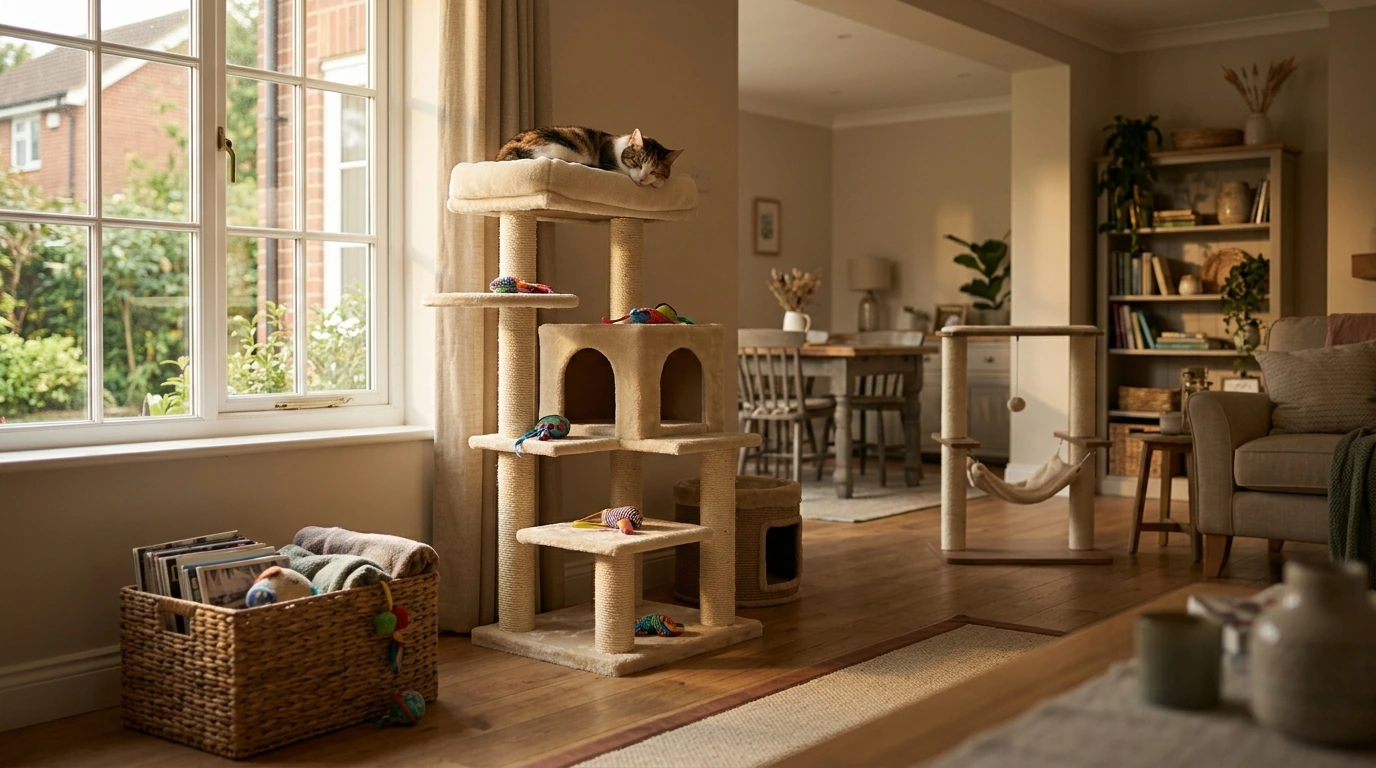
How many cat trees does one cat need?
For most homes, one cat does best with one high-quality cat tree that covers three needs at once: climbing, lounging, and scratching. Our team focuses less on “how many” and more on whether your setup gives your cat reliable vertical territory and a clear place to sharpen claws without targeting furniture.
Our practical rule: start with one, add based on your layout
When one cat tree is enough
One cat tree is usually sufficient when it’s tall enough to feel like a lookout, stable enough not to wobble, and has multiple levels so your cat can choose different heights. A built-in sisal scratching post and at least one comfy platform or condo help make it a true all-in-one spot your cat will actually use daily.
When your single cat benefits from two
Consider two cat trees if your home has multiple “hangout zones” (for example, living room plus bedroom), if your cat spends time in different rooms throughout the day, or if you want to prevent furniture scratching by offering an obvious scratch option wherever your cat likes to roam. A second tree doesn’t need to be huge—pair a main tower with a smaller scratching-and-perch station.
Match the tree count to your cat’s age and habits
Active cats often use height and jumping lanes, so a taller multi-level tree can replace the need for multiples. Seniors may do better with one lower, easy-climb tree near their favorite resting area, plus a separate scratch post nearby to reduce climbing strain while still meeting scratching needs.
If you’re choosing that “one great tree,” our 5-layer style guide breaks down what to look for—levels, scratch coverage, and jump-friendly spacing—so you can build a setup your cat uses right away: 5-layer cat tree guide with sisal scratching post and jump platforms.
FAQ
Where should I place a cat tree in my home?
Place it where your cat already likes to spend time, ideally near a window or in the room you use most so it becomes a daily destination. Keep it away from hazards like heaters or unstable furniture, and ensure the base sits flat so the tree stays steady during jumps.
Recommended for you



Cat Tree Adjustment Timeline: Days to 2 Weeks
Oct 13, 2026













Leave a comment