-
Shop
- Advanced Technologies
- AI Skills
- Bathroom
- Best-Sellers
- Car Accessories
- Confidence
- Dating & Social Skills
- Digital Resources
- AI & Technology
- Beauty
- Budgeting & Saving
- Car Buying & Ownership
- Cozy Feast Collection
- Electronics & Technology
- Entrepreneurship & Business Growth
- Financial Education
- Financial Independence
- Financial Mindset & Psychology
- Goal Setting
- Home Styling & Organization
- Kitchen & Recipes
- Leadership
- Mindfulness
- Mindset
- Online Business
- Parenting & Child Development
- Personal Style & Fashion
- Pet Lifestyle & Wellness
- Positive Thinking
- Sleep Improvement
- Smart Life with AI
- Stress Management & Relaxation
- Travel Planning
- Wellness
- Yoga & Fitness
- Yoga & Mind-Body Practices
- Education & Learning
- Family & Parenting
- Fashion
- Accessories
- Alexander McQueen
- Bags
- Bags & Wallets
- Balenciaga
- Belts
- Blazers
- Bottega Veneta
- Bottoms
- Brunello Cucinelli
- Burberry
- Chanel
- Chloé
- Dior
- Dolce & Gabbana
- Dresses
- Etro
- Fendi
- Gucci
- Hats & Hair Accessories
- Hoodies & Sweatshirts
- Jacquemus
- Jewelry
- Jil Sander
- Kiton
- Luggage
- Miu Miu
- Off-White
- Outerwear
- Prada
- Rick Owens
- Saint Laurent
- Shoes
- Socks & Tights
- Sweaters & Cardigans
- The Row
- Tom Ford
- Tops & Shirts
- Valentino
- Valentino Garavani
- Versace
- Vivienne Westwood
- Watches
- Fashion Accessories
- Furniture
- Gadgets
- Health & Beauty
- Health & Wellness
- Home & Garden
- Home Decor
- Home Electronics
- Home Supplies
- Kids & Babies
- Kitchen
- Kitchen Best-Sellers
- Lighting
- Patio, Lawn & Garden
- Personal Growth
- Pet Care
- Pet Supplies
- Pets
- Sport & Outdoors
- Super Deals
- Travel
- Travel & Adventure
- Wealth
- Popular
- Best deals
Puppy Care Made Simple: 5-in-1 Bundle for New Owners
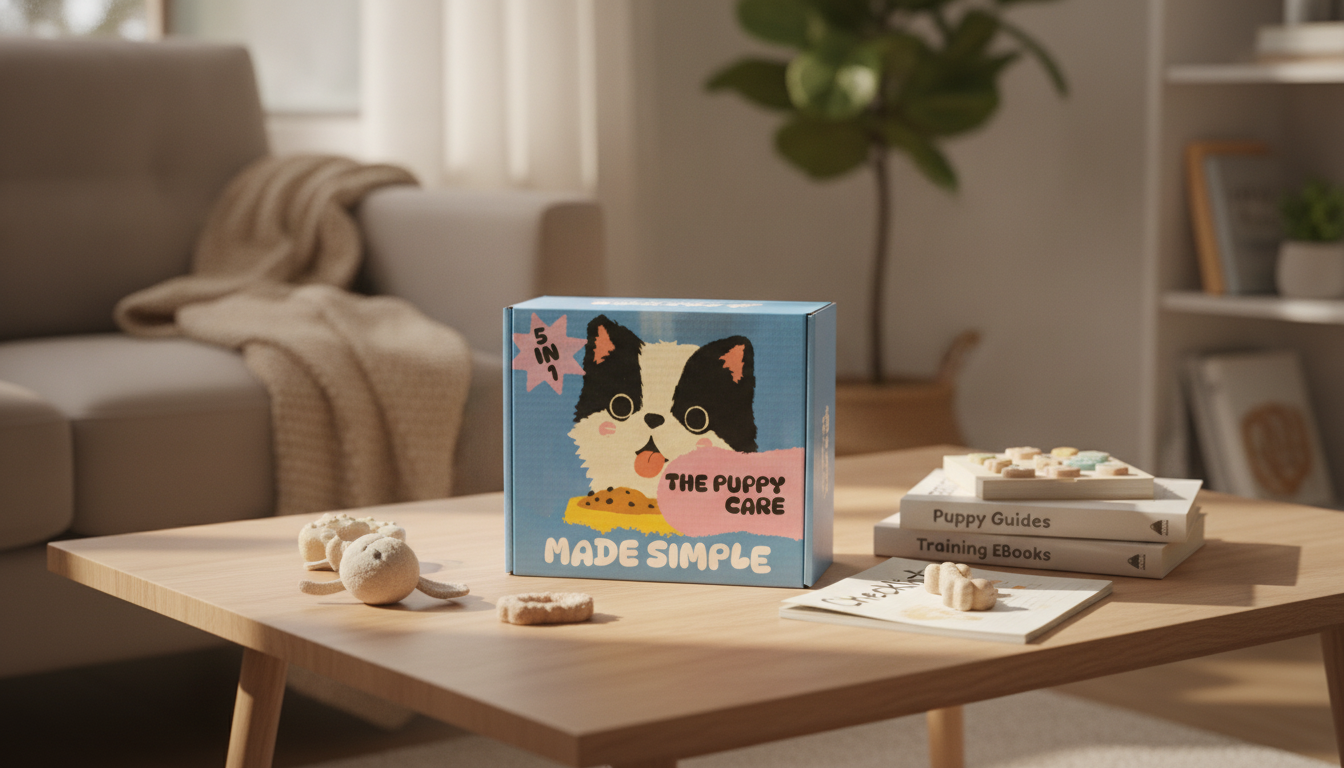
Those first weeks with a new puppy can feel like a nonstop cycle of feeding, potty breaks, sleep schedules, and sudden “is this normal?” moments. A structured set of guides and checklists helps turn the chaos into a routine you can follow day by day—especially during the critical first 90 days when habits form fast.
What’s inside the 5-in-1 bundle and how each piece gets used
A puppy plan works best when it’s easy to follow at 6 a.m., consistent across caregivers, and flexible enough to fit real life. The Puppy Care Made Simple 5-in-1 Bundle: Guides, eBooks & Checklists for Puppy Care is designed to do exactly that by combining quick-reference tools with deeper explanations for the common “why is my puppy doing this?” problems.
- Guides: Step-by-step care routines that reduce guesswork (feeding, potty, crate, alone-time, socialization).
- eBooks: Deeper explanations for common puppy problems (biting, barking, separation stress, fear periods).
- Checklists: Quick daily/weekly trackers for meals, potty logs, training reps, grooming, and vet tasks.
- How it gets used: Read the overview once, then rely on checklists for daily execution so your routine stays consistent even on busy days.
If your puppy is joining a work-from-home household, pairing puppy routines with a structured workflow can help reduce missed potty breaks and inconsistent naps. For owners juggling a home schedule alongside a business, the AI for Small Business Toolkit – 5-in-1 Digital Download Bundle can be used to streamline planning so puppy care stays predictable.
A simple first-week plan: stabilize sleep, potty, and meals
The first week is less about “perfect training” and more about stabilizing your puppy’s body clock and expectations. A simple rhythm prevents overtired meltdowns, reduces accidents, and makes the rest of training easier.
- Set a predictable day rhythm: wake → potty → play/training → meal → calm time → potty → nap.
- Potty basics: go out frequently (after sleep, play, eating), reward immediately, and keep one consistent cue word.
- Sleep setup: crate or pen near the bed at first; keep bedtime calm and avoid late-night play that revs your puppy up.
- Feeding routine: stick to the breeder/shelter food initially, then transition gradually if changing diets (ask your vet for specifics).
First-week routine snapshot (adjust by age, size, and vet advice)
| Time Block | Primary Goal | What to Do | Checklist Item |
|---|---|---|---|
| Morning | Potty success + calm energy | Immediate potty trip, short play, brief training (name, touch), breakfast | Potty log + meal tracker |
| Midday | Prevent accidents + social learning | Potty after naps, 5–10 minutes training, safe social exposure, quiet chew time | Training reps + exposure notes |
| Evening | Settle skills + grooming habits | Dinner, gentle handling (ears/paws), short leash practice, calm wind-down | Handling/grooming checklist |
| Night | Sleep continuity | Last potty trip, dim lights, crate/pen settle, minimal interaction if waking | Sleep + potty record |
Health and vet basics that prevent problems later
Health routines are part of puppy training—because a puppy that feels well learns faster and settles more easily. Schedule your first veterinary visit soon after bringing your puppy home (or follow the timeline given by the rescue/shelter).
- Vaccinations and parasite prevention: follow a vet-directed schedule and avoid high-risk dog areas until protection is complete. The American Veterinary Medical Association (AVMA) puppy care guidance is a solid starting point for what to expect.
- Microchipping and ID: confirm chip registration details and use a properly fitted collar/harness with tags.
- Hygiene and zoonotic risk: wash hands after handling stool, keep kids from touching waste, and maintain parasite prevention—especially important in multi-pet homes. The CDC Healthy Pets, Healthy People resources cover practical prevention steps.
- Red flags to act on quickly: repeated vomiting/diarrhea, lethargy, refusal to eat, coughing, labored breathing, pale gums.
Training foundations: what to teach first (and what to ignore for now)
Early training should be short, repeatable, and tied to daily life. Think “micro-sessions” that fit between potty trips and naps rather than long drills.
For more training structure and socialization best practices, the American Kennel Club training resources can help you understand what’s normal at each stage.
Socialization without overwhelm: safe exposure that builds confidence
Making the bundle work: a daily checklist approach that sticks
When a structured bundle is especially helpful
FAQ
Are 2 month old puppies hard to take care of?
They can be demanding because 8-week-old puppies need frequent potty breaks, lots of naps, and close supervision to prevent accidents and chewing. A simple routine with tracking (meals, potty, sleep) reduces stress because it makes patterns obvious and progress measurable. Your vet should guide vaccines and parasite prevention, which also affects where it’s safe to take your puppy.
How to take care of a puppy for beginners
Start with the basics: schedule a vet visit, keep a consistent feeding schedule, and set a potty routine with immediate rewards. Use safe confinement (crate/pen) to prevent rehearsing bad habits, add a few short training sessions daily, and build a gentle socialization plan that stays within your puppy’s comfort level. Make household rules consistent across everyone so your puppy doesn’t get mixed messages.
How to take care of puppies from birth
Newborn puppy care is very different and should follow veterinarian or experienced breeder guidance, especially for warmth and feeding frequency. Puppies must be kept warm, fed on an appropriate schedule, weighed daily to confirm steady gain, and kept in a clean environment with careful sanitation. If a puppy is orphaned, weak, chilled, or not gaining weight, seek veterinary help immediately.
















Leave a comment