-
Shop
- Advanced Technologies
- AI Skills
- Bathroom
- Best-Sellers
- Car Accessories
- Confidence
- Dating & Social Skills
- Digital Resources
- AI & Technology
- Beauty
- Budgeting & Saving
- Car Buying & Ownership
- Cozy Feast Collection
- Electronics & Technology
- Entrepreneurship & Business Growth
- Financial Education
- Financial Independence
- Financial Mindset & Psychology
- Goal Setting
- Home Styling & Organization
- Kitchen & Recipes
- Leadership
- Mindfulness
- Mindset
- Online Business
- Parenting & Child Development
- Personal Style & Fashion
- Pet Lifestyle & Wellness
- Positive Thinking
- Sleep Improvement
- Smart Life with AI
- Stress Management & Relaxation
- Travel Planning
- Wellness
- Yoga & Fitness
- Yoga & Mind-Body Practices
- Education & Learning
- Family & Parenting
- Fashion
- Accessories
- Alexander McQueen
- Bags
- Bags & Wallets
- Balenciaga
- Belts
- Blazers
- Bottega Veneta
- Bottoms
- Brunello Cucinelli
- Burberry
- Chanel
- Chloé
- Dior
- Dolce & Gabbana
- Dresses
- Etro
- Fendi
- Gucci
- Hats & Hair Accessories
- Hoodies & Sweatshirts
- Jacquemus
- Jewelry
- Jil Sander
- Kiton
- Luggage
- Miu Miu
- Off-White
- Outerwear
- Prada
- Rick Owens
- Saint Laurent
- Shoes
- Socks & Tights
- Sweaters & Cardigans
- The Row
- Tom Ford
- Tops & Shirts
- Valentino
- Valentino Garavani
- Versace
- Vivienne Westwood
- Watches
- Fashion Accessories
- Furniture
- Gadgets
- Health & Beauty
- Health & Wellness
- Home & Garden
- Home Decor
- Home Electronics
- Home Supplies
- Kids & Babies
- Kitchen
- Kitchen Best-Sellers
- Lighting
- Patio, Lawn & Garden
- Personal Growth
- Pet Care
- Pet Supplies
- Pets
- Sport & Outdoors
- Super Deals
- Travel
- Travel & Adventure
- Wealth
- Popular
- Best deals
Modern Wood Cat Tree with Basket, Hammock & Posts
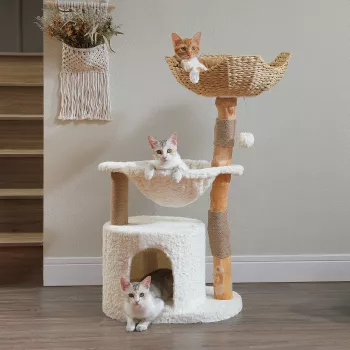
A cat tree can bring several parts of your cat’s daily routine into one dedicated space. Scratching posts offer an alternative to furniture, while a wicker basket and hammock give your cat different places to settle. The wood structure also provides a spot for climbing and exploring, making it a practical addition to a modern home.
Choosing a cat tree is about more than appearance. Your cat needs to be able to reach and use its features comfortably, and you need a location that works for your household. We’ve gathered a few practical considerations to help you decide whether this style is right for you.
A Place for Everyday Cat Activities
Cats often move between bursts of activity and periods of rest throughout the day. A dedicated tree gives your cat a place to scratch, climb, and pause without having to use the same spot for every activity. Keeping those options together can also make it easier to give your cat an inviting area of their own.
Our Modern Wood Cat Tree with Wicker Basket, Hammock & Scratching Posts combines a wood design with a wicker basket for a look that may appeal to you if you prefer a home-conscious approach to pet furniture. Its appearance is only one part of the decision, though: make sure its layout and size suit your cat and the space you have available.
The cat tree is listed at $186.01 and is in stock. Price and availability are subject to change.
Basket, Hammock, and Scratching Posts
Each named feature serves a different purpose, so your cat can choose how to use the tree. The wicker basket creates a defined resting spot, while the hammock offers another lounging option. Scratching posts give your cat a designated surface for a natural behavior, and the structure provides opportunities to climb and explore.
Cats have individual preferences. One may take to the basket first, while another may spend more time investigating the posts or hammock. Offering options lets your cat discover what feels comfortable rather than relying on a single feature.
| Feature | Everyday use |
|---|---|
| Wicker basket | A defined spot for resting |
| Hammock | An alternative place to lounge |
| Scratching posts | A dedicated surface for scratching |
| Wood cat tree structure | A place for climbing and exploring |
Scratching is a normal part of cat behavior, so an appealing scratching surface can be a useful addition to your home. The Ohio State Indoor Pet Initiative’s scratching guide offers more information about why cats scratch and how to provide suitable surfaces.
Finding the Right Spot at Home
Start with a level floor and enough surrounding room for your cat to approach and move away comfortably. Keep access routes clear of cords, clutter, and furniture that could make getting on or off the tree awkward. A stable placement matters both for everyday use and for a cat’s confidence when exploring something new.
A quieter area with a view of household activity can be a good starting point. Your cat may appreciate being able to observe the room without being directly in the path of people walking through it. If your cat tends to avoid busy spaces, choose a location that gives them some distance from the busiest traffic.
Before buying, compare the tree’s dimensions with your available floor space and consider whether its layout is suitable for your cat. Review any available stability and suitability information, too. Think about how your cat will move between features, not just whether the tree will fit in the room.
For more ideas on arranging a comfortable environment, see International Cat Care’s guide to making your home cat friendly.
Helping Your Cat Settle In
Once the tree is assembled, let your cat investigate at their own pace. You can place a favorite toy nearby or offer a treat when your cat approaches. These gentle invitations can make the new addition interesting without forcing your cat onto it or pressing their paws against the scratching posts.
Give your cat time to form a routine. If the tree gets little attention at first, consider whether another accessible location would be more inviting. A spot near an area your cat already visits may work better than one that is convenient for you but rarely used by your cat.
Follow any included assembly and care instructions, and check the tree regularly for looseness or wear. For kittens, senior cats, or cats with mobility concerns, consider whether the available climbing routes are manageable. If you’re unsure what movements are appropriate for your cat, ask your veterinarian for guidance.
Another Resource from Our Store
If you also run a small business, our AI for Small Business Toolkit – 5-in-1 Digital Download Bundle is a separate in-stock digital resource. It is unrelated to the cat tree, but may be useful for your business planning.
FAQ
Why can’t cats climb back down trees?
Many cats can climb back down, often by backing down, but curved claws grip most effectively when climbing upward, so descending headfirst can be difficult. A frightened or inexperienced cat may hesitate on an outdoor tree; an indoor cat tree offers a different climbing environment.
Where should I place a cat tree?
Choose a level, accessible spot where your cat feels comfortable and has room to approach and leave. Check that the tree is stable and keep the surrounding area clear of household traffic and clutter.
How can I encourage my cat to use the scratching posts?
Place the tree where your cat already spends time, and encourage exploration with a favorite toy or a treat. Let your cat investigate and scratch on their own rather than forcing them.
Recommended for you

How to Talk to Strangers Without Freezing Up
Nov 19, 2026
Simple Daily Rituals for a Calmer Mind
Nov 19, 2026













Leave a comment