-
Shop
- Advanced Technologies
- AI Skills
- Bathroom
- Best-Sellers
- Car Accessories
- Confidence
- Dating & Social Skills
- Digital Resources
- AI & Technology
- Beauty
- Budgeting & Saving
- Car Buying & Ownership
- Cozy Feast Collection
- Electronics & Technology
- Entrepreneurship & Business Growth
- Financial Education
- Financial Independence
- Financial Mindset & Psychology
- Goal Setting
- Home Styling & Organization
- Kitchen & Recipes
- Leadership
- Mindfulness
- Mindset
- Online Business
- Parenting & Child Development
- Personal Style & Fashion
- Pet Lifestyle & Wellness
- Positive Thinking
- Sleep Improvement
- Smart Life with AI
- Stress Management & Relaxation
- Travel Planning
- Wellness
- Yoga & Fitness
- Yoga & Mind-Body Practices
- Education & Learning
- Family & Parenting
- Fashion
- Accessories
- Alexander McQueen
- Bags
- Bags & Wallets
- Balenciaga
- Belts
- Blazers
- Bottega Veneta
- Bottoms
- Brunello Cucinelli
- Burberry
- Chanel
- Chloé
- Dior
- Dolce & Gabbana
- Dresses
- Etro
- Fendi
- Gucci
- Hats & Hair Accessories
- Hoodies & Sweatshirts
- Jacquemus
- Jewelry
- Jil Sander
- Kiton
- Luggage
- Miu Miu
- Off-White
- Outerwear
- Prada
- Rick Owens
- Saint Laurent
- Shoes
- Socks & Tights
- Sweaters & Cardigans
- The Row
- Tom Ford
- Tops & Shirts
- Valentino
- Valentino Garavani
- Versace
- Vivienne Westwood
- Watches
- Fashion Accessories
- Furniture
- Gadgets
- Health & Beauty
- Health & Wellness
- Home & Garden
- Home Decor
- Home Electronics
- Home Supplies
- Kids & Babies
- Kitchen
- Kitchen Best-Sellers
- Lighting
- Patio, Lawn & Garden
- Personal Growth
- Pet Care
- Pet Supplies
- Pets
- Sport & Outdoors
- Super Deals
- Travel
- Travel & Adventure
- Wealth
- Popular
- Best deals
How to Handle Flight Delays and Cancellations
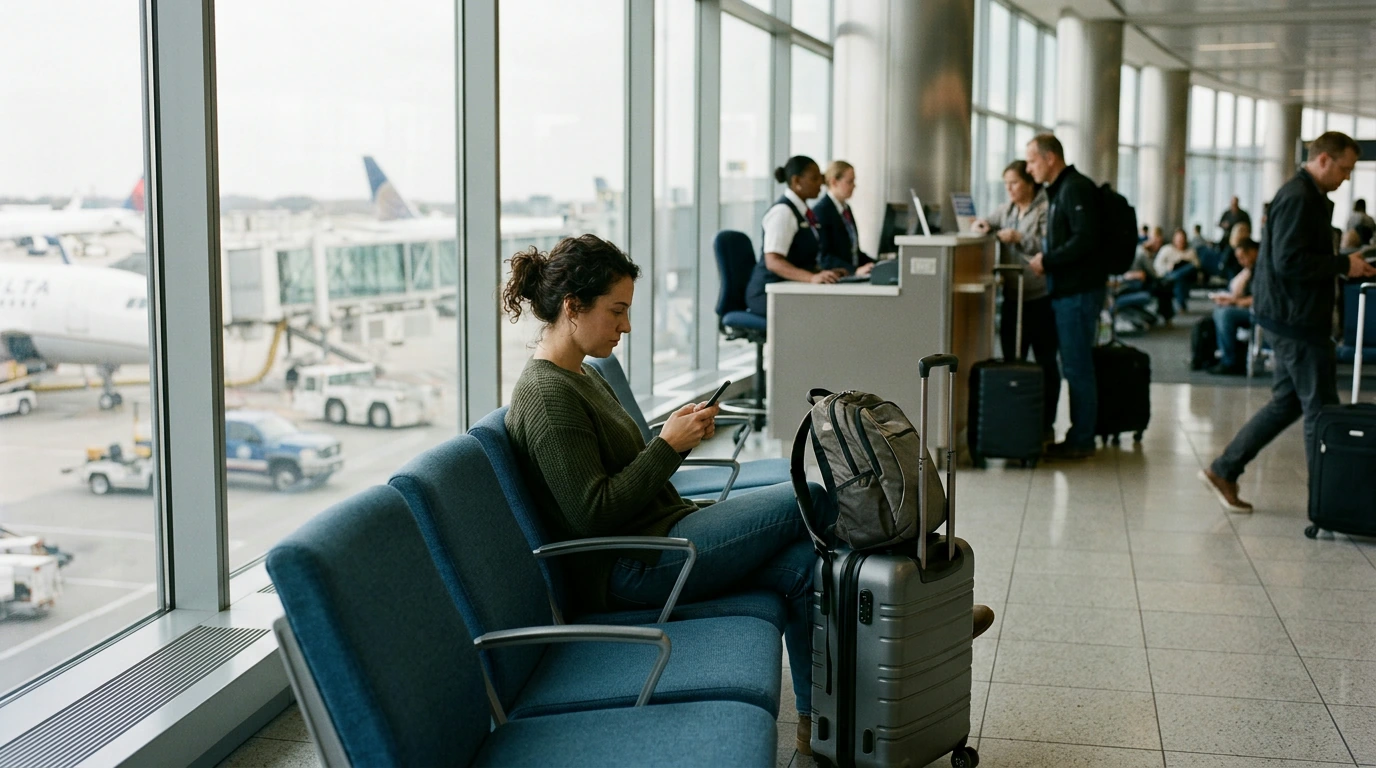
A delayed or canceled flight can change the shape of your trip in minutes. Our team recommends starting with the facts: confirm your flight status, compare the alternatives, and keep a record of what the airline tells you. A few organized steps can make it easier to decide whether to keep traveling or request a refund.
Start with the Flight Status
Check the airline’s app or website for the latest departure time, gate, and connection information. Airport departure boards can help, too, especially when you are already at the terminal. Updates may change quickly, so avoid relying on a single notification received earlier in the day.
Keep your booking confirmation, passenger names, and flight numbers handy. If the airline offers rebooking online, review the available choices while you also consider contacting an agent. You may be able to explore options in the app while waiting for help at the airport.
Save texts, emails, and screenshots of important updates. If the airline gives a reason for the disruption, note it along with the time and any instructions you receive. Those records can help if you later ask about a refund or reimbursement.
Choose Your Next Step
Before accepting an alternative flight, compare the full itinerary with your plans. Look at the departure and arrival times, the airport, and any connection. A replacement flight that gets you to a connecting airport after your next flight leaves may not solve the problem.
If you no longer want to travel, ask about a refund for the unused portion of your trip. You may also be offered a voucher or travel credit. Before accepting one, review its expiration date, restrictions, and transfer rules, and understand whether accepting it affects other options available to you.
When a delay or cancellation creates extra costs, ask the airline what assistance it can provide. Keep itemized receipts for necessary meals, lodging, and transportation, but do not assume every expense will be reimbursed. The airline’s commitments and the rules that apply to your trip can affect the outcome.
Flight Disruption Checklist
| Situation | Action | Keep handy |
|---|---|---|
| Delayed flight | Monitor updates and ask about connection options | Booking confirmation and notifications |
| Canceled flight | Compare rebooking and refund options | Cancellation notice and itinerary |
| Overnight disruption | Ask about hotel, meal, and transport assistance | Receipts and airline communications |
When Your Trip Includes a Connection
Ask the airline to review the entire itinerary, not just the disrupted segment. Confirm whether your checked bags will follow the new route and whether you need to make changes to a hotel, ground transportation, or plans at your destination. If you booked separate tickets, contact each carrier as needed; a change on one booking may not automatically change the other.
Check the Rules for Your Trip
Refund and assistance rules depend on your itinerary, the jurisdictions involved, and the circumstances of the disruption. The airline’s own policies and commitments may also matter. For covered U.S. flights, consult current U.S. Department of Transportation refund guidance and its information on flight delays and cancellations.
Keep three concepts separate: a refund returns money for eligible unused travel; reimbursement concerns expenses you paid; and compensation is a separate payment that may be available under certain rules or policies. Eligibility for one does not automatically mean you qualify for the others. Ask the airline to explain which option it is offering and how to submit a request.
If you need to follow up, keep copies of your claim, receipts, and any response. A simple timeline with flight numbers, notification times, and the names or channels used for communications can make your request easier to explain.
Prepare for Disruptions Before You Travel
Save your booking reference, airline contact information, and copies of important travel documents somewhere you can access them away from home. Enable airline notifications and leave enough time between connections for your itinerary and travel circumstances.
Before departure, review the airline’s policies and any travel insurance terms you have purchased. Pay attention to covered events, exclusions, documentation requirements, and claim deadlines. If your plans involve a conference or other fixed commitment, decide in advance how late you can arrive before the trip no longer serves its purpose.
For more guidance on delays and cancellations, explore our Smart Way to Handle Flight Disruptions. Visit the product page for current purchasing details.
If you are traveling for work and also planning how to manage business tasks, our AI for Small Business Toolkit – 5-in-1 Digital Download Bundle is another option to explore. It is a separate business resource, not a substitute for airline assistance or travel coverage.
Before choosing, compare the product details with your daily routine, available space, care needs, and preferred setup. The strongest option is usually the one that fits the intended use clearly and remains simple to clean, store, and check before repeat use.
FAQ
How to handle flight cancellations?
Confirm the cancellation with the airline, then compare rebooking options with a refund if you no longer wish to travel. Save cancellation notices, communications, and receipts for necessary expenses.
What are the new rules for airline delays and cancellations?
Rules vary by route, jurisdiction, and circumstances, so consult current U.S. Department of Transportation guidance for covered flights. A refund for eligible unused travel is different from compensation or reimbursement for expenses.
Recommended for you



Toy Rotation and Storage: A Simple Guide for Parents
Nov 13, 2026
Patio Paradise: Small-Space Gardening for Beginners
Nov 13, 2026













Leave a comment