-
Shop
- Advanced Technologies
- AI Skills
- Bathroom
- Best-Sellers
- Car Accessories
- Confidence
- Dating & Social Skills
- Digital Resources
- AI & Technology
- Beauty
- Budgeting & Saving
- Car Buying & Ownership
- Cozy Feast Collection
- Electronics & Technology
- Entrepreneurship & Business Growth
- Financial Education
- Financial Independence
- Financial Mindset & Psychology
- Goal Setting
- Home Styling & Organization
- Kitchen & Recipes
- Leadership
- Mindfulness
- Mindset
- Online Business
- Parenting & Child Development
- Personal Style & Fashion
- Pet Lifestyle & Wellness
- Positive Thinking
- Sleep Improvement
- Smart Life with AI
- Stress Management & Relaxation
- Travel Planning
- Wellness
- Yoga & Fitness
- Yoga & Mind-Body Practices
- Education & Learning
- Family & Parenting
- Fashion
- Accessories
- Alexander McQueen
- Bags
- Bags & Wallets
- Balenciaga
- Belts
- Blazers
- Bottega Veneta
- Bottoms
- Brunello Cucinelli
- Burberry
- Chanel
- Chloé
- Dior
- Dolce & Gabbana
- Dresses
- Etro
- Fendi
- Gucci
- Hats & Hair Accessories
- Hoodies & Sweatshirts
- Jacquemus
- Jewelry
- Jil Sander
- Kiton
- Luggage
- Miu Miu
- Off-White
- Outerwear
- Prada
- Rick Owens
- Saint Laurent
- Shoes
- Socks & Tights
- Sweaters & Cardigans
- The Row
- Tom Ford
- Tops & Shirts
- Valentino
- Valentino Garavani
- Versace
- Vivienne Westwood
- Watches
- Fashion Accessories
- Furniture
- Gadgets
- Health & Beauty
- Health & Wellness
- Home & Garden
- Home Decor
- Home Electronics
- Home Supplies
- Kids & Babies
- Kitchen
- Kitchen Best-Sellers
- Lighting
- Patio, Lawn & Garden
- Personal Growth
- Pet Care
- Pet Supplies
- Pets
- Sport & Outdoors
- Super Deals
- Travel
- Travel & Adventure
- Wealth
- Popular
- Best deals
Bidet Seat Outlet Needed? Electric vs Non-Electric Guide
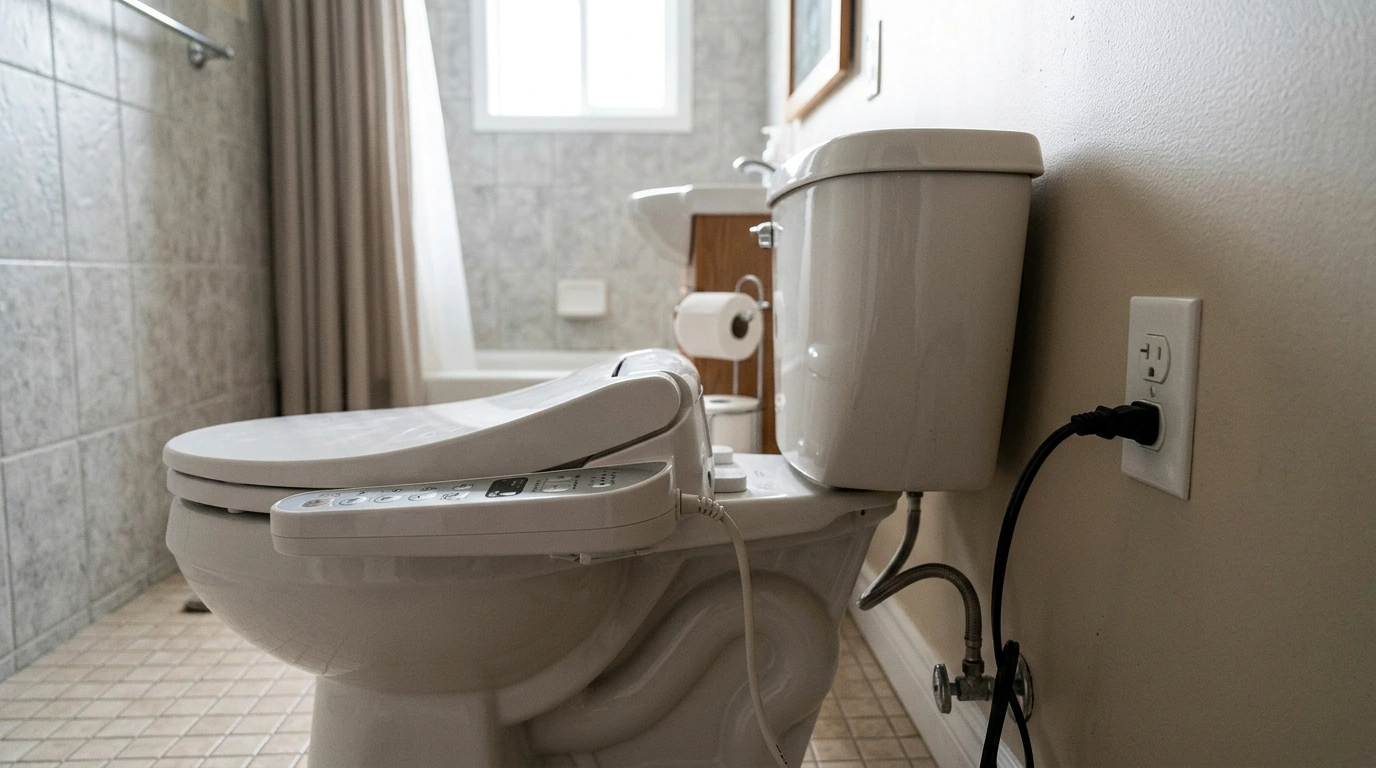
Do I need an outlet for a bidet toilet seat?
Sometimes yes, sometimes no—it depends on whether you choose an electric bidet seat or a non-electric attachment. Our team recommends starting with the features you want, then confirming you can power them safely. If you want warm water, a heated seat, warm air drying, an automatic deodorizer, a night light, or remote-controlled settings, you’ll typically need a nearby GFCI outlet. If you only want basic washing using your home’s water pressure, many non-electric bidet attachments don’t need electricity at all.
When you do need an outlet
Most “smart” bidet toilet seats require power because they heat water on demand or keep a warm reservoir, maintain a heated seat, and run electronics like sensors and dryers. In practical terms, that means you’ll want an outlet close enough to reach without stretching the cord or using an extension cord. Bathrooms are wet locations, so a GFCI-protected outlet is the right type for safety.
When you don’t need an outlet
Non-electric bidet attachments and simple manual bidet seats usually run entirely on water pressure and a mechanical dial. These are a good fit if your bathroom doesn’t have an accessible outlet, you prefer a simpler setup, or you’re aiming for the most budget-friendly option. You may still need a warm-water hookup if you want temperature control without electricity, but many models use cold water only.
Outlet placement and setup tips
Plan for a cord path that stays dry and doesn’t cross walking areas. Avoid power strips and extension cords in the bathroom. If the nearest outlet is too far, our team suggests having a licensed electrician add a properly protected outlet rather than forcing a workaround. If you’re comparing integrated smart toilets versus bidet seats, our guide to all-in-one smart bidet toilet options breaks down comfort features and installation considerations: https://bestsellis.com/guide-all-in-one-smart-bidet-toilet-auto-flush-heated-seat-air-drying/.
FAQ
Can a non-electric bidet still have warm water?
Yes, some non-electric setups can use warm water if they connect to a nearby warm-water supply line. Otherwise, they typically use cold water only.
Recommended for you



3-3-3 Rule for Dog Training: New Dog Timeline Guide
Oct 15, 2026













Leave a comment