-
Shop
- Advanced Technologies
- AI Skills
- Bathroom
- Best-Sellers
- Car Accessories
- Confidence
- Dating & Social Skills
- Digital Resources
- AI & Technology
- Beauty
- Budgeting & Saving
- Car Buying & Ownership
- Cozy Feast Collection
- Electronics & Technology
- Entrepreneurship & Business Growth
- Financial Education
- Financial Independence
- Financial Mindset & Psychology
- Goal Setting
- Home Styling & Organization
- Kitchen & Recipes
- Leadership
- Mindfulness
- Mindset
- Online Business
- Parenting & Child Development
- Personal Style & Fashion
- Pet Lifestyle & Wellness
- Positive Thinking
- Sleep Improvement
- Smart Life with AI
- Stress Management & Relaxation
- Travel Planning
- Wellness
- Yoga & Fitness
- Yoga & Mind-Body Practices
- Education & Learning
- Family & Parenting
- Fashion
- Accessories
- Alexander McQueen
- Bags
- Bags & Wallets
- Balenciaga
- Belts
- Blazers
- Bottega Veneta
- Bottoms
- Brunello Cucinelli
- Burberry
- Chanel
- Chloé
- Dior
- Dolce & Gabbana
- Dresses
- Etro
- Fendi
- Gucci
- Hats & Hair Accessories
- Hoodies & Sweatshirts
- Jacquemus
- Jewelry
- Jil Sander
- Kiton
- Luggage
- Miu Miu
- Off-White
- Outerwear
- Prada
- Rick Owens
- Saint Laurent
- Shoes
- Socks & Tights
- Sweaters & Cardigans
- The Row
- Tom Ford
- Tops & Shirts
- Valentino
- Valentino Garavani
- Versace
- Vivienne Westwood
- Watches
- Fashion Accessories
- Furniture
- Gadgets
- Health & Beauty
- Health & Wellness
- Home & Garden
- Home Decor
- Home Electronics
- Home Supplies
- Kids & Babies
- Kitchen
- Kitchen Best-Sellers
- Lighting
- Patio, Lawn & Garden
- Personal Growth
- Pet Care
- Pet Supplies
- Pets
- Sport & Outdoors
- Super Deals
- Travel
- Travel & Adventure
- Wealth
- Popular
- Best deals
Electric Fireplace Electricity Use: Watts, Cost & Tips
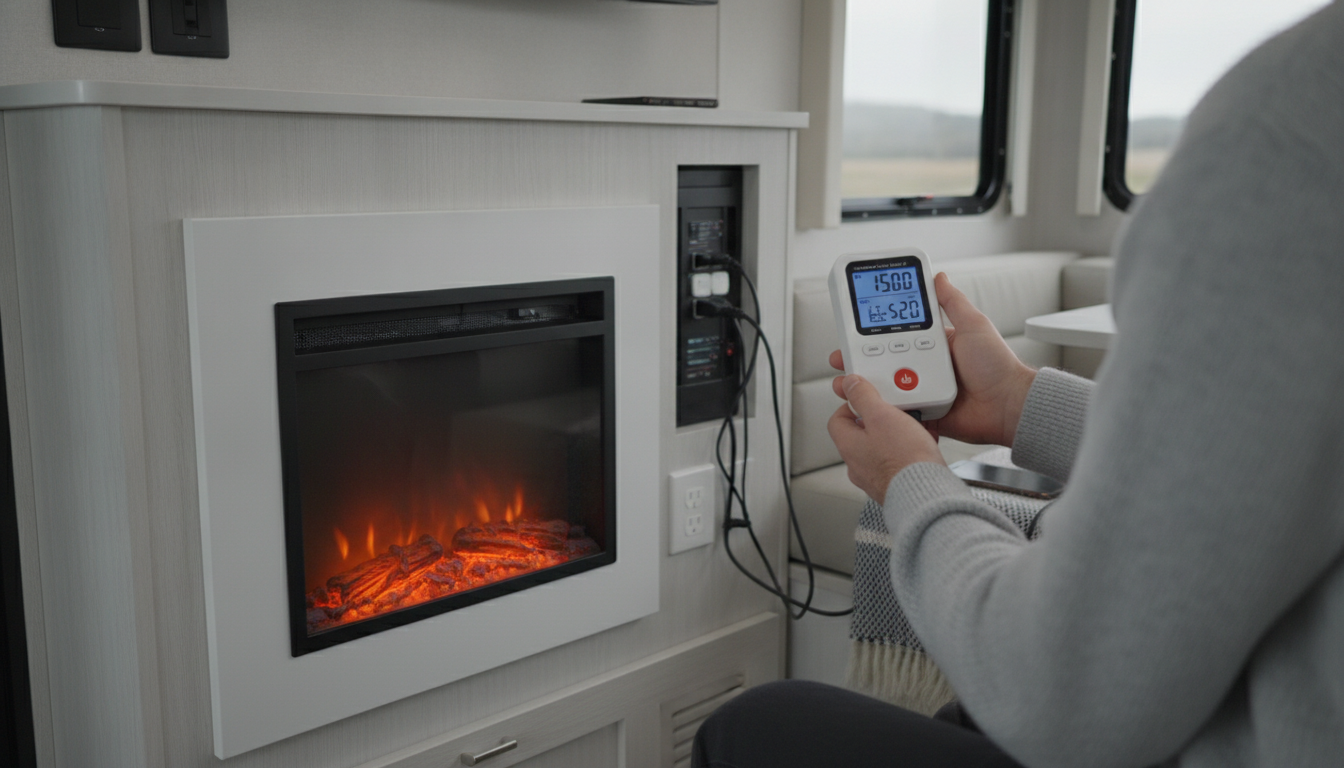
Do electric fireplaces use a lot of electricity?
Electric fireplaces usually don’t use a lot of electricity for the flame effect, but they can use a noticeable amount when the heater is running. Most models have two power draws: a low-wattage LED flame/lighting mode and a higher-wattage heat mode. If the goal is ambiance, they’re typically inexpensive to run. If the goal is space heating, the cost depends on wattage, how long it runs, and local electricity rates.
How much electricity does an electric fireplace use?
Many electric fireplaces use about 1,500 watts on the high heat setting (1.5 kWh per hour of heater use). Some also offer a lower heat setting around 750 watts. By comparison, the flame-only mode often uses roughly 10–50 watts, which is closer to running a light bulb than a heater.
What does that cost to run?
To estimate cost, multiply the fireplace’s kilowatts by hours used, then by your electricity rate. A 1,500W heater is 1.5 kW. If electricity costs $0.16/kWh, one hour of heat is about $0.24 (1.5 x 0.16). Run it for 5 hours and it’s about $1.20. Flame-only mode at 30W is 0.03 kW, which would cost under a penny per hour at the same rate.
Why electric fireplaces can feel “power hungry”
When the heat is on, an electric fireplace is essentially a portable space heater with a decorative front. Resistance heating converts electricity to heat efficiently at the unit, but it’s still drawing real power from the wall—often similar to a hair dryer on low. The “high usage” reputation usually comes from running the heater for long stretches rather than the flame visuals.
Ways to use less electricity
Use flame-only mode when you don’t need heat, choose the lower heat setting when possible, and rely on the built-in thermostat/timer so it cycles instead of running continuously. Also consider zone heating: warm the room you’re in instead of turning up whole-home heat.
If you’re shopping for a larger setup and want practical sizing and feature guidance, see the full guide here: 72-inch electric fireplace TV stand with mantel guide.
FAQ
How much heat can an electric fireplace realistically provide?
Most units are designed to warm a room, not a whole house—often around 400–1,000 square feet depending on insulation, ceiling height, and layout. They’re best for supplemental “zone” heating where you spend the most time.
Recommended for you

Convert a Wood-Burning Fireplace to Electric: How-To
Jun 19, 2026













Leave a comment