-
Shop
- Advanced Technologies
- AI Skills
- Bathroom
- Best-Sellers
- Car Accessories
- Confidence
- Dating & Social Skills
- Digital Resources
- AI & Technology
- Beauty
- Budgeting & Saving
- Car Buying & Ownership
- Cozy Feast Collection
- Electronics & Technology
- Entrepreneurship & Business Growth
- Financial Education
- Financial Independence
- Financial Mindset & Psychology
- Goal Setting
- Home Styling & Organization
- Kitchen & Recipes
- Leadership
- Mindfulness
- Mindset
- Online Business
- Parenting & Child Development
- Personal Style & Fashion
- Pet Lifestyle & Wellness
- Positive Thinking
- Sleep Improvement
- Smart Life with AI
- Stress Management & Relaxation
- Travel Planning
- Wellness
- Yoga & Fitness
- Yoga & Mind-Body Practices
- Education & Learning
- Family & Parenting
- Fashion
- Accessories
- Alexander McQueen
- Bags
- Bags & Wallets
- Balenciaga
- Belts
- Blazers
- Bottega Veneta
- Bottoms
- Brunello Cucinelli
- Burberry
- Chanel
- Chloé
- Dior
- Dolce & Gabbana
- Dresses
- Etro
- Fendi
- Gucci
- Hats & Hair Accessories
- Hoodies & Sweatshirts
- Jacquemus
- Jewelry
- Jil Sander
- Kiton
- Luggage
- Miu Miu
- Off-White
- Outerwear
- Prada
- Rick Owens
- Saint Laurent
- Shoes
- Socks & Tights
- Sweaters & Cardigans
- The Row
- Tom Ford
- Tops & Shirts
- Valentino
- Valentino Garavani
- Versace
- Vivienne Westwood
- Watches
- Fashion Accessories
- Furniture
- Gadgets
- Health & Beauty
- Health & Wellness
- Home & Garden
- Home Decor
- Home Electronics
- Home Supplies
- Kids & Babies
- Kitchen
- Kitchen Best-Sellers
- Lighting
- Patio, Lawn & Garden
- Personal Growth
- Pet Care
- Pet Supplies
- Pets
- Sport & Outdoors
- Super Deals
- Travel
- Travel & Adventure
- Wealth
- Popular
- Best deals
Fix Poor Room Lighting: Bulbs, Layers & Placement
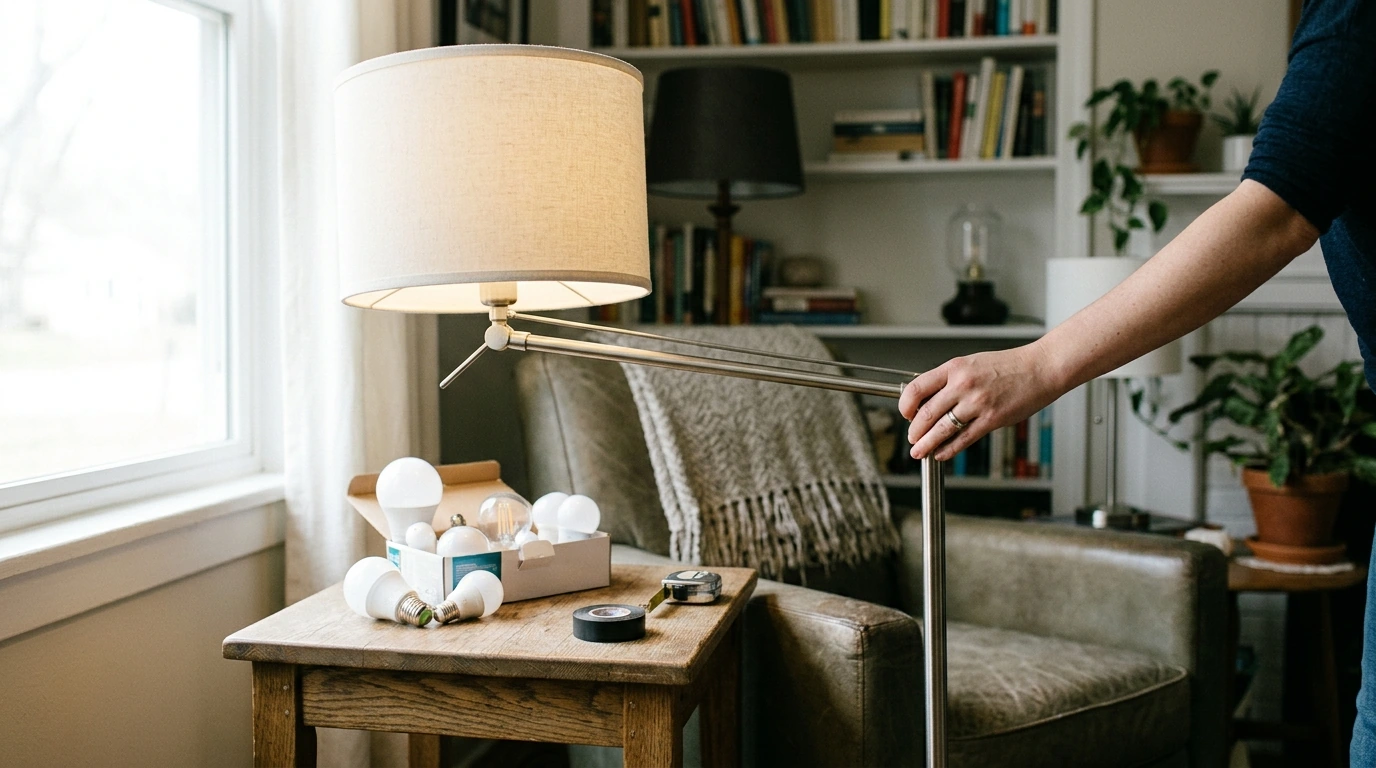
How to fix poor lighting in a room
Poor lighting usually isn’t a single problem—it’s a mix of the wrong bulb, the wrong fixture placement, and missing layers. Our team fixes dim, harsh, or patchy rooms by building a simple lighting plan: ambient (overall), task (work), and accent (mood and depth). Once those layers are in place, the room feels brighter and more comfortable without relying on one blinding ceiling light.
1) Start with the room’s “base” light
If your overhead fixture is weak, add a brighter ceiling fixture or supplement it with two floor lamps placed on opposite sides of the room. Use bulbs labeled “soft white” or “warm white” (around 2700K–3000K) for living spaces, and aim for multiple light sources rather than one intense center point.
2) Add task lighting where you actually need it
Dark corners happen when light isn’t landing on the activity. Place a desk lamp for office work, a reading lamp near seating, and under-cabinet lighting in kitchens. Look for adjustable heads and shades that aim light down onto the surface to reduce glare.
3) Use bulbs that match the fixture—and the job
Swap mismatched bulbs so the room doesn’t feel uneven. Choose LEDs with a higher lumen output for brightness, and keep color temperature consistent across the room. In enclosed fixtures, pick bulbs rated for enclosed use to avoid early failure and dimming.
4) Create depth with accent lighting
To make a room feel brighter without increasing harshness, add a wall sconce, picture light, or an uplight behind a plant or bookshelf. Bouncing light off walls and ceilings spreads illumination more evenly and reduces “cave” shadows.
5) Place and control lights for comfort
Use dimmers where possible, and add plug-in dimmers for lamps. Avoid bare bulbs at eye level; pick shades or diffusers to soften the light. If windows are causing glare, sheer curtains can balance daylight while keeping the room bright.
For a deeper walkthrough on layering, bulb selection, and placement, visit our guide: balanced home lighting tips.
FAQ
How many lumens do I need for a living room?
Many living rooms feel comfortable around 1,500–3,000 total lumens, spread across multiple lamps and fixtures. Use dimmers so you can adjust for movies, entertaining, or reading.













Leave a comment