-
Shop
- Advanced Technologies
- AI Skills
- Bathroom
- Best-Sellers
- Car Accessories
- Confidence
- Dating & Social Skills
- Digital Resources
- AI & Technology
- Beauty
- Budgeting & Saving
- Car Buying & Ownership
- Cozy Feast Collection
- Electronics & Technology
- Entrepreneurship & Business Growth
- Financial Education
- Financial Independence
- Financial Mindset & Psychology
- Goal Setting
- Home Styling & Organization
- Kitchen & Recipes
- Leadership
- Mindfulness
- Mindset
- Online Business
- Parenting & Child Development
- Personal Style & Fashion
- Pet Lifestyle & Wellness
- Positive Thinking
- Sleep Improvement
- Smart Life with AI
- Stress Management & Relaxation
- Travel Planning
- Wellness
- Yoga & Fitness
- Yoga & Mind-Body Practices
- Education & Learning
- Family & Parenting
- Fashion
- Accessories
- Alexander McQueen
- Bags
- Bags & Wallets
- Balenciaga
- Belts
- Blazers
- Bottega Veneta
- Bottoms
- Brunello Cucinelli
- Burberry
- Chanel
- Chloé
- Dior
- Dolce & Gabbana
- Dresses
- Etro
- Fendi
- Gucci
- Hats & Hair Accessories
- Hoodies & Sweatshirts
- Jacquemus
- Jewelry
- Jil Sander
- Kiton
- Luggage
- Miu Miu
- Off-White
- Outerwear
- Prada
- Rick Owens
- Saint Laurent
- Shoes
- Socks & Tights
- Sweaters & Cardigans
- The Row
- Tom Ford
- Tops & Shirts
- Valentino
- Valentino Garavani
- Versace
- Vivienne Westwood
- Watches
- Fashion Accessories
- Furniture
- Gadgets
- Health & Beauty
- Health & Wellness
- Home & Garden
- Home Decor
- Home Electronics
- Home Supplies
- Kids & Babies
- Kitchen
- Kitchen Best-Sellers
- Lighting
- Patio, Lawn & Garden
- Personal Growth
- Pet Care
- Pet Supplies
- Pets
- Sport & Outdoors
- Super Deals
- Travel
- Travel & Adventure
- Wealth
- Popular
- Best deals
Paper Decluttering: How Long to Keep Financial Records
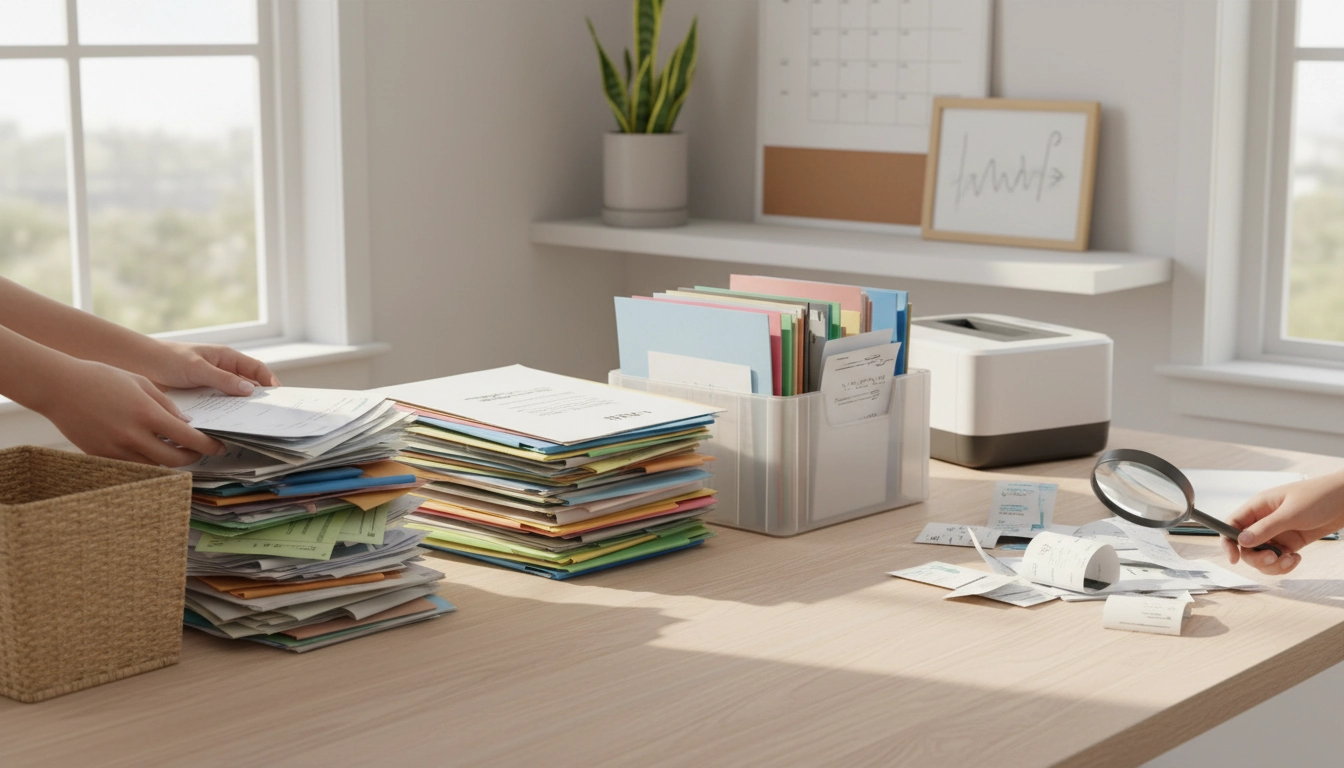
How long should you keep bank statements, bills, tax documents, and receipts when decluttering paper?
When you’re sorting paper, aim for a “keep it only as long as it can still protect you” approach. The right retention window depends on whether a document helps prove income, supports a deduction, settles a debt, or resolves a warranty or dispute.
Bank statements
Keep monthly bank statements for about 1 year if you can access them online and just need them for occasional verification. Keep 3–7 years for statements tied to tax-related activity (business income/expenses, large deposits, or investment transfers) so you can back up your return if questions come up. For major purchases (home down payment records, large renovations), keep the relevant statements with the closing file as long as you own the asset.
Bills and utility statements
Keep routine bills (utilities, phone, cable) until you’ve confirmed payment and your account shows a zero balance—typically 1–2 billing cycles. Keep bills that document deductible expenses (home office, rental property, self-employment) for 3–7 years with your tax records. For medical bills, keep them until insurance has fully processed the claim and you’re sure the balance is correct; if you deduct medical expenses, keep them for 3–7 years.
Tax documents
Keep tax returns and supporting documents for 7 years as a practical, conservative rule (returns, W-2s/1099s, schedules, proof of deductions, and any correspondence). Keep records related to property (purchase documents, improvements, casualty losses) for as long as you own the property plus several years after you sell, since they can affect cost basis.
Receipts
Keep receipts until the return window closes (often 30–90 days) for everyday shopping. For warranties, keep receipts for the life of the warranty. For taxes, keep receipts that support deductions/credits for 3–7 years; digital copies are usually fine if they’re legible and backed up.
For a simple daily/weekly system that makes paper retention manageable, follow the filing routines in this paper mail control guide.
FAQ
What should I shred vs. recycle when decluttering mail?
Shred anything with account numbers, Social Security numbers, medical details, or signatures; recycle low-risk items like generic flyers, catalogs, and envelopes without sensitive data.
Recommended for you


Declutter Sentimental Papers Without the Guilt
Aug 12, 2026













Leave a comment