-
Shop
- Advanced Technologies
- AI Skills
- Bathroom
- Best-Sellers
- Car Accessories
- Confidence
- Dating & Social Skills
- Digital Resources
- AI & Technology
- Beauty
- Budgeting & Saving
- Car Buying & Ownership
- Cozy Feast Collection
- Electronics & Technology
- Entrepreneurship & Business Growth
- Financial Education
- Financial Independence
- Financial Mindset & Psychology
- Goal Setting
- Home Styling & Organization
- Kitchen & Recipes
- Leadership
- Mindfulness
- Mindset
- Online Business
- Parenting & Child Development
- Personal Style & Fashion
- Pet Lifestyle & Wellness
- Positive Thinking
- Sleep Improvement
- Smart Life with AI
- Stress Management & Relaxation
- Travel Planning
- Wellness
- Yoga & Fitness
- Yoga & Mind-Body Practices
- Education & Learning
- Family & Parenting
- Fashion
- Accessories
- Alexander McQueen
- Bags
- Bags & Wallets
- Balenciaga
- Belts
- Blazers
- Bottega Veneta
- Bottoms
- Brunello Cucinelli
- Burberry
- Chanel
- Chloé
- Dior
- Dolce & Gabbana
- Dresses
- Etro
- Fendi
- Gucci
- Hats & Hair Accessories
- Hoodies & Sweatshirts
- Jacquemus
- Jewelry
- Jil Sander
- Kiton
- Luggage
- Miu Miu
- Off-White
- Outerwear
- Prada
- Rick Owens
- Saint Laurent
- Shoes
- Socks & Tights
- Sweaters & Cardigans
- The Row
- Tom Ford
- Tops & Shirts
- Valentino
- Valentino Garavani
- Versace
- Vivienne Westwood
- Watches
- Fashion Accessories
- Furniture
- Gadgets
- Health & Beauty
- Health & Wellness
- Home & Garden
- Home Decor
- Home Electronics
- Home Supplies
- Kids & Babies
- Kitchen
- Kitchen Best-Sellers
- Lighting
- Patio, Lawn & Garden
- Personal Growth
- Pet Care
- Pet Supplies
- Pets
- Sport & Outdoors
- Super Deals
- Travel
- Travel & Adventure
- Wealth
- Popular
- Best deals
Why Do Cats Raise Their Butts When You Pet Them?
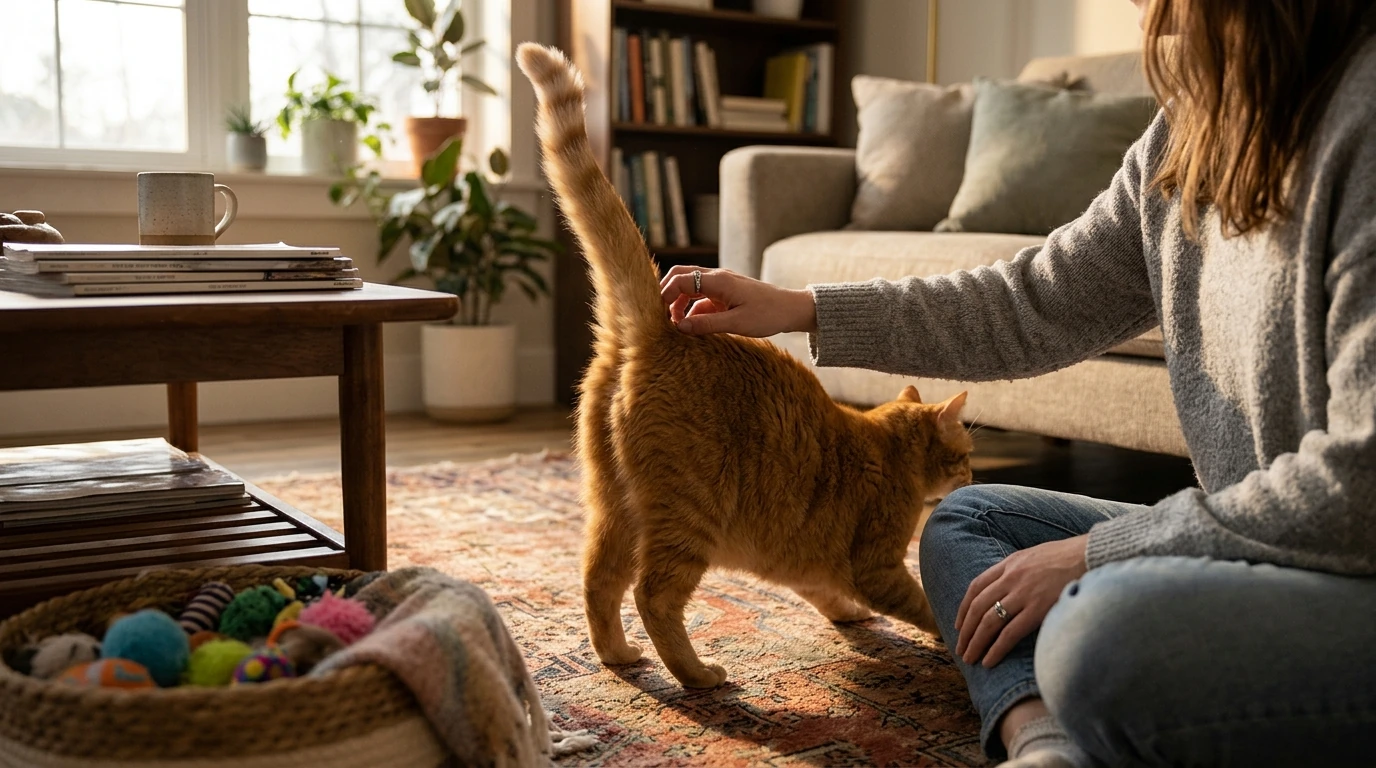
Why do cats raise their butts when you pet them?
When your cat lifts their rear as you stroke their back, they may be leaning into a sensation they enjoy. The area near the base of the tail is sensitive, and raising their hindquarters can bring it closer to your hand. For many cats, it is a relaxed, friendly response to familiar touch.
That raised-backside pose can also be part of feline social behavior. Cats greet one another by sniffing around the tail, so presenting that area to a trusted person may be a sign of comfort. Context matters, though: the rest of your cat’s body language tells you whether they want you to continue.
How can you tell if your cat enjoys it?
Look for a loose body, a gently raised tail, slow blinking, purring, or a cat that moves toward your hand. Your cat may rub against you or ask for another stroke when you pause. These signs suggest the interaction is welcome.
Pet gently along the back and pause before giving more attention near the tail. Every cat has preferences: some love a light scratch there, while others prefer strokes around the cheeks, chin, or shoulders. Let your cat approach and choose when to leave.
When should you stop petting?
Stop if your cat’s skin twitches, their tail lashes, their ears turn sideways or back, or they suddenly move away. A stiff body, growling, swatting, or biting can also signal discomfort or overstimulation. Give your cat space rather than trying to continue.
If your cat reacts painfully to touch, repeatedly licks or bites the area, has irritated skin, or shows a sudden change in behavior, contact your veterinarian. Fleas, skin irritation, or other medical issues can make the lower back uncomfortable.
Can a raised rear mean something else?
In an unspayed female cat, a lowered front end, raised hindquarters, and tail held to one side can be signs of heat, especially alongside loud vocalizing and increased affection. Your veterinarian can discuss spaying and help you recognize what is normal for your cat.
Getting to know these little habits is part of understanding your cat’s personality. For another way to celebrate what makes your companion unique, explore our guide to unique pet names.
FAQ
Why does my cat bite me after I pet them?
Your cat may be overstimulated, uncomfortable, or ready for the interaction to end. Watch for tail flicking or tense body language, and stop petting before your cat feels the need to bite.
Recommended for you



How Parents Can Help Their Child Thrive
Nov 7, 2026













Leave a comment