-
Shop
- Advanced Technologies
- AI Skills
- Bathroom
- Best-Sellers
- Car Accessories
- Confidence
- Dating & Social Skills
- Digital Resources
- AI & Technology
- Beauty
- Budgeting & Saving
- Car Buying & Ownership
- Cozy Feast Collection
- Electronics & Technology
- Entrepreneurship & Business Growth
- Financial Education
- Financial Independence
- Financial Mindset & Psychology
- Goal Setting
- Home Styling & Organization
- Kitchen & Recipes
- Leadership
- Mindfulness
- Mindset
- Online Business
- Parenting & Child Development
- Personal Style & Fashion
- Pet Lifestyle & Wellness
- Positive Thinking
- Sleep Improvement
- Smart Life with AI
- Stress Management & Relaxation
- Travel Planning
- Wellness
- Yoga & Fitness
- Yoga & Mind-Body Practices
- Education & Learning
- Family & Parenting
- Fashion
- Accessories
- Alexander McQueen
- Bags
- Bags & Wallets
- Balenciaga
- Belts
- Blazers
- Bottega Veneta
- Bottoms
- Brunello Cucinelli
- Burberry
- Chanel
- Chloé
- Dior
- Dolce & Gabbana
- Dresses
- Etro
- Fendi
- Gucci
- Hats & Hair Accessories
- Hoodies & Sweatshirts
- Jacquemus
- Jewelry
- Jil Sander
- Kiton
- Luggage
- Miu Miu
- Off-White
- Outerwear
- Prada
- Rick Owens
- Saint Laurent
- Shoes
- Socks & Tights
- Sweaters & Cardigans
- The Row
- Tom Ford
- Tops & Shirts
- Valentino
- Valentino Garavani
- Versace
- Vivienne Westwood
- Watches
- Fashion Accessories
- Furniture
- Gadgets
- Health & Beauty
- Health & Wellness
- Home & Garden
- Home Decor
- Home Electronics
- Home Supplies
- Kids & Babies
- Kitchen
- Kitchen Best-Sellers
- Lighting
- Patio, Lawn & Garden
- Personal Growth
- Pet Care
- Pet Supplies
- Pets
- Sport & Outdoors
- Super Deals
- Travel
- Travel & Adventure
- Wealth
- Popular
- Best deals
Fear of Judgment Phobia: Social Anxiety Explained

What phobia is fear of judgement?
The phobia most closely tied to fear of judgment is social anxiety disorder (also called social phobia). It’s characterized by an intense fear of being watched, evaluated, embarrassed, or rejected in social or performance situations—like speaking up in a meeting, making a phone call, eating in public, or even starting a conversation.
Some people use the phrase “fear of judgment” to describe a broader experience that isn’t always a formal diagnosis. But when that fear becomes persistent, feels out of proportion to the situation, and leads to avoidance or major distress, it fits the pattern of social anxiety.
Is there a specific “fear of being judged” name?
You may see terms like scopophobia (fear of being stared at) or gelotophobia (fear of being laughed at). These can overlap with fear of judgment, but they’re more specific. For many people, the central issue is the social-evaluation fear seen in social anxiety disorder.
What does fear of judgment commonly feel like?
It often shows up as racing thoughts (“They’ll think I’m awkward”), physical symptoms (blushing, sweating, shaky voice, nausea), and “safety behaviors” (over-preparing, staying quiet, avoiding eye contact). Over time, avoiding situations can make the fear feel even more convincing, because there’s less chance to learn that judgment is usually limited—or manageable.
When does it become a problem worth addressing?
Fear of judgment is worth addressing when it blocks opportunities, strains relationships, or keeps you from doing everyday tasks. If it’s interfering with work, school, dating, or friendships, building a plan for speaking up—step by step—can help reduce the grip it has.
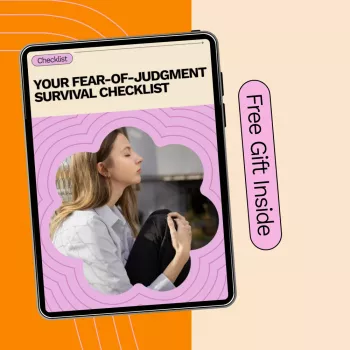
For a practical, quick way to assess what’s driving your fear and how to respond in the moment, see this guide: Fear of Judgment: A 10-Minute Checklist to Speak Up.
FAQ
How can you stop worrying about what others think?
Start by naming the specific fear (what you think will happen), then test it with small, repeatable actions like asking one question or sharing one opinion. Pair that with calming techniques (slow breathing, grounding) and focus on your goal rather than on guessing others’ reactions.















Leave a comment