-
Shop
- Advanced Technologies
- AI Skills
- Bathroom
- Best-Sellers
- Car Accessories
- Confidence
- Dating & Social Skills
- Digital Resources
- AI & Technology
- Beauty
- Budgeting & Saving
- Car Buying & Ownership
- Cozy Feast Collection
- Electronics & Technology
- Entrepreneurship & Business Growth
- Financial Education
- Financial Independence
- Financial Mindset & Psychology
- Goal Setting
- Home Styling & Organization
- Kitchen & Recipes
- Leadership
- Mindfulness
- Mindset
- Online Business
- Parenting & Child Development
- Personal Style & Fashion
- Pet Lifestyle & Wellness
- Positive Thinking
- Sleep Improvement
- Smart Life with AI
- Stress Management & Relaxation
- Travel Planning
- Wellness
- Yoga & Fitness
- Yoga & Mind-Body Practices
- Education & Learning
- Family & Parenting
- Fashion
- Accessories
- Alexander McQueen
- Bags
- Bags & Wallets
- Balenciaga
- Belts
- Blazers
- Bottega Veneta
- Bottoms
- Brunello Cucinelli
- Burberry
- Chanel
- Chloé
- Dior
- Dolce & Gabbana
- Dresses
- Etro
- Fendi
- Gucci
- Hats & Hair Accessories
- Hoodies & Sweatshirts
- Jacquemus
- Jewelry
- Jil Sander
- Kiton
- Luggage
- Miu Miu
- Off-White
- Outerwear
- Prada
- Rick Owens
- Saint Laurent
- Shoes
- Socks & Tights
- Sweaters & Cardigans
- The Row
- Tom Ford
- Tops & Shirts
- Valentino
- Valentino Garavani
- Versace
- Vivienne Westwood
- Watches
- Fashion Accessories
- Furniture
- Gadgets
- Health & Beauty
- Health & Wellness
- Home & Garden
- Home Decor
- Home Electronics
- Home Supplies
- Kids & Babies
- Kitchen
- Kitchen Best-Sellers
- Lighting
- Patio, Lawn & Garden
- Personal Growth
- Pet Care
- Pet Supplies
- Pets
- Sport & Outdoors
- Super Deals
- Travel
- Travel & Adventure
- Wealth
- Popular
- Best deals
Console Table Rules: Ideal Size, Spacing, and Styling
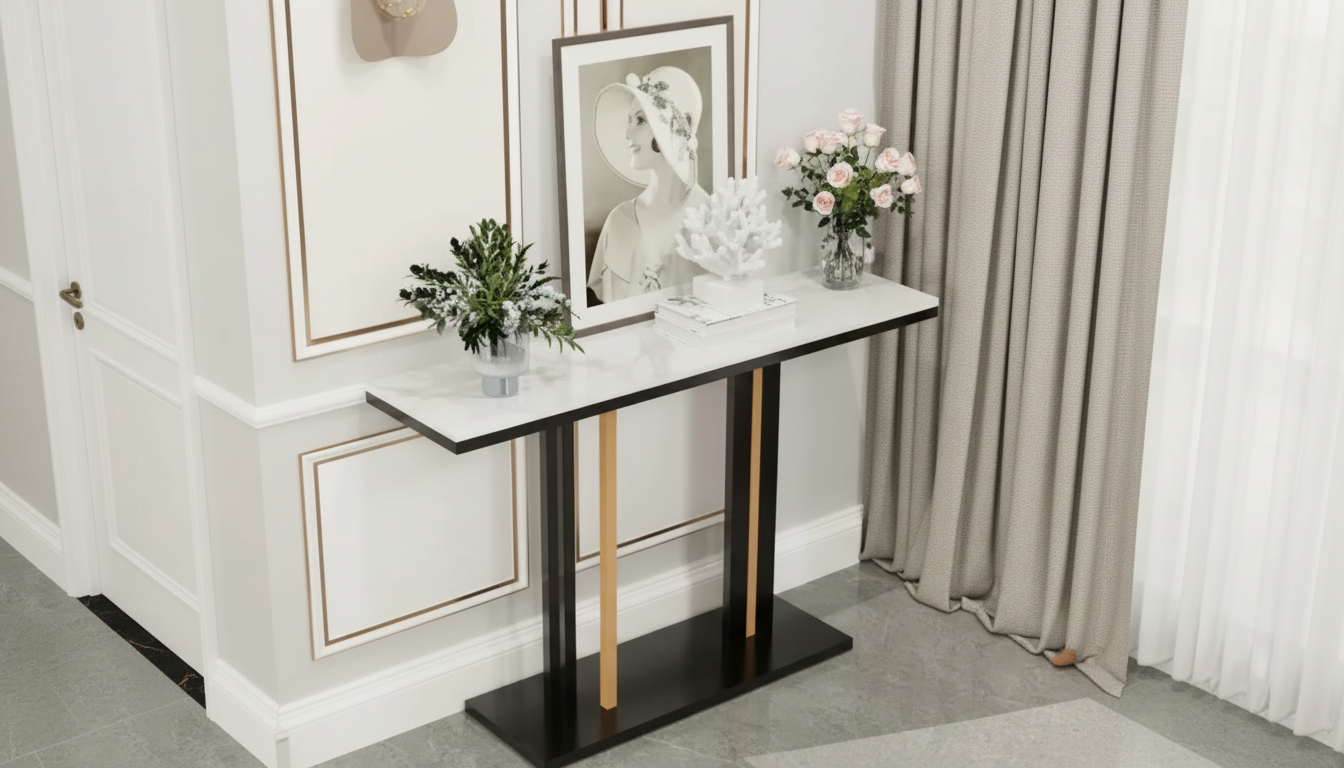
What is the rule for a console table?
The “rule” for a console table is really a set of practical proportions that keep the piece looking intentional and functioning well in a room. Start with placement: a console table should feel like it belongs to the wall, sofa back, or entry area it’s serving—close enough to read as a pairing, but not so tight that it snags traffic flow.
Size and proportion guidelines
As a general guideline, choose a console table that’s roughly two-thirds the width of the furniture or wall section it sits with (like behind a sofa or under a mirror). Height matters too: behind a sofa, the tabletop typically looks best at or slightly below the sofa back; under wall art, leave enough breathing room so the arrangement doesn’t feel cramped.
Spacing and walkways
In entryways and hallways, the “rule” is clearance. A slim depth helps—many console tables work well when they don’t protrude too far into the path. Aim to preserve comfortable walking space so doors can swing freely and people can pass without turning sideways.
Styling: balance over clutter
Decor should add function or visual balance, not chaos. A common approach is to anchor one side with height (a lamp or tall vase), add a middle element (a tray or books), and finish with something personal (a small sculpture or bowl for keys). Keep a little open surface visible so the table still feels like furniture, not a shelf.
For more detailed sizing tips, placement examples, and styling ideas for different rooms, visit the main guide on console table rules.
For Console Table Rules: Ideal Size, Spacing, and Styling, the best answer depends on fit, material, care instructions, and how the product will be used day to day.
FAQ
How do you style a console table for an entryway?
Use a practical catch-all (tray or bowl), add lighting or a mirror for function, and include one or two decorative pieces for personality. Keep the center area relatively clear so it stays useful for daily drop-offs.
Recommended for you

Stripe vs PayPal vs Square: Which Is Best for You?
Jul 17, 2026












Leave a comment