-
Shop
- Advanced Technologies
- AI Skills
- Bathroom
- Best-Sellers
- Car Accessories
- Confidence
- Dating & Social Skills
- Digital Resources
- AI & Technology
- Beauty
- Budgeting & Saving
- Car Buying & Ownership
- Cozy Feast Collection
- Electronics & Technology
- Entrepreneurship & Business Growth
- Financial Education
- Financial Independence
- Financial Mindset & Psychology
- Goal Setting
- Home Styling & Organization
- Kitchen & Recipes
- Leadership
- Mindfulness
- Mindset
- Online Business
- Parenting & Child Development
- Personal Style & Fashion
- Pet Lifestyle & Wellness
- Positive Thinking
- Sleep Improvement
- Smart Life with AI
- Stress Management & Relaxation
- Travel Planning
- Wellness
- Yoga & Fitness
- Yoga & Mind-Body Practices
- Education & Learning
- Family & Parenting
- Fashion
- Accessories
- Alexander McQueen
- Bags
- Bags & Wallets
- Balenciaga
- Belts
- Blazers
- Bottega Veneta
- Bottoms
- Brunello Cucinelli
- Burberry
- Chanel
- Chloé
- Dior
- Dolce & Gabbana
- Dresses
- Etro
- Fendi
- Gucci
- Hats & Hair Accessories
- Hoodies & Sweatshirts
- Jacquemus
- Jewelry
- Jil Sander
- Kiton
- Luggage
- Miu Miu
- Off-White
- Outerwear
- Prada
- Rick Owens
- Saint Laurent
- Shoes
- Socks & Tights
- Sweaters & Cardigans
- The Row
- Tom Ford
- Tops & Shirts
- Valentino
- Valentino Garavani
- Versace
- Vivienne Westwood
- Watches
- Fashion Accessories
- Furniture
- Gadgets
- Health & Beauty
- Health & Wellness
- Home & Garden
- Home Decor
- Home Electronics
- Home Supplies
- Kids & Babies
- Kitchen
- Kitchen Best-Sellers
- Lighting
- Patio, Lawn & Garden
- Personal Growth
- Pet Care
- Pet Supplies
- Pets
- Sport & Outdoors
- Super Deals
- Travel
- Travel & Adventure
- Wealth
- Popular
- Best deals
What Happens If You Unplug a Coolant Temperature Sensor?

What happens if I unplug my coolant temperature sensor?
Unplugging the engine coolant temperature sensor removes a temperature signal the engine control module uses to manage the engine. Depending on your vehicle, the module may substitute a default temperature, turn on the check engine light, and store a diagnostic trouble code. You may also notice changes in how the engine starts, idles, or runs.
The sensor does not cool the engine itself, but its signal can affect systems that do. Some vehicles may run the cooling fan continuously as a precaution; others behave differently. You should not rely on the fan or temperature gauge to respond normally with the sensor disconnected.
Can you drive with the sensor unplugged?
We do not recommend driving with the coolant temperature sensor unplugged as a workaround. An inaccurate or missing signal can cause poor fuel economy, rough running, hard starts, or higher emissions. It may also make it harder to recognize an overheating problem, especially if your vehicle uses that signal for its temperature display or warning system.
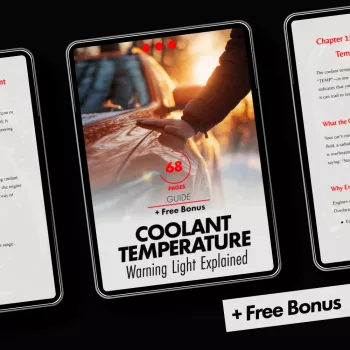
If the engine is overheating, pull over safely, shut it off, and let it cool. Do not remove the radiator cap while the cooling system is hot or pressurized. For more guidance on warning signs and next steps, read our coolant temperature warning light guide.
What should you do instead?
If you disconnected the sensor, reconnect it with the ignition off and make sure the connector locks securely. Look for damaged wiring, corrosion, or a loose connection. If the check engine light remains on or the engine still runs poorly, have the trouble codes read and the cooling system diagnosed rather than replacing parts based on the warning light alone.
When a replacement sensor is needed, choose one made for your vehicle’s year, make, model, and engine. Our team recommends using the correct connector and following the vehicle manufacturer’s installation procedure, since sensor locations and cooling-system requirements vary. Some sensor replacements can release coolant, so let the engine cool completely before any work begins.
FAQ
Can a bad coolant temperature sensor cause hard starting?
Yes. A faulty sensor can send an incorrect temperature reading, causing the engine control module to use an unsuitable fuel mixture during startup.
Recommended for you


How Long Does a Coolant Temperature Sensor Last?
Nov 5, 2026













Leave a comment