-
Shop
- Advanced Technologies
- AI Skills
- Bathroom
- Best-Sellers
- Car Accessories
- Confidence
- Dating & Social Skills
- Digital Resources
- AI & Technology
- Beauty
- Budgeting & Saving
- Car Buying & Ownership
- Cozy Feast Collection
- Electronics & Technology
- Entrepreneurship & Business Growth
- Financial Education
- Financial Independence
- Financial Mindset & Psychology
- Goal Setting
- Home Styling & Organization
- Kitchen & Recipes
- Leadership
- Mindfulness
- Mindset
- Online Business
- Parenting & Child Development
- Personal Style & Fashion
- Pet Lifestyle & Wellness
- Positive Thinking
- Sleep Improvement
- Smart Life with AI
- Stress Management & Relaxation
- Travel Planning
- Wellness
- Yoga & Fitness
- Yoga & Mind-Body Practices
- Education & Learning
- Family & Parenting
- Fashion
- Accessories
- Alexander McQueen
- Bags
- Bags & Wallets
- Balenciaga
- Belts
- Blazers
- Bottega Veneta
- Bottoms
- Brunello Cucinelli
- Burberry
- Chanel
- Chloé
- Dior
- Dolce & Gabbana
- Dresses
- Etro
- Fendi
- Gucci
- Hats & Hair Accessories
- Hoodies & Sweatshirts
- Jacquemus
- Jewelry
- Jil Sander
- Kiton
- Luggage
- Miu Miu
- Off-White
- Outerwear
- Prada
- Rick Owens
- Saint Laurent
- Shoes
- Socks & Tights
- Sweaters & Cardigans
- The Row
- Tom Ford
- Tops & Shirts
- Valentino
- Valentino Garavani
- Versace
- Vivienne Westwood
- Watches
- Fashion Accessories
- Furniture
- Gadgets
- Health & Beauty
- Health & Wellness
- Home & Garden
- Home Decor
- Home Electronics
- Home Supplies
- Kids & Babies
- Kitchen
- Kitchen Best-Sellers
- Lighting
- Patio, Lawn & Garden
- Personal Growth
- Pet Care
- Pet Supplies
- Pets
- Sport & Outdoors
- Super Deals
- Travel
- Travel & Adventure
- Wealth
- Popular
- Best deals
What Does Fear of Judgement Mean? Signs and Next Steps

What does fear of judgment mean?
Fear of judgment means worrying that other people will evaluate you negatively. You may expect them to criticize what you say, reject a choice you make, or notice a mistake. The feeling can arise before a conversation, during a meeting, or even after an interaction that seemed to go well.
Most of us care what others think sometimes. Fear of judgment becomes more disruptive when that concern repeatedly stops you from speaking, asking for help, trying something new, or sharing an honest opinion. You may find yourself rehearsing every sentence, apologizing when you have done nothing wrong, or replaying a small comment for hours.
What can you do when the feeling shows up?
Start by naming the specific prediction behind the fear: “They’ll think my question is foolish,” for example. Then separate what you know from what you are guessing. You cannot control every reaction, but you can decide what you want to communicate and take one manageable step toward saying it.
Keep that step small enough to practice. You might ask one question, offer a brief opinion, or tell a trusted person what you need. Afterward, note what actually happened rather than judging the attempt solely by how anxious you felt. Speaking while nervous still counts as speaking up.
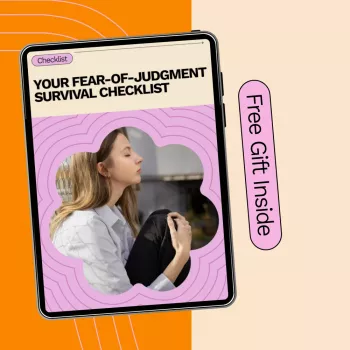
Our 10-minute checklist for speaking up when you fear judgment gives you a short way to prepare before a moment that matters. You can use it to clarify your message and choose a first step without waiting to feel perfectly confident.
What kind of support is useful?
If you prefer to work through your thoughts on paper, a guided journal with short prompts may be easier to use consistently than an open-ended notebook. Look for prompts that help you record your prediction, your action, and the outcome; those three details can make patterns easier to notice. A simple note on your phone works, too. The useful tool is the one you will return to.
When fear of judgment regularly limits your relationships, work, or daily life, consider talking with a mental health professional. You do not have to manage a persistent fear on your own.
FAQ
How can you tell whether fear of judgment is holding you back?
Notice whether worry about other people’s opinions repeatedly changes what you say or keeps you from taking actions you value. A single nervous moment is common; a recurring pattern that limits your choices deserves attention.
Recommended for you


Best Tops to Wear Under Cardigans for Any Look
Oct 22, 2026
How to Deal With Being Judged by Others
Oct 22, 2026













Leave a comment