-
Shop
- Advanced Technologies
- AI Skills
- Bathroom
- Best-Sellers
- Car Accessories
- Confidence
- Dating & Social Skills
- Digital Resources
- AI & Technology
- Beauty
- Budgeting & Saving
- Car Buying & Ownership
- Cozy Feast Collection
- Electronics & Technology
- Entrepreneurship & Business Growth
- Financial Education
- Financial Independence
- Financial Mindset & Psychology
- Goal Setting
- Home Styling & Organization
- Kitchen & Recipes
- Leadership
- Mindfulness
- Mindset
- Online Business
- Parenting & Child Development
- Personal Style & Fashion
- Pet Lifestyle & Wellness
- Positive Thinking
- Sleep Improvement
- Smart Life with AI
- Stress Management & Relaxation
- Travel Planning
- Wellness
- Yoga & Fitness
- Yoga & Mind-Body Practices
- Education & Learning
- Family & Parenting
- Fashion
- Accessories
- Alexander McQueen
- Bags
- Bags & Wallets
- Balenciaga
- Belts
- Blazers
- Bottega Veneta
- Bottoms
- Brunello Cucinelli
- Burberry
- Chanel
- Chloé
- Dior
- Dolce & Gabbana
- Dresses
- Etro
- Fendi
- Gucci
- Hats & Hair Accessories
- Hoodies & Sweatshirts
- Jacquemus
- Jewelry
- Jil Sander
- Kiton
- Luggage
- Miu Miu
- Off-White
- Outerwear
- Prada
- Rick Owens
- Saint Laurent
- Shoes
- Socks & Tights
- Sweaters & Cardigans
- The Row
- Tom Ford
- Tops & Shirts
- Valentino
- Valentino Garavani
- Versace
- Vivienne Westwood
- Watches
- Fashion Accessories
- Furniture
- Gadgets
- Health & Beauty
- Health & Wellness
- Home & Garden
- Home Decor
- Home Electronics
- Home Supplies
- Kids & Babies
- Kitchen
- Kitchen Best-Sellers
- Lighting
- Patio, Lawn & Garden
- Personal Growth
- Pet Care
- Pet Supplies
- Pets
- Sport & Outdoors
- Super Deals
- Travel
- Travel & Adventure
- Wealth
- Popular
- Best deals
Build vs Buy a Cat Tree: Which Saves More Money?
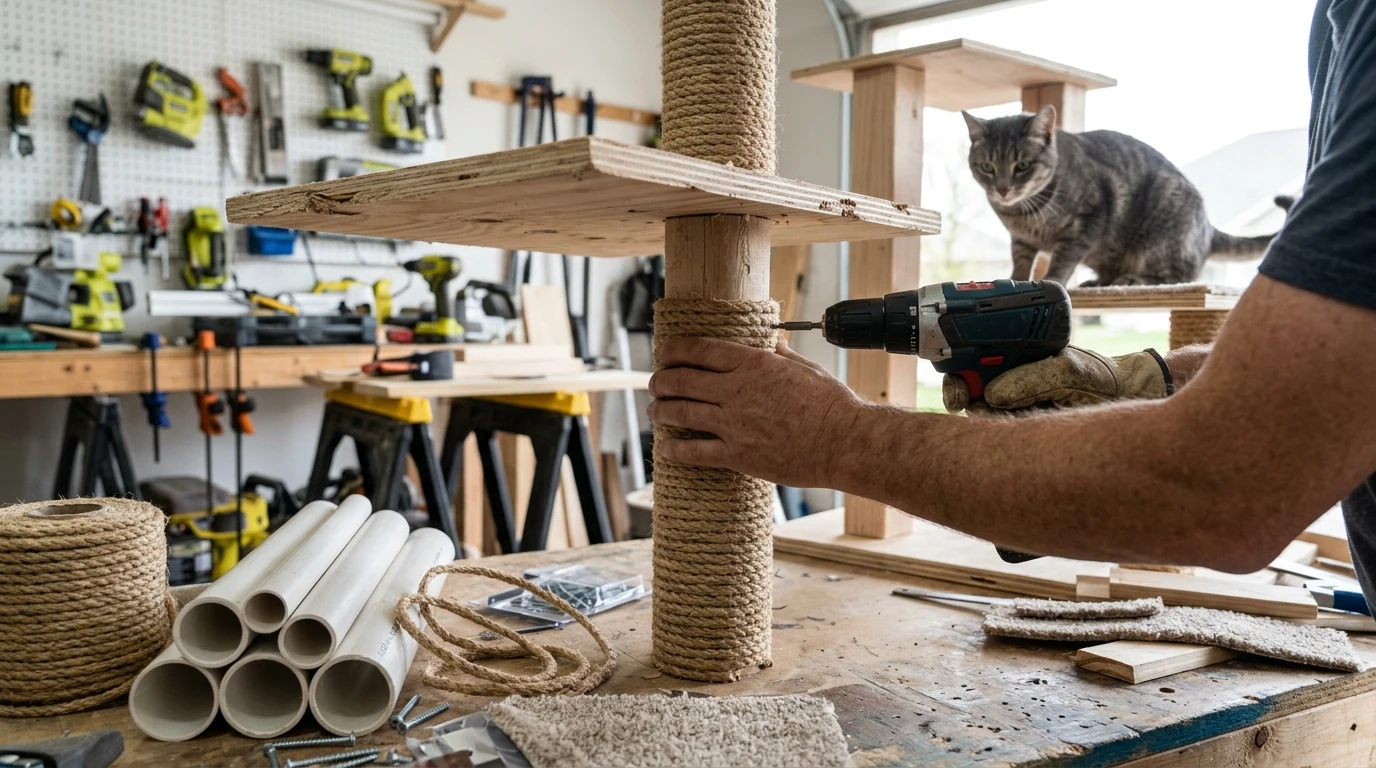
Is It Cheaper to Build or Buy a Cat Tree?
For most homes, it’s cheaper to buy a cat tree than to build one from scratch—especially once you add up wood, sisal rope, carpet or plush, fasteners, tools, and the time it takes to measure, cut, wrap, and assemble everything safely. Building can cost less only when you already own the tools and can source materials at a steep discount or reuse lumber and fabric you already have.
When Buying a Cat Tree Usually Costs Less
Pre-made cat trees benefit from bulk materials and streamlined manufacturing, so the per-platform cost is typically lower than a DIY build. You also avoid buying extra supplies you’ll rarely use again (like staple guns, heavy-duty screws, corner braces, and adhesives). If you want a multi-level layout with multiple perches, a condo, and scratching surfaces, buying is often the more budget-friendly option.
When Building Can Be Cheaper
DIY can win on price if you keep the design simple: one sturdy base, one or two posts, and a couple platforms. It can also be cheaper if you’re repurposing plywood, leftover carpet, or an old floor mat, and you already have a saw and drill. The biggest savings come from avoiding premium coverings and keeping height modest while still stable.
Cost Isn’t Everything: Safety and Stability Matter
Whether you build or buy, stability is the non-negotiable. A tall tree needs a wide, heavy base and secure fasteners so it doesn’t sway or tip when your cat launches upward. If you DIY, avoid particleboard that crumbles at screw points, use thick posts, and tightly wrap sisal so claws don’t snag on loose strands.
Our Team’s Practical Recommendation
If you want a reliable multi-level setup with scratch-friendly sisal and jump platforms, buying is usually the best value and fastest path to daily use. If you’re comparing options, our team recommends starting with a clear feature list—levels, scratch zones, perch sizes, and base footprint—then matching it to your space and cat’s activity level. For a helpful reference point, see our guide here: 5-layer cat tree with sisal scratching post and jump platforms.
FAQ
What materials are best for a durable scratching post?
Natural sisal rope is a top choice because it holds up to repeated scratching and provides a satisfying texture. A solid wood core and tight wrapping help prevent wobble and fraying.
















Leave a comment