-
Shop
- Advanced Technologies
- AI Skills
- Bathroom
- Best-Sellers
- Car Accessories
- Confidence
- Dating & Social Skills
- Digital Resources
- AI & Technology
- Beauty
- Budgeting & Saving
- Car Buying & Ownership
- Cozy Feast Collection
- Electronics & Technology
- Entrepreneurship & Business Growth
- Financial Education
- Financial Independence
- Financial Mindset & Psychology
- Goal Setting
- Home Styling & Organization
- Kitchen & Recipes
- Leadership
- Mindfulness
- Mindset
- Online Business
- Parenting & Child Development
- Personal Style & Fashion
- Pet Lifestyle & Wellness
- Positive Thinking
- Sleep Improvement
- Smart Life with AI
- Stress Management & Relaxation
- Travel Planning
- Wellness
- Yoga & Fitness
- Yoga & Mind-Body Practices
- Education & Learning
- Family & Parenting
- Fashion
- Accessories
- Alexander McQueen
- Bags
- Bags & Wallets
- Balenciaga
- Belts
- Blazers
- Bottega Veneta
- Bottoms
- Brunello Cucinelli
- Burberry
- Chanel
- Chloé
- Dior
- Dolce & Gabbana
- Dresses
- Etro
- Fendi
- Gucci
- Hats & Hair Accessories
- Hoodies & Sweatshirts
- Jacquemus
- Jewelry
- Jil Sander
- Kiton
- Luggage
- Miu Miu
- Off-White
- Outerwear
- Prada
- Rick Owens
- Saint Laurent
- Shoes
- Socks & Tights
- Sweaters & Cardigans
- The Row
- Tom Ford
- Tops & Shirts
- Valentino
- Valentino Garavani
- Versace
- Vivienne Westwood
- Watches
- Fashion Accessories
- Furniture
- Gadgets
- Health & Beauty
- Health & Wellness
- Home & Garden
- Home Decor
- Home Electronics
- Home Supplies
- Kids & Babies
- Kitchen
- Kitchen Best-Sellers
- Lighting
- Patio, Lawn & Garden
- Personal Growth
- Pet Care
- Pet Supplies
- Pets
- Sport & Outdoors
- Super Deals
- Travel
- Travel & Adventure
- Wealth
- Popular
- Best deals
How to Make a Morning Routine List That Works
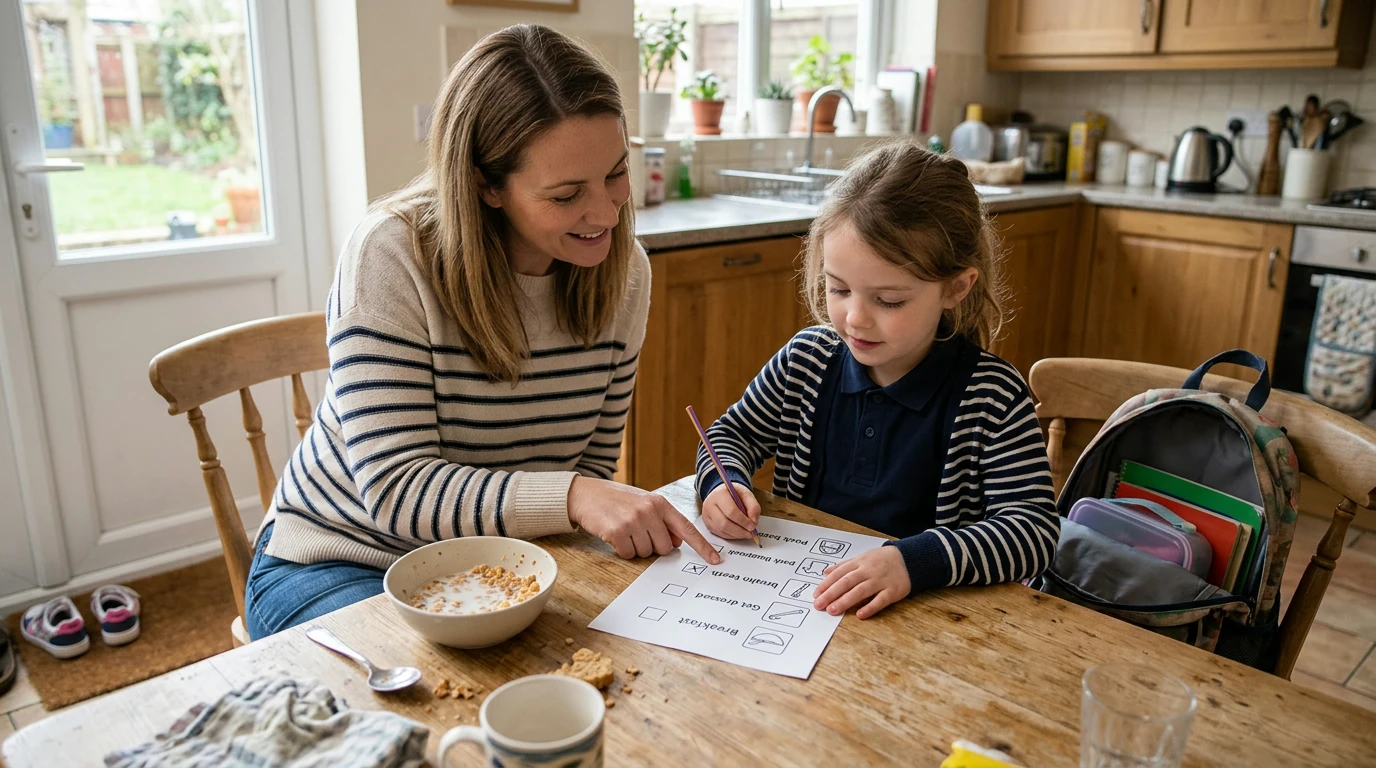
How to make a morning routine list?
Start by writing down what must happen between waking up and leaving home. Put those tasks in the order you’ll do them, then give each one a realistic amount of time. A useful list is short enough to follow on a busy morning and flexible enough to adjust when plans change.
If you’re creating a list for a child, involve them in choosing the steps. Simple wording and a predictable order can help them know what comes next without needing a reminder for every task.
What should you put on your list?
Begin with the essentials, then add extras only if there’s time. Your list might include:
- Wake up and use the bathroom.
- Get dressed.
- Eat breakfast and drink water.
- Brush teeth and wash up.
- Pack a bag, lunch, and any needed items.
- Put on shoes and get ready to leave.
Adapt the order to your household. For example, you might prefer breakfast before getting dressed, especially if spills are common. Add a specific reminder for anything that is easy to forget, such as a library book or homework folder.
How can you make the routine easier to follow?
Work backward from the time you need to leave. Estimate how long each step takes, and leave a small buffer for unexpected delays. If the list feels rushed, move a task to the evening, such as choosing clothes or packing a backpack.
For younger children, use pictures alongside a few words and place the list where they can see it. A dry-erase board or reusable checklist makes it easy to mark each step and reset for the next day. Older children may prefer a paper list, a planner, or reminders on a device.
Try the routine for a few mornings before changing it. Notice where your family gets stuck, then shorten, reorder, or break down that step. Our team recommends keeping the goal practical: a calmer start, not a perfectly timed morning.
For more ideas tailored to families, explore our guide to creating a morning routine checklist for kids.
FAQ
How can you help a child remember their morning routine?
Place a simple checklist at your child’s eye level and use pictures for steps they cannot yet read. Practice the routine together and let them mark off each completed task.
Recommended for you


Best Morning Routine App for Kids: What to Look For
Nov 20, 2026
Introducing Your Dog to a Newborn: A Safety Guide
Nov 20, 2026













Leave a comment