-
Shop
- Advanced Technologies
- AI Skills
- Bathroom
- Best-Sellers
- Car Accessories
- Confidence
- Dating & Social Skills
- Digital Resources
- AI & Technology
- Beauty
- Budgeting & Saving
- Car Buying & Ownership
- Cozy Feast Collection
- Electronics & Technology
- Entrepreneurship & Business Growth
- Financial Education
- Financial Independence
- Financial Mindset & Psychology
- Goal Setting
- Home Styling & Organization
- Kitchen & Recipes
- Leadership
- Mindfulness
- Mindset
- Online Business
- Parenting & Child Development
- Personal Style & Fashion
- Pet Lifestyle & Wellness
- Positive Thinking
- Sleep Improvement
- Smart Life with AI
- Stress Management & Relaxation
- Travel Planning
- Wellness
- Yoga & Fitness
- Yoga & Mind-Body Practices
- Education & Learning
- Family & Parenting
- Fashion
- Accessories
- Alexander McQueen
- Bags
- Bags & Wallets
- Balenciaga
- Belts
- Blazers
- Bottega Veneta
- Bottoms
- Brunello Cucinelli
- Burberry
- Chanel
- Chloé
- Dior
- Dolce & Gabbana
- Dresses
- Etro
- Fendi
- Gucci
- Hats & Hair Accessories
- Hoodies & Sweatshirts
- Jacquemus
- Jewelry
- Jil Sander
- Kiton
- Luggage
- Miu Miu
- Off-White
- Outerwear
- Prada
- Rick Owens
- Saint Laurent
- Shoes
- Socks & Tights
- Sweaters & Cardigans
- The Row
- Tom Ford
- Tops & Shirts
- Valentino
- Valentino Garavani
- Versace
- Vivienne Westwood
- Watches
- Fashion Accessories
- Furniture
- Gadgets
- Health & Beauty
- Health & Wellness
- Home & Garden
- Home Decor
- Home Electronics
- Home Supplies
- Kids & Babies
- Kitchen
- Kitchen Best-Sellers
- Lighting
- Patio, Lawn & Garden
- Personal Growth
- Pet Care
- Pet Supplies
- Pets
- Sport & Outdoors
- Super Deals
- Travel
- Travel & Adventure
- Wealth
- Popular
- Best deals
Toddler Confidence: Signs, Scripts, and a 7-Day Plan
What Self-Confidence Looks Like in Toddlers
Toddler self-confidence isn’t loud or constant—it’s often quiet and practical. It looks like curiosity, a willingness to try, and the ability to explore while “checking back” with a trusted caregiver for reassurance. A confident toddler may still cry, cling, or melt down; big feelings are age-appropriate and don’t erase progress.
Encouraging signs to nurture include attempting new skills, using words (or gestures) to ask for help, recovering after frustration, and showing pride in an “I did it” moment. Common confidence blockers are subtle but powerful: rushing, saying “no” frequently without alternatives, correcting every attempt, or comparing a child to siblings or peers.
| Situation | Confidence-leaning signs | Overwhelm-leaning signs | Helpful caregiver response |
|---|---|---|---|
| Trying a new puzzle | Keeps experimenting, asks for a hint | Throws pieces, avoids looking | Break it into 1–2 piece goals; model once, then pause |
| Getting dressed | Attempts sleeves/buttons, tolerates mistakes | Cries, stiffens, refuses clothing | Offer two outfit choices; do the first step together |
| At the playground | Climbs with checks for safety, returns to caregiver briefly | Clings, freezes, or bolts unsafely | Stay close; narrate steps; practice one small challenge repeatedly |
| When corrected | Tries again after a short protest | Shuts down, screams, or hits | Validate feeling; give a simple redo: “Let’s try again—gentle hands.” |
A Step-by-Step Foundation: Connection, Clarity, Consistency
Confidence grows fastest when a toddler feels safe, understood, and guided by predictable limits. A simple foundation helps: connection first, then clarity, then consistency.
1) Start with connection
Before giving a direction, offer a brief “bridge” of attention: eye contact, saying their name, a gentle touch, or a 10-second playful moment. This reduces resistance because the toddler feels seen before being guided.
2) Use clarity toddlers can follow
Swap broad warnings for specific cues. “Feet on the floor” is easier to follow than “Be careful.” “Hands stay on the table” lands better than “Stop that.” Clear language supports self-control—an important ingredient of confidence.
3) Build consistency with a few repeatable rules
Toddlers don’t relax into brave behavior when the “rules” change hourly. Pick a small set of steady expectations (gentle hands, safe feet, food stays on the table) and keep daily routines predictable. A warm-and-firm approach—empathy plus boundaries—teaches that feelings are safe and limits are steady.
Positive Communication That Builds Confidence
Confidence isn’t built through nonstop praise. It’s built through feedback that helps a toddler understand their own effort, strategies, and progress.
- Use descriptive feedback: “You kept trying even when it was hard.” This highlights persistence rather than “being good.”
- Try when/then language: “When toys are in the bin, then we read a book.” This reduces power struggles and keeps you out of long debates.
- Offer short, real choices: “Blue cup or green cup?” Limit choices to two acceptable options, and skip “fake choices” you can’t actually allow.
- Coach emotional language: “You’re mad the block fell. Mad is okay. Hands stay gentle.” Feelings can be accepted while behavior is guided.
- Model repair: “Oops—let’s fix it.” A toddler who learns repair learns that mistakes aren’t dangerous to connection.
Play-Based Learning: Practice Confidence Without Pressure
Play is a low-stakes training ground for confidence because it lets toddlers rehearse challenges with emotional safety. The goal is “practice,” not performance.
- Role-play with stuffed animals: Act out sharing, waiting, or a doctor visit. Let your toddler be the helper who “coaches” the bear.
- Create just-right challenges: Add one small stretch beyond current skill (one more block, one more step up), then repeat that same mini-challenge across days.
- Choose open-ended materials: Blocks, play dough, crayons, and pretend play reward experimentation instead of “right answers.”
- Narrate instead of directing: “You put the big block on top.” Describing builds attention and confidence without taking over.
- Use cooperative games: Roll a ball back and forth, build a “together tower,” or take turns adding pieces—simple ways to build social confidence.
Independence in Daily Routines (The Confidence Engine)
Handling Setbacks: Tantrums, Shyness, and “No!”
If challenges spike, check patterns first: hunger, tiredness, overstimulation, or too many transitions can mimic “behavior problems.” For developmental guidance and realistic expectations, see the CDC’s Positive Parenting Tips and resources from the American Academy of Pediatrics. For a broader look at resilience principles, the American Psychological Association offers helpful framing.
A Simple 7-Day Confidence Routine
Practical eBook Support for Everyday Confidence-Building
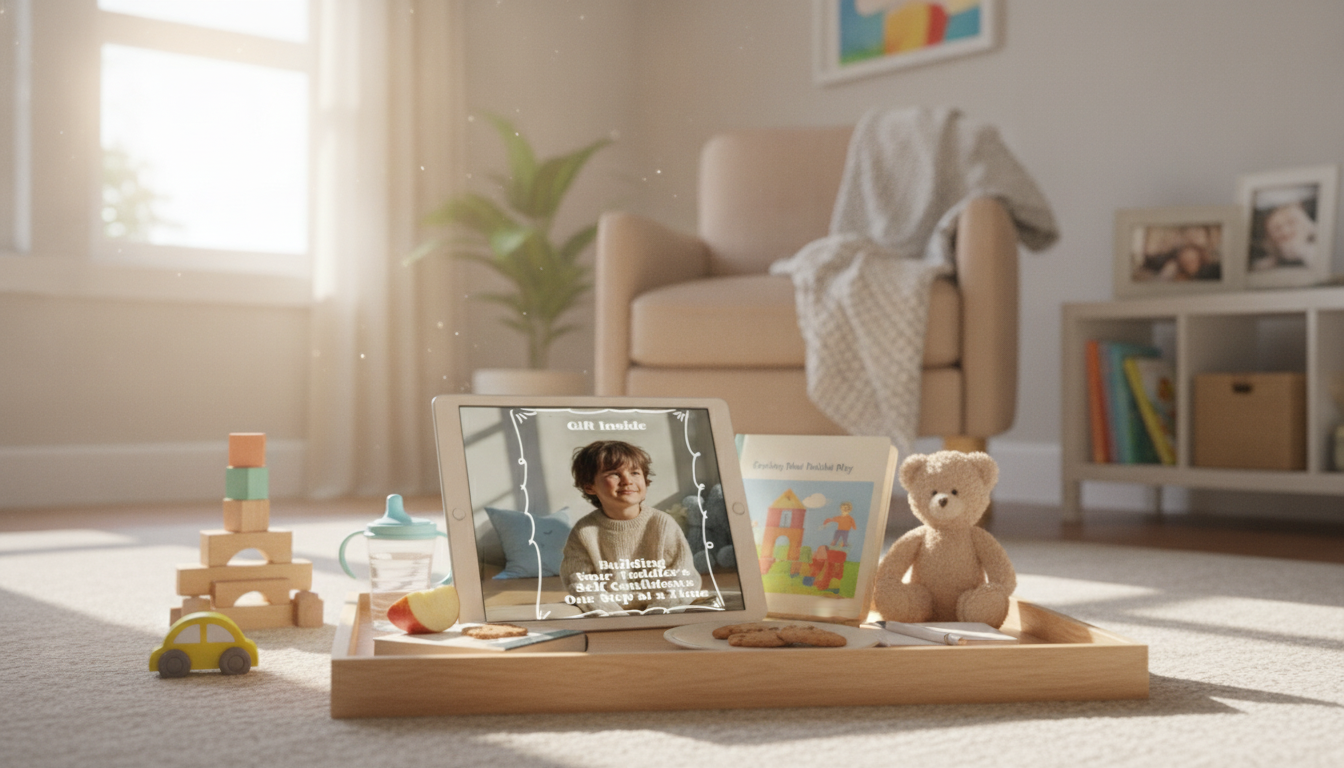
When days are busy, structure helps. A step-by-step guide can turn “I know what to do” into repeatable routines, with scripts for common moments like getting dressed, leaving the playground, or recovering after a spill. If you want a practical, everyday framework focused on positive communication, play-based learning, and independence-building, consider Building Your Toddler’s Self-Confidence One Step at a Time (eBook).
If you’re also balancing work or a side project and need streamlined systems, these in-stock digital resources may help support your routines overall: AI for Small Business Toolkit – 5-in-1 Digital Download Bundle and Choosing the Right Payment Solution for Your Business: Stripe vs Square Which Is Better (eBook).
FAQ
How can confidence be built without overpraising?
Use descriptive feedback about effort and strategies: point out what your toddler did (“You kept stacking even when it fell”) rather than labeling them (“You’re the best”). This helps them trust their own process, not chase approval.
What if a toddler refuses to try new things?
Lower the challenge to a tiny first step, offer close support, and repeat the same small task across several days. Pair attempts with connection and predictable routines so “trying” feels safe, not pressured.
Does giving choices create more defiance?
Choices reduce defiance when they’re limited and real (two acceptable options) and paired with clear boundaries. Too many options—or choices you can’t truly allow—often increases frustration.
Recommended for you


Grain of Rice Cat Paw Personality: Traits & Behavior
Jun 21, 2026













Leave a comment