-
Shop
- Advanced Technologies
- AI Skills
- Bathroom
- Best-Sellers
- Car Accessories
- Confidence
- Dating & Social Skills
- Digital Resources
- AI & Technology
- Beauty
- Budgeting & Saving
- Car Buying & Ownership
- Cozy Feast Collection
- Electronics & Technology
- Entrepreneurship & Business Growth
- Financial Education
- Financial Independence
- Financial Mindset & Psychology
- Goal Setting
- Home Styling & Organization
- Kitchen & Recipes
- Leadership
- Mindfulness
- Mindset
- Online Business
- Parenting & Child Development
- Personal Style & Fashion
- Pet Lifestyle & Wellness
- Positive Thinking
- Sleep Improvement
- Smart Life with AI
- Stress Management & Relaxation
- Travel Planning
- Wellness
- Yoga & Fitness
- Yoga & Mind-Body Practices
- Education & Learning
- Family & Parenting
- Fashion
- Accessories
- Alexander McQueen
- Bags
- Bags & Wallets
- Balenciaga
- Belts
- Blazers
- Bottega Veneta
- Bottoms
- Brunello Cucinelli
- Burberry
- Chanel
- Chloé
- Dior
- Dolce & Gabbana
- Dresses
- Etro
- Fendi
- Gucci
- Hats & Hair Accessories
- Hoodies & Sweatshirts
- Jacquemus
- Jewelry
- Jil Sander
- Kiton
- Luggage
- Miu Miu
- Off-White
- Outerwear
- Prada
- Rick Owens
- Saint Laurent
- Shoes
- Socks & Tights
- Sweaters & Cardigans
- The Row
- Tom Ford
- Tops & Shirts
- Valentino
- Valentino Garavani
- Versace
- Vivienne Westwood
- Watches
- Fashion Accessories
- Furniture
- Gadgets
- Health & Beauty
- Health & Wellness
- Home & Garden
- Home Decor
- Home Electronics
- Home Supplies
- Kids & Babies
- Kitchen
- Kitchen Best-Sellers
- Lighting
- Patio, Lawn & Garden
- Personal Growth
- Pet Care
- Pet Supplies
- Pets
- Sport & Outdoors
- Super Deals
- Travel
- Travel & Adventure
- Wealth
- Popular
- Best deals
How to Support Someone With Low Self-Esteem & Depression

Introduction
When someone lives with low self-esteem and depression, encouragement alone can feel like pressure, and silence can feel like abandonment. Support that helps most is steady, respectful, and specific: listening without trying to “fix,” offering small doable options, and knowing when to bring in professional help. This guide organizes concrete ways to show up—day to day, during hard moments, and over the long haul—while protecting your own boundaries and wellbeing.
Understanding the overlap: low self-esteem and depression
Low self-esteem and depression often reinforce each other. Depression can drain energy and motivation, while low self-esteem supplies the “evidence” the depressed mind wants to find: harsh self-criticism, hopeless predictions, and selective attention to failures. Over time, a person may start to treat painful thoughts as facts rather than symptoms.
Common signs include withdrawal, fatigue, irritability, loss of interest, sleep or appetite changes, increased reassurance-seeking, and self-deprecating jokes that hide real distress. If you’re noticing these patterns, the most helpful lens is not “How do I make them feel better right now?” but “How do I increase safety, connection, and small actions?” For a clinical overview of depression symptoms and treatment, see the National Institute of Mental Health.
“Just be confident” backfires because it can sound like, “Your struggle is a choice,” which deepens shame and isolation. Instead, aim for grounded support that makes today slightly more survivable and tomorrow slightly easier.
How to talk so they feel seen (without rescuing or minimizing)
Start with permission. Before offering advice, ask what kind of support they want: listening, comfort, distraction, or help thinking through options. This reduces the risk of turning the conversation into a debate about feelings.
Use reflecting statements that name both emotion and meaning: “That sounds exhausting,” “It makes sense you’d feel stuck,” or “You’ve been carrying a lot alone.” Validation isn’t agreement with harsh self-judgments. You can acknowledge their experience while separating them from the depressive story: “I hear you feel like a burden; I don’t see you that way.”
Avoid common pitfalls: toxic positivity, comparisons (“Others have it worse”), rapid-fire advice, or arguing them out of their feelings. Gentle curiosity is often more effective: “What’s the hardest part of today?” and “What usually helps even a little?”
| Try saying | Instead of |
|---|---|
| “That sounds really heavy. I’m here with you.” | “It’s not that bad.” |
| “Would you like me to listen or help think through options?” | “Here’s what you need to do.” |
| “I care about you, even when you’re not okay.” | “Call me when you’re feeling better.” |
| “Can we pick one small step for today?” | “You have to change your mindset.” |
| “You’re not alone. Can we check in tomorrow?” | “Cheer up.” |
Small, practical help that reduces the load
Depression makes basic tasks feel like climbing a wall. Vague offers (“Let me know if you need anything”) can be too hard to accept because they require planning, deciding, and initiating. Make support concrete with one or two options: “I can bring dinner Tuesday or help with laundry Saturday—what’s easier?”
Lower the activation barrier with short time blocks: a 10-minute walk, a 15-minute tidy together, or one phone call made side-by-side. Before problem-solving, co-regulate: sit quietly, make a warm drink, take slow breaths, or do a quick grounding exercise (name five things you can see, four you can touch, three you can hear, two you can smell, one you can taste).
Supporting self-esteem without empty compliments
When and how to encourage professional help
If symptoms last longer than two weeks, functioning is worsening, hopelessness is persistent, substance use is increasing, or there are self-harm thoughts, it’s time to encourage additional support. Depression is treatable and not a character flaw; the American Psychological Association offers a helpful overview of what depression can look like and how care works.
Supporting someone in a low moment: a simple checklist
Protecting your own wellbeing while staying supportive
A ready-to-use companion: Lifting Spirits (digital guide)
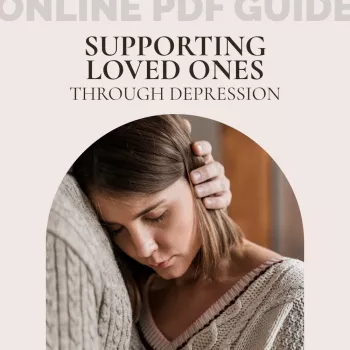
If it helps to have supportive language and step-by-step options ready when emotions are running high, Lifting Spirits: A Compassionate Guide to Supporting Loved Ones with Low Self-Esteem and Depression (digital download) is designed for partners, friends, and family. It includes conversation prompts, practical “do/don’t” cues, and simple ways to plan check-ins while keeping boundaries clear.
For those juggling support with work responsibilities, a separate organizational resource can help streamline planning and follow-through: AI for Small Business Toolkit – 5-in-1 Digital Download Bundle (digital download) offers structured tools that can reduce decision fatigue when your bandwidth is limited.
FAQ
What should be avoided when trying to help someone with low self-esteem and depression?
Avoid minimizing (“It’s not that bad”), arguing them out of feelings, forced positivity, making it about your own emotions, or giving nonstop advice. Instead, validate, ask what kind of support they want, offer one small next step, and follow up consistently.
How can someone be encouraged to get therapy without making them feel pressured?
Use empathy and choice: name what you’re seeing, ask permission to discuss options, and frame therapy as a trial rather than a lifetime commitment. Offer practical help (finding providers, drafting a message, sitting with them while they call) and keep your support steady even if they aren’t ready yet.
How can you tell if it’s a crisis situation?
Warning signs include suicidal thoughts, a plan or access to means, escalating substance misuse, inability to care for basic needs, or a sudden calm after intense despair. Treat this as urgent: contact local emergency services or crisis support and stay with the person if it’s safe.
Recommended for you


Lift Someone’s Spirit: What to Say & Do That Helps
Jul 30, 2026













Leave a comment