-
Shop
- Advanced Technologies
- AI Skills
- Bathroom
- Best-Sellers
- Car Accessories
- Confidence
- Dating & Social Skills
- Digital Resources
- AI & Technology
- Beauty
- Budgeting & Saving
- Car Buying & Ownership
- Cozy Feast Collection
- Electronics & Technology
- Entrepreneurship & Business Growth
- Financial Education
- Financial Independence
- Financial Mindset & Psychology
- Goal Setting
- Home Styling & Organization
- Kitchen & Recipes
- Leadership
- Mindfulness
- Mindset
- Online Business
- Parenting & Child Development
- Personal Style & Fashion
- Pet Lifestyle & Wellness
- Positive Thinking
- Sleep Improvement
- Smart Life with AI
- Stress Management & Relaxation
- Travel Planning
- Wellness
- Yoga & Fitness
- Yoga & Mind-Body Practices
- Education & Learning
- Family & Parenting
- Fashion
- Accessories
- Alexander McQueen
- Bags
- Bags & Wallets
- Balenciaga
- Belts
- Blazers
- Bottega Veneta
- Bottoms
- Brunello Cucinelli
- Burberry
- Chanel
- Chloé
- Dior
- Dolce & Gabbana
- Dresses
- Etro
- Fendi
- Gucci
- Hats & Hair Accessories
- Hoodies & Sweatshirts
- Jacquemus
- Jewelry
- Jil Sander
- Kiton
- Luggage
- Miu Miu
- Off-White
- Outerwear
- Prada
- Rick Owens
- Saint Laurent
- Shoes
- Socks & Tights
- Sweaters & Cardigans
- The Row
- Tom Ford
- Tops & Shirts
- Valentino
- Valentino Garavani
- Versace
- Vivienne Westwood
- Watches
- Fashion Accessories
- Furniture
- Gadgets
- Health & Beauty
- Health & Wellness
- Home & Garden
- Home Decor
- Home Electronics
- Home Supplies
- Kids & Babies
- Kitchen
- Kitchen Best-Sellers
- Lighting
- Patio, Lawn & Garden
- Personal Growth
- Pet Care
- Pet Supplies
- Pets
- Sport & Outdoors
- Super Deals
- Travel
- Travel & Adventure
- Wealth
- Popular
- Best deals
Puppy Growth Milestones: A Simple Guide for New Owners
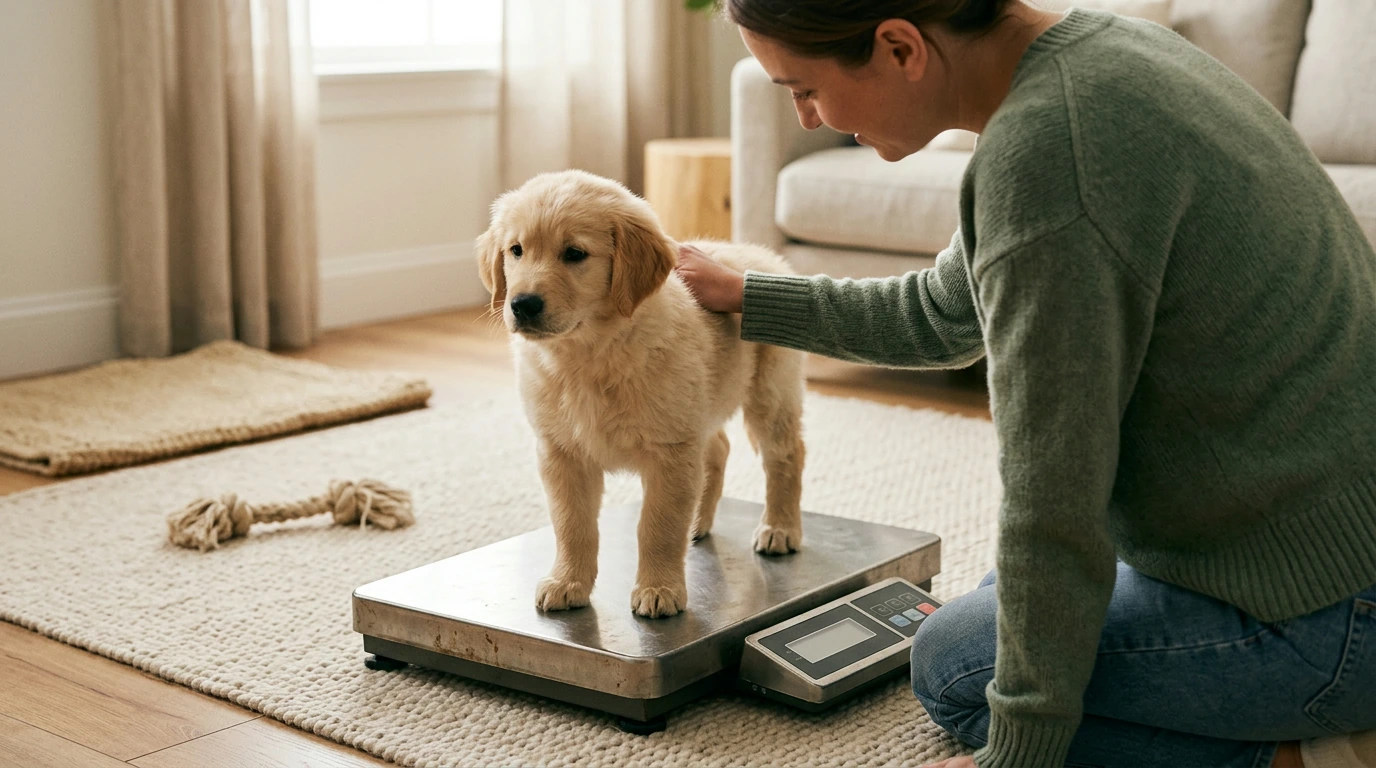
Welcoming a puppy brings plenty of firsts: new routines, new behaviors, and a lot of questions about what comes next. A growth chart can make those changes easier to follow without turning every milestone into a deadline.
Our Puppy Growth Milestones Made Simple eBook offers an easy-to-follow chart for new dog owners. Use it as a starting point for observing your puppy’s development, and turn to your veterinarian for advice suited to your individual companion.
Why a Puppy Growth Chart Helps
Puppies can change quickly, and it is not always easy to remember when a new behavior started or how their weight has changed since the last appointment. A chart gives you a way to organize those observations and notice questions you may want to bring to your veterinarian.
It also helps you prepare for transitions. For example, knowing that teething and early learning are common during puppyhood can prompt you to plan gentle training sessions and ask about appropriate care. The goal is not to compare your puppy against a rigid schedule, but to become more familiar with their own pattern of growth.
Breed, individual health, and other factors influence development, so puppies do not all reach milestones at the same time. Our eBook is a practical starting point if you want an approachable overview. For additional background, the American Kennel Club’s guide to puppy development stages describes changes that can occur as puppies grow.
Puppy Growth at a Glance
The table below is a general orientation, not a diagnosis or a list of what the eBook necessarily covers. Your puppy’s timing may differ. Ask your veterinarian about age-appropriate care and any concerns you have about growth.
| Stage | What owners may notice | Helpful focus |
|---|---|---|
| Early weeks | Rapid physical development and increasing awareness | Follow veterinary guidance and provide a safe environment |
| Around 2–4 months | Growing curiosity, early learning, and teething | Build gentle routines and discuss preventive care with a veterinarian |
| Around 4–6 months | Continued growth and developing adult teeth | Reinforce training and monitor changes in appetite and behavior |
| 6 months and beyond | Ongoing physical and behavioral development | Adjust routines with veterinary guidance as the puppy matures |
These broad stages can help you decide what to observe, but they cannot tell you whether an individual puppy is healthy. If something seems unusual or worries you, a conversation with your veterinarian is more useful than waiting for the next age range on a chart.
Make Milestones Part of Your Routine
A simple record can make veterinary visits more productive. Note your puppy’s weight when you measure it, along with the date. You can also jot down changes in appetite, energy, behavior, or teeth, and keep a running list of questions. Bring your notes to appointments so you do not have to rely on memory.
Pair those observations with consistent routines suited to your puppy’s age. Offer meals according to your veterinarian’s guidance, allow time for rest, and use positive training to reinforce behaviors you want to encourage. Short, gentle practice sessions can help you introduce routines without expecting a young puppy to learn everything at once.
As your puppy matures, revisit those routines rather than assuming the same approach will always fit. Your veterinarian can help you decide whether feeding or preventive care needs to change. A chart complements that individualized advice; it does not replace it.
Who Is the eBook For?
We recommend our puppy growth eBook to first-time dog owners who want an easy-to-follow milestones chart as they get to know their new companion. It can also be a useful reference if you prefer having a straightforward starting point for conversations about development.
The listed price is $16.99. Explore the Puppy Growth Milestones Made Simple eBook for purchase details and decide whether it fits your needs.
Our team also offers resources for other interests. If you run a small business, you can explore our separate AI for Small Business Toolkit; it is unrelated to puppy care.
When to Ask Your Veterinarian
Contact your veterinarian if you are worried about your puppy’s growth, appetite, energy, or behavior. Your notes can help explain what you have noticed and when it began, but you do not need a complete record before asking for help.
A veterinarian can assess your individual puppy, answer questions, and recommend an appropriate care plan. For more general pet-owner resources, visit the American Veterinary Medical Association.
Before choosing, compare the product details with your daily routine, available space, care needs, and preferred setup. The strongest option is usually the one that fits the intended use clearly and remains simple to clean, store, and check before repeat use.
FAQ
Do all puppies reach growth milestones at the same age?
No. Timing varies by breed and individual puppy, so use general milestones as a guide and ask your veterinarian about concerns.
How can a puppy growth chart help a new owner?
A chart provides an easy reference for tracking changes and preparing questions for veterinary visits.
Does a puppy growth chart replace veterinary advice?
No. A chart is an educational aid, while your veterinarian can provide guidance tailored to your puppy.
Recommended for you



What to Wear Under a Cardigan for Comfort and Style
Oct 28, 2026
What Kind of Top to Wear With a Cardigan?
Oct 28, 2026













Leave a comment