-
Shop
- Advanced Technologies
- AI Skills
- Bathroom
- Best-Sellers
- Car Accessories
- Confidence
- Dating & Social Skills
- Digital Resources
- AI & Technology
- Beauty
- Budgeting & Saving
- Car Buying & Ownership
- Cozy Feast Collection
- Electronics & Technology
- Entrepreneurship & Business Growth
- Financial Education
- Financial Independence
- Financial Mindset & Psychology
- Goal Setting
- Home Styling & Organization
- Kitchen & Recipes
- Leadership
- Mindfulness
- Mindset
- Online Business
- Parenting & Child Development
- Personal Style & Fashion
- Pet Lifestyle & Wellness
- Positive Thinking
- Sleep Improvement
- Smart Life with AI
- Stress Management & Relaxation
- Travel Planning
- Wellness
- Yoga & Fitness
- Yoga & Mind-Body Practices
- Education & Learning
- Family & Parenting
- Fashion
- Accessories
- Alexander McQueen
- Bags
- Bags & Wallets
- Balenciaga
- Belts
- Blazers
- Bottega Veneta
- Bottoms
- Brunello Cucinelli
- Burberry
- Chanel
- Chloé
- Dior
- Dolce & Gabbana
- Dresses
- Etro
- Fendi
- Gucci
- Hats & Hair Accessories
- Hoodies & Sweatshirts
- Jacquemus
- Jewelry
- Jil Sander
- Kiton
- Luggage
- Miu Miu
- Off-White
- Outerwear
- Prada
- Rick Owens
- Saint Laurent
- Shoes
- Socks & Tights
- Sweaters & Cardigans
- The Row
- Tom Ford
- Tops & Shirts
- Valentino
- Valentino Garavani
- Versace
- Vivienne Westwood
- Watches
- Fashion Accessories
- Furniture
- Gadgets
- Health & Beauty
- Health & Wellness
- Home & Garden
- Home Decor
- Home Electronics
- Home Supplies
- Kids & Babies
- Kitchen
- Kitchen Best-Sellers
- Lighting
- Patio, Lawn & Garden
- Personal Growth
- Pet Care
- Pet Supplies
- Pets
- Sport & Outdoors
- Super Deals
- Travel
- Travel & Adventure
- Wealth
- Popular
- Best deals
Overcoming Fear of Rejection in Dating: A Practical Guide
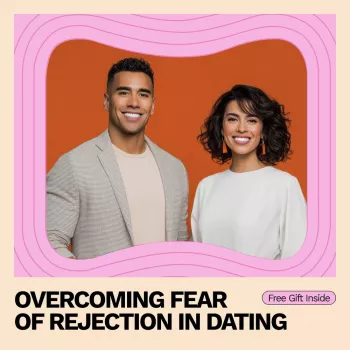
Fear of rejection is a common part of dating. When you care about making a connection, even a simple invitation can feel like a big risk. But confidence does not have to arrive all at once. It can grow as you take small, respectful actions and learn that you can handle a range of responses.
Our team put together this guide to help you approach dating with a steadier mindset. The goal is not to eliminate every uncomfortable feeling or guarantee a particular answer. It is to give yourself room to connect without treating each response as a test of your worth.
Why Rejection Can Feel So Personal
Dating brings together two powerful experiences: uncertainty and the desire to be understood. When someone declines an invitation or does not return your interest, your mind may rush to explain why. It can be tempting to turn a brief interaction into a sweeping judgment: “I am not interesting enough” or “No one will choose me.”
A lack of mutual interest, though, is not a verdict on your value. Someone may be looking for a different kind of connection, navigating their own circumstances, or simply not feel a romantic spark. You may never know the reason, and you do not need a complete explanation to move forward.
Disappointment is still real. Reminding yourself that a response is not a measure of your worth does not mean pretending you are unaffected. It means allowing the feeling without letting it define your identity.
Reframe the Thoughts That Hold You Back
Start by noticing what you predict before an interaction. If your first thought is “They’ll definitely say no,” pause and ask whether you actually know that. A more balanced thought might be, “I don’t know how they’ll respond, but I can ask respectfully and accept their answer.”
Balanced thinking is not forced optimism. It leaves room for both a yes and a no, while recognizing your ability to respond to either. Speak to yourself as you would to a friend: with honesty, patience, and kindness. Nervousness may remain, and that does not mean you are doing anything wrong.
A More Balanced Way to Think About Dating
| Anxious thought | Balanced alternative | Small action |
|---|---|---|
| A no means something is wrong with me. | A no can reflect compatibility or timing. | Thank the person for their honesty. |
| I have to feel confident before I ask. | I can act respectfully even if I feel nervous. | Start with a short conversation. |
| One awkward moment ruins everything. | Most conversations have imperfect moments. | Pause, listen, and continue naturally. |
Take Small Steps Toward Connection
You can practice at a pace that feels manageable. Begin with a brief conversation in a setting where talking is welcome. Ask a simple question, listen to the response, and share something about yourself. You do not need to turn every conversation into a dating opportunity; everyday interactions can help you become more comfortable connecting.
If you enjoy talking with someone and the interest seems welcome, express it plainly. You might say, “I’ve enjoyed getting to know you.” When it feels appropriate, make a low-pressure invitation: “Would you like to get coffee sometime?” A clear question gives the other person space to make a clear choice.
Respect their boundaries and accept a no without trying to persuade them. You can respond with, “Thanks for letting me know,” and move on. If their answer is uncertain, give them space rather than repeatedly asking. A respectful exchange matters more than finding the perfect words.
Afterward, reflect on what you did rather than judging the experience only by the answer. Did you start a conversation, listen, or make an honest invitation? Those actions count as progress, even when the outcome was disappointing. You can also notice what you would like to do differently next time without criticizing yourself.
Explore the Overcoming Fear of Rejection in Dating Guide
If you want a personal-development resource focused on this topic, our Overcoming Fear of Rejection in Dating Guide is an option to consider. It is intended for readers interested in building confidence, reframing their mindset, and taking action in dating. The listed price is $22.99.
Choose support that matches your priorities: a guide may be useful if you want to focus on personal growth at your own pace, while a conversation with a professional may be a better starting point when anxiety feels difficult to manage. Neither option can determine how another person will respond to you.
If your interests extend beyond dating, we also offer the AI for Small Business Toolkit, a separate resource for small business owners. It is not a dating or mental health resource.
When Anxiety Needs More Support
If fear of rejection or social anxiety significantly affects your daily life or relationships, consider speaking with a qualified mental health professional. You do not have to wait until things become unmanageable to ask for help. A professional can help you discuss what you are experiencing and consider appropriate support.
Our guide is a personal-development resource, not a substitute for professional care. For additional information, the NHS offers guidance on anxiety, fear, and panic, and the National Institute of Mental Health explains social anxiety disorder.
FAQ
How can I handle rejection without losing confidence?
Acknowledge your disappointment and respect the other person’s response. Remind yourself that a lack of compatibility is not a measure of your worth.
Should I wait until I feel confident before asking someone out?
Not necessarily. A small, respectful invitation can help you practice taking action even when you still feel nervous.
What if fear of rejection makes dating feel overwhelming?
Take smaller steps at a pace that feels comfortable. If anxiety significantly affects your life or relationships, consider speaking with a qualified mental health professional.
Recommended for you

Modern Console Table Decor Ideas for a Polished Look
Oct 30, 2026
What Childhood Trauma Causes Fear of Rejection?
Oct 30, 2026













Leave a comment