-
Shop
- Advanced Technologies
- AI Skills
- Bathroom
- Best-Sellers
- Car Accessories
- Confidence
- Dating & Social Skills
- Digital Resources
- AI & Technology
- Beauty
- Budgeting & Saving
- Car Buying & Ownership
- Cozy Feast Collection
- Electronics & Technology
- Entrepreneurship & Business Growth
- Financial Education
- Financial Independence
- Financial Mindset & Psychology
- Goal Setting
- Home Styling & Organization
- Kitchen & Recipes
- Leadership
- Mindfulness
- Mindset
- Online Business
- Parenting & Child Development
- Personal Style & Fashion
- Pet Lifestyle & Wellness
- Positive Thinking
- Sleep Improvement
- Smart Life with AI
- Stress Management & Relaxation
- Travel Planning
- Wellness
- Yoga & Fitness
- Yoga & Mind-Body Practices
- Education & Learning
- Family & Parenting
- Fashion
- Accessories
- Alexander McQueen
- Bags
- Bags & Wallets
- Balenciaga
- Belts
- Blazers
- Bottega Veneta
- Bottoms
- Brunello Cucinelli
- Burberry
- Chanel
- Chloé
- Dior
- Dolce & Gabbana
- Dresses
- Etro
- Fendi
- Gucci
- Hats & Hair Accessories
- Hoodies & Sweatshirts
- Jacquemus
- Jewelry
- Jil Sander
- Kiton
- Luggage
- Miu Miu
- Off-White
- Outerwear
- Prada
- Rick Owens
- Saint Laurent
- Shoes
- Socks & Tights
- Sweaters & Cardigans
- The Row
- Tom Ford
- Tops & Shirts
- Valentino
- Valentino Garavani
- Versace
- Vivienne Westwood
- Watches
- Fashion Accessories
- Furniture
- Gadgets
- Health & Beauty
- Health & Wellness
- Home & Garden
- Home Decor
- Home Electronics
- Home Supplies
- Kids & Babies
- Kitchen
- Kitchen Best-Sellers
- Lighting
- Patio, Lawn & Garden
- Personal Growth
- Pet Care
- Pet Supplies
- Pets
- Sport & Outdoors
- Super Deals
- Travel
- Travel & Adventure
- Wealth
- Popular
- Best deals
Mind–Body Wellness: A 15-Min Daily Routine for Health
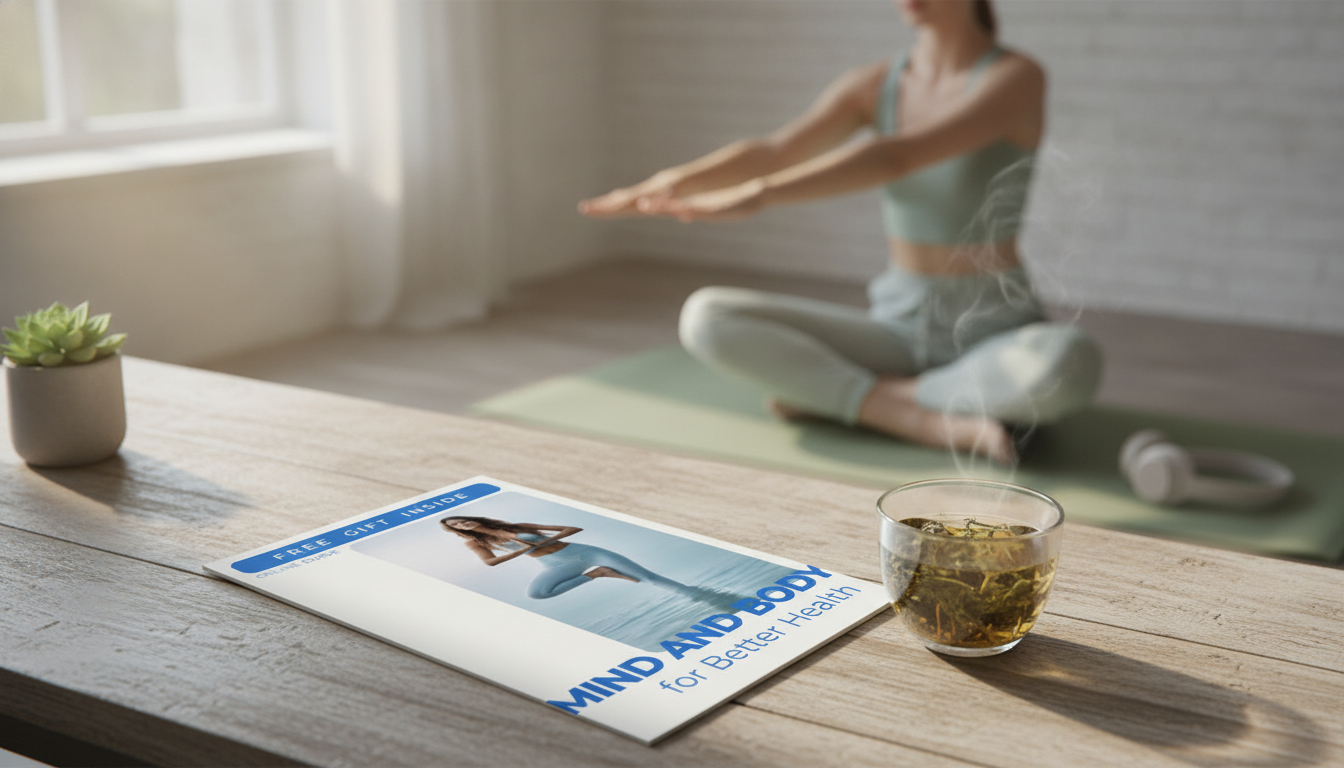
Mind and Body for Better Health: A Practical Guide to Holistic Wellness
Better health isn’t only about nutrition and exercise or only about mindset and stress—it’s how they interact. When thoughts, emotions, sleep, movement, and recovery are aligned, the body tends to respond with steadier energy, improved resilience, and healthier habits that actually stick.
What the Mind–Body Connection Means in Daily Life
The mind–body connection shows up in ordinary moments: how the body reacts to a stressful email, how sleep changes after a tense day, or why motivation can dip when you feel overwhelmed.
- Stress signals shift body functions. When the nervous system reads “threat,” breathing often gets shallower, shoulders creep upward, digestion can feel off, and sleep may become lighter or more fragmented.
- Emotions influence pain, cravings, and movement. Irritability or sadness can raise pain sensitivity, increase comfort-food cravings, and make it harder to start (or enjoy) physical activity.
- Daily habits nudge the nervous system. Late-night screens, caffeine too late in the day, and low social connection can keep the body stuck in “on” mode; consistent meals, daylight, and supportive relationships tend to help the system settle.
- Holistic wellness is a combined approach. It’s physical care (sleep, movement, nutrition) plus mental skills (awareness, coping tools) and simple routines that make the healthy choice the easy choice.
Core Systems That Link Mind and Body
Several body systems act like bridges between mental state and physical symptoms. Understanding them doesn’t require medical training—just a practical sense of cause and effect.
- Nervous system: The body naturally cycles between alert mode (useful for focus and quick action) and recovery mode (needed for digestion, repair, and deeper sleep). When recovery mode doesn’t get enough “time on the clock,” tension and fatigue can build.
- Endocrine system: Stress hormones help you meet demands in the short term. Under chronic strain, appetite, energy, and sleep can become less predictable, which makes consistent habits harder to maintain.
- Immune function: Sleep quality, ongoing stress, and movement patterns are tied to inflammatory signaling. A stable routine—especially sleep and light-to-moderate activity—often supports better day-to-day recovery. For a research-grounded overview of mind–body practices, see the National Center for Complementary and Integrative Health.
- Gut–brain communication: Digestion and mood frequently move together. Stress can change appetite and digestion; gut discomfort can affect mood and focus, creating a feedback loop that benefits from calming, regular rhythms.
For a clear explanation of how stress can show up physically, the American Psychological Association outlines common body responses.
Simple Practices That Build Mind–Body Skills
- Breath training: Try a slower exhale to signal safety to the nervous system. Even a few minutes can reduce the feeling of being “revved up.” Harvard Health discusses why breath control can help calm the stress response: Relaxation techniques and breath control.
- Mindful movement: Walking, yoga, mobility drills, or gentle strength work becomes more regulating when attention stays on sensations—feet on the ground, shoulder position, breath pace, and smooth range of motion.
- Progressive muscle relaxation: Tense a muscle group for a few seconds, then release. This can reduce headaches linked to tension, loosen jaw tightness, and make it easier to fall asleep.
- Journaling for patterns: A brief log of triggers, mood, sleep, and symptoms can reveal what truly helps (and what consistently makes things worse), without relying on memory alone.
- Guided imagery: Using vivid sensory detail—sounds, textures, temperatures—can lower perceived stress and support a smoother transition into rest routines.
A 15-Minute Daily Routine (Mix and Match)
| Goal | Minutes | What to do | Best time to try |
|---|---|---|---|
| Calm the nervous system | 3–5 | Inhale through the nose, longer exhale (e.g., 4 seconds in, 6–8 out) for 10–15 breaths | Before meetings, after commuting, before sleep |
| Reduce muscle tension | 5 | Progressive muscle relaxation: tense/release shoulders, jaw, hands, hips, calves | Evening or after long sitting |
| Boost energy without stimulants | 5–10 | Brisk walk or light mobility flow; finish with 3 slow breaths | Mid-morning or mid-afternoon |
| Improve sleep readiness | 10–15 | Screen-off wind-down + gentle stretching + journaling 3 lines (worries, gratitudes, tomorrow’s first step) | 30–60 minutes before bed |
Turning Insight into Lasting Habits
Using a Practical Digital Guide to Stay Consistent
- Fast reference: Digital download format is easy to open on a phone, tablet, or computer during short breaks.
- Action-first language: Look for practical exercises that move from basics (breathing and awareness) into routines (sleep, stress, movement).
- Ready-to-use option: Mind and Body for Better Health – Practical Guide to the mind body connection for health (digital download) provides a straightforward way to build daily mind–body habits without overcomplicating your schedule.
If movement outdoors is part of your stress-reset plan, a fun, low-impact activity can help reinforce the routine. For longer sessions on weekends or recovery days, consider an option like the 3.6M Thickened PVC Inflatable Kayak to turn gentle movement into a consistent, enjoyable ritual.
FAQ
What is the mind-body healing method?
The mind-body healing method refers to approaches that use mental, emotional, and behavioral tools—such as relaxation, mindfulness, and breathing—to influence physical symptoms and support recovery. These methods can be helpful alongside medical care, not as a replacement for diagnosis or treatment.
What are some mind-body therapies?
Common mind-body therapies include mindfulness-based stress reduction, cognitive behavioral therapy for stress or pain, biofeedback, yoga, tai chi, guided imagery, progressive muscle relaxation, and meditation. The best fit depends on your goals, preferences, and health conditions.
What is a mind-body illness?
A mind-body illness generally describes physical symptoms that can be influenced or worsened by stress, emotions, and nervous system dysregulation. The symptoms are real and deserve proper evaluation, and mind–body strategies can be a useful part of a broader care plan.
Recommended for you



Mind-Body Healing Method: How It Works + Examples
Jun 22, 2026













Leave a comment