-
Shop
- Advanced Technologies
- AI Skills
- Bathroom
- Best-Sellers
- Car Accessories
- Confidence
- Dating & Social Skills
- Digital Resources
- AI & Technology
- Beauty
- Budgeting & Saving
- Car Buying & Ownership
- Cozy Feast Collection
- Electronics & Technology
- Entrepreneurship & Business Growth
- Financial Education
- Financial Independence
- Financial Mindset & Psychology
- Goal Setting
- Home Styling & Organization
- Kitchen & Recipes
- Leadership
- Mindfulness
- Mindset
- Online Business
- Parenting & Child Development
- Personal Style & Fashion
- Pet Lifestyle & Wellness
- Positive Thinking
- Sleep Improvement
- Smart Life with AI
- Stress Management & Relaxation
- Travel Planning
- Wellness
- Yoga & Fitness
- Yoga & Mind-Body Practices
- Education & Learning
- Family & Parenting
- Fashion
- Accessories
- Alexander McQueen
- Bags
- Bags & Wallets
- Balenciaga
- Belts
- Blazers
- Bottega Veneta
- Bottoms
- Brunello Cucinelli
- Burberry
- Chanel
- Chloé
- Dior
- Dolce & Gabbana
- Dresses
- Etro
- Fendi
- Gucci
- Hats & Hair Accessories
- Hoodies & Sweatshirts
- Jacquemus
- Jewelry
- Jil Sander
- Kiton
- Luggage
- Miu Miu
- Off-White
- Outerwear
- Prada
- Rick Owens
- Saint Laurent
- Shoes
- Socks & Tights
- Sweaters & Cardigans
- The Row
- Tom Ford
- Tops & Shirts
- Valentino
- Valentino Garavani
- Versace
- Vivienne Westwood
- Watches
- Fashion Accessories
- Furniture
- Gadgets
- Health & Beauty
- Health & Wellness
- Home & Garden
- Home Decor
- Home Electronics
- Home Supplies
- Kids & Babies
- Kitchen
- Kitchen Best-Sellers
- Lighting
- Patio, Lawn & Garden
- Personal Growth
- Pet Care
- Pet Supplies
- Pets
- Sport & Outdoors
- Super Deals
- Travel
- Travel & Adventure
- Wealth
- Popular
- Best deals
Dress Smart for Every Shape: Easy Outfit System

Dress Smart for Every Shape: A Practical Style System You Can Use on Busy Mornings
“Dressing smart” isn’t about dressing up or following rigid rules. It’s about making choices that work with your shape, your lifestyle, and the moments you dress for—so you look intentional, feel comfortable, and waste less time second-guessing. Our team built this guide around a simple, repeatable system you can use on real mornings: fit that moves with you, a few dependable outfit formulas, and a capsule structure that makes your closet easier to live in.
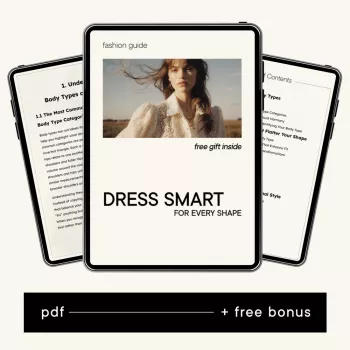
If you want the full step-by-step framework (including ready-to-use AI outfit prompts, a capsule wardrobe plan, and a quick confidence checklist), start here: Dress Smart for Every Shape – Body Type Styling Guide, Personal Style eBook, AI Outfit Prompts, Capsule Wardrobe & Confidence Building Checklist.
What “dress smart” means in real life (and why it works for every body)
In practice, dressing smart means you get clear on a handful of silhouettes, a color direction that mixes easily, and outfits that match your day (work, errands, dinner, travel). The goal isn’t to “fix” your body; it’s to create balance, proportion, and ease using intentional lines, lengths, and fabrics.
Our team relies on three anchors that work across shapes and sizes:
- Fit that skims instead of squeezes: you should be able to sit, walk, reach, and breathe without constant adjusting.
- Structure where you want definition: a blazer shoulder, a waistband that holds gently, a crisp collar, a more supportive knit.
- A focal point: a neckline, a waist moment, a statement shoe, a sharp jacket—one “on purpose” detail that finishes the look.
When you stop chasing one-off trends and start building repeatable formulas (top + bottom + layer + shoe), you reduce decision fatigue—fewer items, more combinations, and far less “closet full of nothing to wear.” The psychology behind how clothing can influence confidence and self-perception is well documented, including by the American Psychological Association.
Start with shape-aware styling: simple adjustments that change everything
Shape-aware styling is the fastest shortcut we know because it helps you prioritize what you like to highlight (waist definition, legs, shoulders, neckline) and choose silhouettes that support that—without obsessing over labels.
- Balance is the strategy: add structure where you want presence (often shoulders/waist) and choose drape where you want softness (often midsection/hips/bust).
- Length is leverage: the hem of a top, jacket, skirt, or cropped pant can change the whole proportion story more than sizing up or down.
- Necklines are an instant reset: V and scoop necklines visually open the upper body; higher necklines can look polished when paired with a great layer or a clean hairstyle/accessory.
- Create a “column” with color: similar tones top-to-bottom lengthen your line; strong contrast pulls attention—use it where you want the focus.
Fabric choice matters here. Higher-performing materials (like crisp cotton, ponte, wool blends, and denim with recovery) tend to hold shape and read more intentional than thin, clingy fabrics; for a plain-English overview of fiber and fabric performance, see Encyclopaedia Britannica’s textile guidance.
Use outfit formulas + AI prompts to build looks faster
Outfit formulas turn “getting dressed” into assembly. You’re not inventing; you’re selecting from combinations that already work.
Three formulas we use on repeat
- Fitted top + relaxed bottom + structured layer: creates clean contrast and keeps comfort high.
- Monochrome base + statement jacket: looks pulled together with minimal effort and is travel-friendly.
- Dress + waist emphasis + polished shoe: fastest full outfit—just control the focal point.
AI can speed this up when you give it specifics: the occasion, weather, comfort level, silhouettes you prefer, and what you already own. If you want a broader library of prompt structures you can reuse (beyond outfits—think planning, checklists, and templates), we also keep this in stock: AI for Small Business Toolkit – 5-in-1 Digital Download Bundle.
When AI suggests something unrealistic, keep the logic and swap the pieces: retain the silhouette and color idea, then replace the exact items with what’s in your closet (or the categories you actually wear).
Build a capsule wardrobe that supports your proportions and your week
| Category | Recommended pieces | Why it earns a spot |
|---|---|---|
| Tops | 2 polished tees + 2 blouses/knits | Reliable bases for layering and proportion control |
| Bottoms | 1 dark jean + 1 trouser + 1 skirt or second trouser | Rotates across casual, work, and dinner |
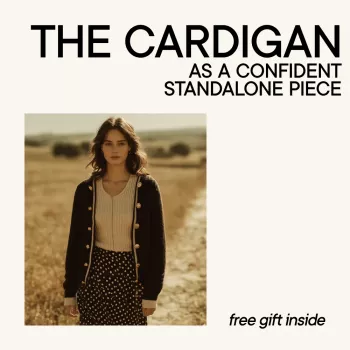
| Layers | 1 blazer/structured jacket + 1 cardigan/soft layer | Instant polish and temperature control |
| One-piece | 1 dress (wrap, shirt dress, or sheath) | A complete outfit with minimal decisions |
| Shoes | 1 clean sneaker/flat + 1 loafer/boot + 1 dressier option | Covers weekday, weekend, and events |
| Finishing | Belt + simple jewelry + structured bag | Makes repeated outfits look styled, not repeated |
Confidence-building checklist: the fastest “upgrade” without buying more
Put it all together with the Dress Smart for Every Shape eBook system
When you use a system, getting dressed becomes repeatable: identify the silhouettes that support your shape, build a few outfit formulas around them, and make your closet more interchangeable through a capsule framework. Our team designed Dress Smart for Every Shape to be reused season after season—small updates, same structure—so you’re not reinventing your style every few months.
FAQ
What does “dress smart” mean?
It means dressing with intention: choosing fit, proportion, and occasion-appropriate pieces that help you look polished without overthinking. Instead of strict rules, you rely on repeatable outfit formulas and a small set of silhouettes that consistently work for you.
What is not allowed in the smart casual dress code?
Typically, avoid items that read like gym wear or sleepwear, overly distressed pieces, dirty or beat-up shoes, loud slogan graphic tees, and flip-flops. Easy swaps include a clean sneaker or loafer, a structured layer, and a simple top in a more elevated fabric.











Leave a comment