-
Shop
- Advanced Technologies
- AI Skills
- Bathroom
- Best-Sellers
- Car Accessories
- Confidence
- Dating & Social Skills
- Digital Resources
- AI & Technology
- Beauty
- Budgeting & Saving
- Car Buying & Ownership
- Cozy Feast Collection
- Electronics & Technology
- Entrepreneurship & Business Growth
- Financial Education
- Financial Independence
- Financial Mindset & Psychology
- Goal Setting
- Home Styling & Organization
- Kitchen & Recipes
- Leadership
- Mindfulness
- Mindset
- Online Business
- Parenting & Child Development
- Personal Style & Fashion
- Pet Lifestyle & Wellness
- Positive Thinking
- Sleep Improvement
- Smart Life with AI
- Stress Management & Relaxation
- Travel Planning
- Wellness
- Yoga & Fitness
- Yoga & Mind-Body Practices
- Education & Learning
- Family & Parenting
- Fashion
- Accessories
- Alexander McQueen
- Bags
- Bags & Wallets
- Balenciaga
- Belts
- Blazers
- Bottega Veneta
- Bottoms
- Brunello Cucinelli
- Burberry
- Chanel
- Chloé
- Dior
- Dolce & Gabbana
- Dresses
- Etro
- Fendi
- Gucci
- Hats & Hair Accessories
- Hoodies & Sweatshirts
- Jacquemus
- Jewelry
- Jil Sander
- Kiton
- Luggage
- Miu Miu
- Off-White
- Outerwear
- Prada
- Rick Owens
- Saint Laurent
- Shoes
- Socks & Tights
- Sweaters & Cardigans
- The Row
- Tom Ford
- Tops & Shirts
- Valentino
- Valentino Garavani
- Versace
- Vivienne Westwood
- Watches
- Fashion Accessories
- Furniture
- Gadgets
- Health & Beauty
- Health & Wellness
- Home & Garden
- Home Decor
- Home Electronics
- Home Supplies
- Kids & Babies
- Kitchen
- Kitchen Best-Sellers
- Lighting
- Patio, Lawn & Garden
- Personal Growth
- Pet Care
- Pet Supplies
- Pets
- Sport & Outdoors
- Super Deals
- Travel
- Travel & Adventure
- Wealth
- Popular
- Best deals
AI Resilience Training Plan: A 4-Week Stress Skills System

AI for Building Resilience: Turning Stress Skills Into a Repeatable Training Plan
Resilience is a trainable skill: noticing stress early, recovering faster, and staying aligned with your values under pressure. The challenge is consistency—most people know a few coping tools, but don’t have a simple way to practice them in real life. AI can help by turning reflections, habits, and coping skills into a clear, repeatable training plan that fits your goals, schedule, and real constraints—while keeping the human parts (values, judgment, relationships, and professional care) in the lead.
For a research-grounded overview of what resilience is and how it develops, see the American Psychological Association (APA) guidance on resilience.
What resilience training looks like in daily life
Resilience combines two abilities that show up in ordinary moments: recovery (how quickly you bounce back after stress) and adaptability (how well you adjust when circumstances change). Training isn’t about never feeling overwhelmed; it’s about shortening the spiral and widening your options when pressure hits.
Domains worth training
- Emotional regulation: calming the nervous system and riding out intense feelings without impulsive reactions.
- Cognitive flexibility: shifting perspectives, reframing, and loosening unhelpful thoughts.
- Social support: asking for help, repairing conflict, and staying connected.
- Sleep and energy: foundational routines that make coping skills easier to use.
- Meaning and values: choosing actions aligned with what matters, even when uncomfortable.
- Problem-solving under stress: turning “everything is too much” into the next actionable step.
The most effective plans look like training reps: small and frequent. Think short daily check-ins, quick skill practices, and a weekly review. Include both “in-the-moment” tools (breathing, grounding, reframing) and “foundational” habits (sleep, movement, connection).
Where AI helps—and where it should not lead
AI is strongest as a planning and reflection assistant. It can organize what you already know into a plan you’ll actually follow, and it can generate options when your brain is tired.
- Structure: turning a goal into weekly actions, reminders, and measurable checkpoints.
- Personalization: adjusting difficulty, timing, and skill selection based on patterns (like energy dips or common triggers).
- Coaching prompts: reflective questions, coping scripts, and alternative perspectives when you feel stuck.
Where AI should not lead: clinical support, diagnosis, or crisis response. If you’re dealing with severe anxiety, depression, trauma symptoms, or safety concerns, use professional resources. The National Institute of Mental Health (NIMH) guidance on coping with traumatic events is a helpful starting point for understanding when additional support may be needed.
Avoid over-automation. Plans should remain flexible and chosen intentionally—AI can suggest, but you decide.
Define a clear target: the resilience outcome to train
Resilience improves faster when you pick a single target for 4–6 weeks. Examples include “recover from work stress within 30 minutes” or “stay steady during conflict conversations.” A narrow goal keeps practice focused and makes progress easier to see.
Set your baseline and constraints
- Baseline: your main stress signals (tight chest, irritability, rumination), common triggers, and typical recovery time.
- Track 2–3 indicators: sleep quality, perceived stress (0–10), rumination time, mood stability, focus blocks completed, or social connection minutes.
- Constraints: available minutes per day, preferred practice time, and non-negotiables (family time, commute, therapy appointments).
Build the plan with AI: a simple 5-step workflow
Step 1 — Input context
Step 2 — Ask for skill options
Request 6–10 evidence-aligned practices to choose from: slow-exhale breathing, cognitive reappraisal, self-compassion breaks, graded exposure ladders, structured problem-solving, and short social-support scripts. If you want a values-based approach, the World Health Organization’s “Doing What Matters in Times of Stress” is a practical resource.
Step 3 — Select micro-habits
Step 4 — Create “if/then” coping plans
Step 5 — Add progression
A 4-week resilience training plan template (example)
| Week | Focus | Daily practice | Twice-weekly practice | Weekly review |
|---|---|---|---|---|
| 1 | Awareness + recovery basics | 2–4 min breathing + 2 min body scan | Write a coping card for one trigger | Baseline metrics + choose one target behavior |
| 2 | Cognitive flexibility | Reframe one stressful thought + 3 min slow exhale | Role-play a tough moment with a script | What worked/what didn’t + adjust timing |
| 3 | Stress inoculation | Short practice during mild stress (not crisis) | Gradually increase realism of scenario rehearsal | Update if/then plans + add a support check-in |
| 4 | Integration + maintenance | Alternate skills based on need (menu) | Practice quick recovery after a deliberate challenge | Create a 2-week maintenance plan + relapse signals |
Tracking progress without obsessing
Privacy, boundaries, and safe use
Using a ready-made guide to speed up the process
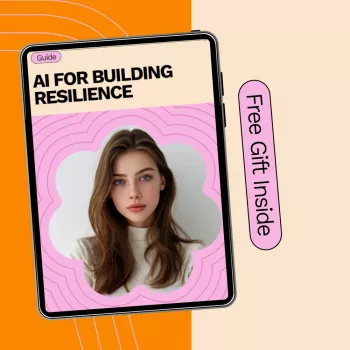
- AI for Building Resilience: A Guide to Creating a Resilience Training Plan with AI (digital guide) helps translate goals into a practical schedule with repeatable worksheets.
- AI for Small Business Toolkit – 5-in-1 Digital Download Bundle is useful if your stress is tied to operations, planning, and decision overload—and you want system templates alongside AI workflows.
- Choosing the Right Payment Solution for Your Business: Stripe vs Square Which Is Better supports resilience indirectly by reducing financial admin friction and recurring decision stress for small business owners.
FAQ
Can AI create a resilience plan that actually fits a busy schedule?
Yes—when you start with constraints first (available minutes and best time of day), choose micro-habits, and build a “minimum viable day” option so the plan still works during high-stress weeks.
What should be measured to know resilience training is working?
Track a small set: perceived stress, recovery time after triggers, sleep quality/energy, and one meaningful behavior (like calmer conflict handling or more focus blocks completed). Review weekly trends rather than day-to-day noise.
Is it safe to use AI for mental health resilience work?
It can be safe for skills practice and planning when privacy is protected and boundaries are clear. It should not replace professional care, especially for severe symptoms, trauma, or crisis situations.
Recommended for you


4 Types of Positive Reinforcement for Dogs & Cats
Jul 24, 2026
Dawn Dish Soap for Sweat Stains: Does It Work?
Jul 24, 2026













Leave a comment