-
Shop
- Advanced Technologies
- AI Skills
- Bathroom
- Best-Sellers
- Car Accessories
- Confidence
- Dating & Social Skills
- Digital Resources
- AI & Technology
- Beauty
- Budgeting & Saving
- Car Buying & Ownership
- Cozy Feast Collection
- Electronics & Technology
- Entrepreneurship & Business Growth
- Financial Education
- Financial Independence
- Financial Mindset & Psychology
- Goal Setting
- Home Styling & Organization
- Kitchen & Recipes
- Leadership
- Mindfulness
- Mindset
- Online Business
- Parenting & Child Development
- Personal Style & Fashion
- Pet Lifestyle & Wellness
- Positive Thinking
- Sleep Improvement
- Smart Life with AI
- Stress Management & Relaxation
- Travel Planning
- Wellness
- Yoga & Fitness
- Yoga & Mind-Body Practices
- Education & Learning
- Family & Parenting
- Fashion
- Accessories
- Alexander McQueen
- Bags
- Bags & Wallets
- Balenciaga
- Belts
- Blazers
- Bottega Veneta
- Bottoms
- Brunello Cucinelli
- Burberry
- Chanel
- Chloé
- Dior
- Dolce & Gabbana
- Dresses
- Etro
- Fendi
- Gucci
- Hats & Hair Accessories
- Hoodies & Sweatshirts
- Jacquemus
- Jewelry
- Jil Sander
- Kiton
- Luggage
- Miu Miu
- Off-White
- Outerwear
- Prada
- Rick Owens
- Saint Laurent
- Shoes
- Socks & Tights
- Sweaters & Cardigans
- The Row
- Tom Ford
- Tops & Shirts
- Valentino
- Valentino Garavani
- Versace
- Vivienne Westwood
- Watches
- Fashion Accessories
- Furniture
- Gadgets
- Health & Beauty
- Health & Wellness
- Home & Garden
- Home Decor
- Home Electronics
- Home Supplies
- Kids & Babies
- Kitchen
- Kitchen Best-Sellers
- Lighting
- Patio, Lawn & Garden
- Personal Growth
- Pet Care
- Pet Supplies
- Pets
- Sport & Outdoors
- Super Deals
- Travel
- Travel & Adventure
- Wealth
- Popular
- Best deals
20 Bar Espresso Machine with Steam Wand: Compact Guide
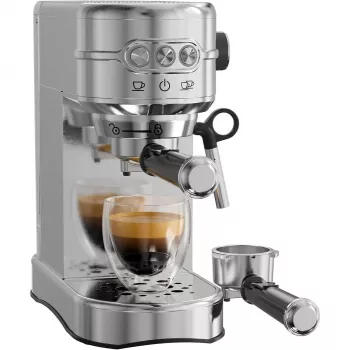
Making espresso at home can be a satisfying part of your day, whether you enjoy a short shot or prefer a cup topped with steamed milk. If your counter space is limited, our 20Bar Espresso Machine with Steam Wand Compact Coffee Maker offers a space-conscious option for exploring both.
Good coffee is about more than a number on a machine. Your beans, grind, milk technique, and cleaning habits all play a part in the cup. Our team has put together practical ways to approach each step so you can build a routine that suits your taste.
Make Room for Your Coffee Routine
A compact coffee maker can be a useful choice when you want to make room for espresso without dedicating your entire counter to it. Before choosing a spot, consider the space you’ll need not only for the machine but also for handling coffee, positioning a milk pitcher, and cleaning up afterward.
Our 20Bar Espresso Machine with Steam Wand Compact Coffee Maker brings espresso preparation and milk steaming into one routine. The steam wand gives you a way to heat and texture milk for drinks such as cappuccinos and lattes. It is listed at $165.01; the price is subject to change.
Think about how you like to drink coffee throughout the week. If you alternate between straight espresso and milk drinks, having a steam wand available lets you practice both without planning a separate milk-preparation routine.
What 20 Bar Means for Espresso
Bar is a unit of pressure, and an advertised 20-bar rating describes the pump’s stated pressure capability. That number is not necessarily the pressure at the coffee bed during extraction. Pressure can vary within a brewing system, so a pump rating alone does not tell you exactly how a shot will be extracted.
A higher bar rating also does not guarantee better espresso. Grind size affects how readily water moves through the coffee, while the amount of coffee, water temperature, and extraction all influence the result. A balanced shot comes from how these factors work together, rather than from the largest number on the box.
For a broader introduction to brewing variables, the National Coffee Association’s brewing guide discusses the importance of fresh coffee, grind, water, and equipment care.
Espresso and Milk Drinks to Try
Espresso is the starting point for a cappuccino or latte. From there, the amount and texture of the milk change the character of the drink. A cappuccino typically has steamed milk and a noticeable layer of foam, while a latte generally uses more steamed milk with a lighter layer of foam.
These descriptions are starting points, not rules you have to follow exactly. You might prefer a smaller latte with a stronger coffee flavor or a cappuccino with a little less foam. Make one small adjustment at a time so you can notice what changes.
Simple Drinks to Make
| Drink | Espresso base | Milk |
|---|---|---|
| Espresso | Espresso shot | None |
| Cappuccino | Espresso shot | Steamed milk with foam |
| Latte | Espresso shot | More steamed milk with a light layer of foam |
Start by tasting your espresso on its own, then add milk in stages. This can help you find the balance you enjoy without making every drink the same size. If you use a milk alternative, expect to spend some time learning how your chosen variety heats and textures.
Getting Comfortable With the Steam Wand
Use a suitable milk pitcher and follow the machine’s instructions for steaming. Cold milk gives you a useful starting point for practice. Adjust the wand position gradually as you work toward a smooth texture, and pay attention to how the milk changes as it warms.
You don’t need perfect foam on your first attempt. Practice with a modest amount of milk, then change one part of your technique on the next try. You can compare a foamier result with a smoother one to see which you prefer in your drink.
The wand and steam can be hot, so keep your hands clear of the steam and handle the equipment carefully. After use, wipe and purge the wand as directed in the machine’s instructions. Cleaning it promptly helps keep milk residue from building up.
A Better Daily Coffee Routine
Fresh coffee is a good place to start. Store it appropriately, and adjust your grind and dose gradually if a shot tastes too sharp, too bitter, or simply unlike what you enjoy. Change one variable at a time and keep notes on the result; that makes it easier to repeat a cup you like.
Make cleaning part of the routine, too. Clean surfaces that come into contact with coffee and follow the manufacturer’s instructions for regular care and descaling. The appropriate schedule can depend on your use and water, so use the guidance provided with your machine.
If your interest in coffee also extends to running a small business, our AI for Small Business Toolkit – 5-in-1 Digital Download Bundle is a separate resource you can explore. It is not needed to use the espresso machine.
FAQ
Is a 15 or 20 bar espresso machine better?
Neither rating alone determines drink quality. Advertised pump pressure may differ from brewing pressure, and grind, dose, temperature, and extraction matter too.
What is the best bar espresso machine?
There is no single best bar rating for every buyer. Consider the overall machine, available space, milk-drink preferences, ease of care, and budget rather than pressure alone.
What can I make with a steam wand?
A steam wand can heat and texture milk for drinks such as cappuccinos and lattes. Your results can improve with practice.
Recommended for you

4-Piece Microfiber Bath Towel Set: A Practical Guide
Nov 19, 2026
Silicone Flower Teething Blocks: Play and Care Tips
Nov 19, 2026













Leave a comment