-
Shop
- Advanced Technologies
- AI Skills
- Bathroom
- Best-Sellers
- Car Accessories
- Confidence
- Dating & Social Skills
- Digital Resources
- AI & Technology
- Beauty
- Budgeting & Saving
- Car Buying & Ownership
- Cozy Feast Collection
- Electronics & Technology
- Entrepreneurship & Business Growth
- Financial Education
- Financial Independence
- Financial Mindset & Psychology
- Goal Setting
- Home Styling & Organization
- Kitchen & Recipes
- Leadership
- Mindfulness
- Mindset
- Online Business
- Parenting & Child Development
- Personal Style & Fashion
- Pet Lifestyle & Wellness
- Positive Thinking
- Sleep Improvement
- Smart Life with AI
- Stress Management & Relaxation
- Travel Planning
- Wellness
- Yoga & Fitness
- Yoga & Mind-Body Practices
- Education & Learning
- Family & Parenting
- Fashion
- Accessories
- Alexander McQueen
- Bags
- Bags & Wallets
- Balenciaga
- Belts
- Blazers
- Bottega Veneta
- Bottoms
- Brunello Cucinelli
- Burberry
- Chanel
- Chloé
- Dior
- Dolce & Gabbana
- Dresses
- Etro
- Fendi
- Gucci
- Hats & Hair Accessories
- Hoodies & Sweatshirts
- Jacquemus
- Jewelry
- Jil Sander
- Kiton
- Luggage
- Miu Miu
- Off-White
- Outerwear
- Prada
- Rick Owens
- Saint Laurent
- Shoes
- Socks & Tights
- Sweaters & Cardigans
- The Row
- Tom Ford
- Tops & Shirts
- Valentino
- Valentino Garavani
- Versace
- Vivienne Westwood
- Watches
- Fashion Accessories
- Furniture
- Gadgets
- Health & Beauty
- Health & Wellness
- Home & Garden
- Home Decor
- Home Electronics
- Home Supplies
- Kids & Babies
- Kitchen
- Kitchen Best-Sellers
- Lighting
- Patio, Lawn & Garden
- Personal Growth
- Pet Care
- Pet Supplies
- Pets
- Sport & Outdoors
- Super Deals
- Travel
- Travel & Adventure
- Wealth
- Popular
- Best deals
TV Stand Fireplace Electricity Use: Watts & Costs
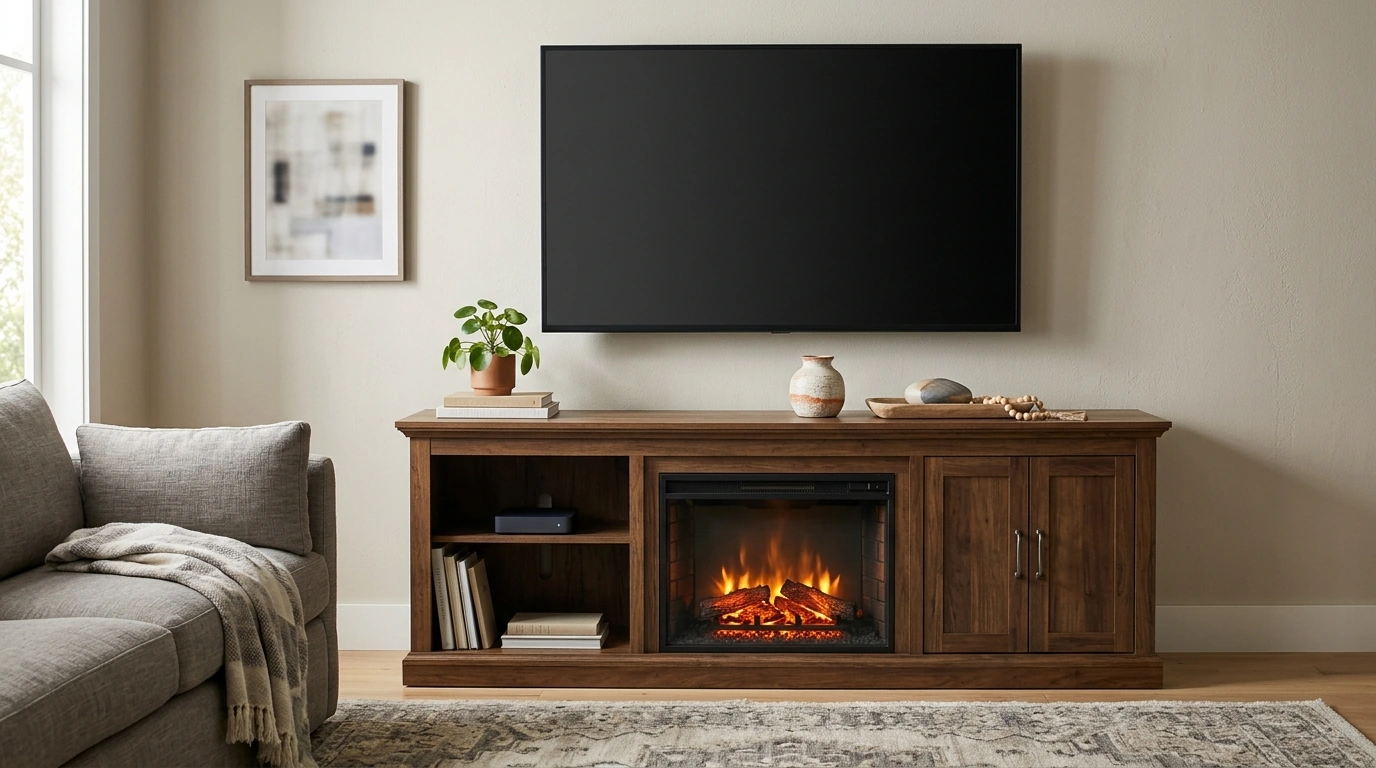
Do TV stand fireplaces use a lot of electricity?
Most TV stand fireplaces don’t use “a lot” of electricity compared to whole-home heating, but they can draw a noticeable amount when the heater is running. The good news is that electric fireplace TV stands are predictable: their power use is mainly tied to whether you’re using heat or just the flame effect.
Typical electricity use (what you can expect)
Many TV stand electric fireplaces have two heat settings that commonly land around 750 watts (low) and 1,500 watts (high). That means if you run the heater on high for one hour, you’ll use about 1.5 kWh. Your cost depends on your local electric rate—multiply kWh used by your $/kWh price to estimate what you’ll pay.
Flame-only mode is much cheaper
If you like the ambiance without adding heat, flame-only mode usually uses far less power (often similar to a few light bulbs). This is where TV stand fireplaces shine for everyday use: you can keep the look without the heating cost.
What makes the biggest difference in your bill
The heater setting and how long it runs matter most. If your unit has a thermostat, it won’t necessarily run at full power nonstop; it cycles on and off to hold the set temperature. Using your fireplace as “zone heat” for the room you’re actually in can be more efficient than heating unused areas of your home.
How our team recommends keeping power use low
Use the lowest heat setting that keeps you comfortable, and rely on the thermostat instead of running high continuously. If your model includes a timer, set it for evenings or bedtime wind-down so it doesn’t run longer than needed. Also keep airflow paths clear (don’t block the heater outlet) so the unit heats efficiently without working harder.
For size, placement, and feature guidance, see our complete buying guide here: 72-inch electric fireplace TV stand with mantel for 80-inch TVs.
FAQ
What are the pros and cons of having a TV stand with a fireplace?
Pros include combining storage, a TV base, and supplemental room heat in one piece, plus ambiance year-round with flame-only mode. Cons can include limited heating range (one room) and needing proper clearance so heat can vent safely.
Do electric fireplaces in TV stands give off heat?
Yes—most include a built-in heater designed to warm a living room or similarly sized space. You can usually run heat and flames together or use flames without heat.
What is the most energy-efficient electric fireplace insert?
The most energy-efficient option is typically one with an adjustable thermostat, multiple heat levels, and an LED flame effect so you can minimize wattage while maintaining comfort. Models that let you use flame-only mode and a timer also help avoid unnecessary run time.










Leave a comment