-
Shop
- Advanced Technologies
- AI Skills
- Bathroom
- Best-Sellers
- Car Accessories
- Confidence
- Dating & Social Skills
- Digital Resources
- AI & Technology
- Beauty
- Budgeting & Saving
- Car Buying & Ownership
- Cozy Feast Collection
- Electronics & Technology
- Entrepreneurship & Business Growth
- Financial Education
- Financial Independence
- Financial Mindset & Psychology
- Goal Setting
- Home Styling & Organization
- Kitchen & Recipes
- Leadership
- Mindfulness
- Mindset
- Online Business
- Parenting & Child Development
- Personal Style & Fashion
- Pet Lifestyle & Wellness
- Positive Thinking
- Sleep Improvement
- Smart Life with AI
- Stress Management & Relaxation
- Travel Planning
- Wellness
- Yoga & Fitness
- Yoga & Mind-Body Practices
- Education & Learning
- Family & Parenting
- Fashion
- Accessories
- Alexander McQueen
- Bags
- Bags & Wallets
- Balenciaga
- Belts
- Blazers
- Bottega Veneta
- Bottoms
- Brunello Cucinelli
- Burberry
- Chanel
- Chloé
- Dior
- Dolce & Gabbana
- Dresses
- Etro
- Fendi
- Gucci
- Hats & Hair Accessories
- Hoodies & Sweatshirts
- Jacquemus
- Jewelry
- Jil Sander
- Kiton
- Luggage
- Miu Miu
- Off-White
- Outerwear
- Prada
- Rick Owens
- Saint Laurent
- Shoes
- Socks & Tights
- Sweaters & Cardigans
- The Row
- Tom Ford
- Tops & Shirts
- Valentino
- Valentino Garavani
- Versace
- Vivienne Westwood
- Watches
- Fashion Accessories
- Furniture
- Gadgets
- Health & Beauty
- Health & Wellness
- Home & Garden
- Home Decor
- Home Electronics
- Home Supplies
- Kids & Babies
- Kitchen
- Kitchen Best-Sellers
- Lighting
- Patio, Lawn & Garden
- Personal Growth
- Pet Care
- Pet Supplies
- Pets
- Sport & Outdoors
- Super Deals
- Travel
- Travel & Adventure
- Wealth
- Popular
- Best deals
Do TV Stand Electric Fireplaces Really Give Off Heat?
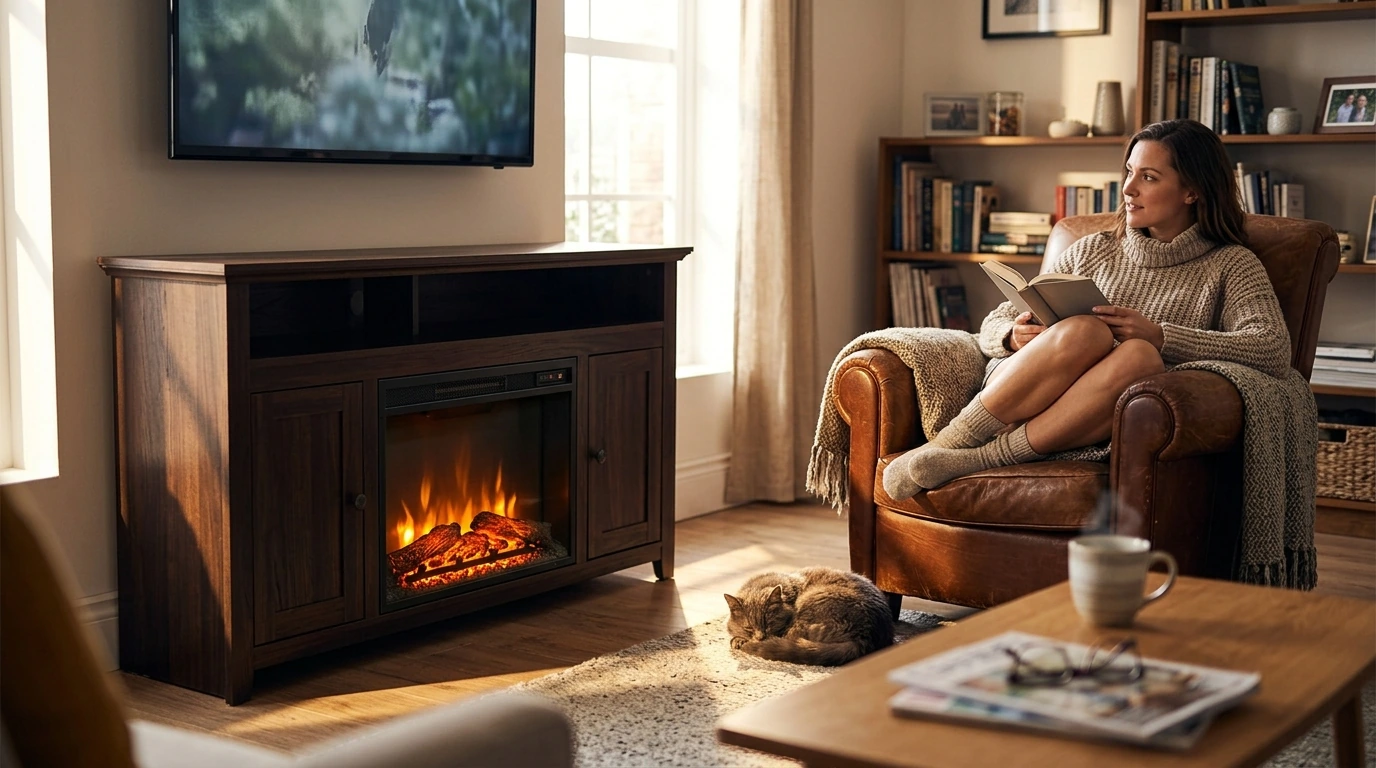
Do electric fireplaces in TV stands give off heat?
Yes—most electric fireplaces built into TV stands are designed to produce real heat, not just a flame effect. Inside the fireplace insert, a fan-forced heater pushes warmed air out through a front vent, helping take the chill off a living room, bedroom, or den while the TV stand doubles as your media hub.
In many models, you can run the heat and the flames independently. That means you can enjoy the look of a fireplace year-round, then switch the heater on only when you want supplemental warmth. Our team likes this setup for everyday comfort because you’re not forced to choose between “ambiance” and “practical.”
What kind of heat should you expect?
TV stand electric fireplaces commonly use a standard household plug and a built-in heater that’s comparable to a small space heater. The result is best used as zone heat—warming the area you’re in—rather than replacing a home’s main heating system. If you want steady comfort, look for adjustable heat settings and a thermostat so the unit can maintain a consistent temperature instead of cycling too hot and too cold.
Placement tips so heat works better (and stays comfortable)
Since the heat typically vents from the front, keep the area directly in front of the insert clear—blankets, baskets, and pet beds can block airflow. Also give the stand a little breathing room around the sides and back so the electronics inside your console don’t trap extra warmth.
If your TV sits above the fireplace opening, position it so the rising heat stream isn’t aimed at the screen. Many stands are designed with this in mind, but you’ll still get the best results when warm air has a straight path into the room rather than into shelves or cabling.
Choosing the right style and size
Heat output is only one part of the decision. For larger TVs, mantel-style options can add presence and better top-surface depth for soundbars and décor. If you’re shopping for a bigger setup, our team put together a detailed guide you can use while comparing layouts and features: 72-inch electric fireplace TV stand with mantel for 80-inch TVs.
FAQ
Are TV stands with electric fireplaces safe?
When used as intended, they’re generally safe: the heat source is enclosed, there’s no real flame, and the warmed air vents out the front. For best safety, plug the unit directly into a wall outlet, keep vents unobstructed, and don’t place combustible items against the heater opening.
Recommended for you

TV Stand With Fireplace: Pros, Cons, and Tips
Oct 8, 2026
TV Over a Fireplace: Why It’s a Bad Idea
Oct 8, 2026












Leave a comment