-
Shop
- Advanced Technologies
- AI Skills
- Bathroom
- Best-Sellers
- Car Accessories
- Confidence
- Dating & Social Skills
- Digital Resources
- AI & Technology
- Beauty
- Budgeting & Saving
- Car Buying & Ownership
- Cozy Feast Collection
- Electronics & Technology
- Entrepreneurship & Business Growth
- Financial Education
- Financial Independence
- Financial Mindset & Psychology
- Goal Setting
- Home Styling & Organization
- Kitchen & Recipes
- Leadership
- Mindfulness
- Mindset
- Online Business
- Parenting & Child Development
- Personal Style & Fashion
- Pet Lifestyle & Wellness
- Positive Thinking
- Sleep Improvement
- Smart Life with AI
- Stress Management & Relaxation
- Travel Planning
- Wellness
- Yoga & Fitness
- Yoga & Mind-Body Practices
- Education & Learning
- Family & Parenting
- Fashion
- Accessories
- Alexander McQueen
- Bags
- Bags & Wallets
- Balenciaga
- Belts
- Blazers
- Bottega Veneta
- Bottoms
- Brunello Cucinelli
- Burberry
- Chanel
- Chloé
- Dior
- Dolce & Gabbana
- Dresses
- Etro
- Fendi
- Gucci
- Hats & Hair Accessories
- Hoodies & Sweatshirts
- Jacquemus
- Jewelry
- Jil Sander
- Kiton
- Luggage
- Miu Miu
- Off-White
- Outerwear
- Prada
- Rick Owens
- Saint Laurent
- Shoes
- Socks & Tights
- Sweaters & Cardigans
- The Row
- Tom Ford
- Tops & Shirts
- Valentino
- Valentino Garavani
- Versace
- Vivienne Westwood
- Watches
- Fashion Accessories
- Furniture
- Gadgets
- Health & Beauty
- Health & Wellness
- Home & Garden
- Home Decor
- Home Electronics
- Home Supplies
- Kids & Babies
- Kitchen
- Kitchen Best-Sellers
- Lighting
- Patio, Lawn & Garden
- Personal Growth
- Pet Care
- Pet Supplies
- Pets
- Sport & Outdoors
- Super Deals
- Travel
- Travel & Adventure
- Wealth
- Popular
- Best deals
102mm Achromatic Refractor: A Night Sky Guide
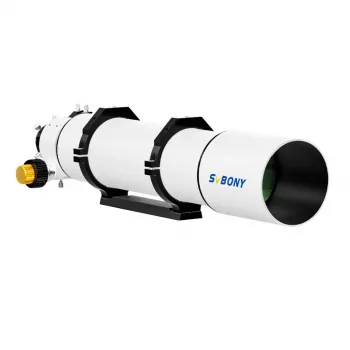
A 102mm achromatic refractor offers a way to explore the Moon’s surface, watch the planets, and seek out brighter deep-sky objects. Our 102mm Achromatic Refractor Telescope Set is an option if you want one telescope for a range of visual observing.
Before choosing a set, consider where you will observe, how much outdoor space you have, and whether you can travel to darker skies. A telescope can reveal rewarding details, but the view through an eyepiece will differ from the colorful, long-exposure images you may have seen online.
What a 102mm Refractor Brings to the Night Sky
The 102mm measurement describes the telescope’s aperture: the diameter of its main light-gathering lens. That aperture collects light from bright targets like the Moon and planets as well as fainter targets such as star clusters and some galaxies. What you can see also depends on the object, your surroundings, and observing conditions.
A refractor uses lenses to focus incoming light. An achromatic design brings different colors of light closer to a common focus, reducing color error without eliminating it. You may notice a colored fringe around a bright planet or the edge of the Moon. This is a normal characteristic of the optical design, though its visibility varies with the target and viewing setup.
For someone who wants variety, a 102mm refractor provides a practical starting point. You can spend one evening exploring lunar craters and another finding clusters or looking for the subtle glow of a bright galaxy.
What to Look for Through the Telescope
We recommend beginning with the Moon because it is easy to locate and offers recognizable features. Look near the boundary between its illuminated and dark portions, where shadows help craters and mountains stand out. A partial Moon often provides more contrast along this boundary than a full Moon.
Next, try a bright planet or a star cluster. Planets appear as small discs, and the detail you can distinguish changes with their position and the steadiness of the atmosphere. On a turbulent night, an image may shimmer even when the telescope is carefully focused.
Deep-sky observing rewards a different approach. Give your eyes time to adapt and choose a dark location when possible. Galaxies generally look like faint patches, not the colorful photographs produced with cameras and long exposures. You can learn more about these distant systems from NASA’s guide to galaxies.
| Target | What to Expect | Helpful Conditions |
|---|---|---|
| Moon | Craters and shadows along the illuminated edge | A clear sky; a partial Moon can reveal useful contrast |
| Planets | Small discs and possible visible detail | Steady air and careful focusing |
| Star clusters | Groups of stars against the sky | Dark skies and a suitable eyepiece |
| Bright galaxies | Faint patches of light | A dark location and eyes adapted to darkness |
Getting Ready for a Viewing Session
Set up on stable ground with an unobstructed view of the part of the sky you want to explore. Avoid looking over rooftops when you can: heat rising from buildings can disturb the image. Allow the telescope time to adjust to outdoor temperatures before judging the sharpness of the view.
Start with a low-magnification eyepiece to make targets easier to find. Once an object is centered and focused, increase magnification if the available eyepieces and atmospheric conditions allow it. More magnification does not always mean a clearer view; if the image becomes dim or unsteady, return to a lower setting.
For faint targets, let your eyes adapt to darkness and use a dim red light when you need to read a chart or adjust equipment. Give yourself time at the eyepiece: a faint object can become easier to notice after a few minutes of careful looking.
Solar safety: Never look at the Sun through the telescope without a properly fitted solar filter designed for the telescope. Follow the filter manufacturer’s instructions, and learn more from NASA’s solar observing guidance.
Is This Telescope Set Right for You?
This set is worth considering if you want to explore several types of night-sky targets and are comfortable with the visual limitations of an achromatic refractor. Its 102mm aperture supports a mix of lunar, planetary, and brighter deep-sky observing, while dark skies and steady air can make a meaningful difference to your experience.
The listed price is $1,517.49, and the set is currently in stock. Price and availability may change. Visit the product page to review the included equipment and set details before ordering, particularly if you have specific expectations for eyepieces or how you will support the telescope.
For a different kind of outdoor outing, our 3.6M Thickened PVC Inflatable Kayak is also in stock. Our team recommends choosing outdoor equipment for the activity and conditions in which you plan to use it.
FAQ
Can you see galaxies with a refractor telescope?
Yes. Brighter galaxies can be visible through a refractor, especially under dark skies, but they usually look like faint patches rather than detailed, colorful images.
Can a 102mm refractor be used to observe planets?
Yes. The detail you see depends on the planet, atmospheric conditions, magnification, and focus.
Why might bright objects show colored fringes?
An achromatic refractor reduces but does not eliminate chromatic aberration, which can appear as colored fringing around bright targets.
Recommended for you



Building Wealth Through Mentorship on a Low Income
Nov 19, 2026













Leave a comment