-
Shop
- Advanced Technologies
- AI Skills
- Bathroom
- Best-Sellers
- Car Accessories
- Confidence
- Dating & Social Skills
- Digital Resources
- AI & Technology
- Beauty
- Budgeting & Saving
- Car Buying & Ownership
- Cozy Feast Collection
- Electronics & Technology
- Entrepreneurship & Business Growth
- Financial Education
- Financial Independence
- Financial Mindset & Psychology
- Goal Setting
- Home Styling & Organization
- Kitchen & Recipes
- Leadership
- Mindfulness
- Mindset
- Online Business
- Parenting & Child Development
- Personal Style & Fashion
- Pet Lifestyle & Wellness
- Positive Thinking
- Sleep Improvement
- Smart Life with AI
- Stress Management & Relaxation
- Travel Planning
- Wellness
- Yoga & Fitness
- Yoga & Mind-Body Practices
- Education & Learning
- Family & Parenting
- Fashion
- Accessories
- Alexander McQueen
- Bags
- Bags & Wallets
- Balenciaga
- Belts
- Blazers
- Bottega Veneta
- Bottoms
- Brunello Cucinelli
- Burberry
- Chanel
- Chloé
- Dior
- Dolce & Gabbana
- Dresses
- Etro
- Fendi
- Gucci
- Hats & Hair Accessories
- Hoodies & Sweatshirts
- Jacquemus
- Jewelry
- Jil Sander
- Kiton
- Luggage
- Miu Miu
- Off-White
- Outerwear
- Prada
- Rick Owens
- Saint Laurent
- Shoes
- Socks & Tights
- Sweaters & Cardigans
- The Row
- Tom Ford
- Tops & Shirts
- Valentino
- Valentino Garavani
- Versace
- Vivienne Westwood
- Watches
- Fashion Accessories
- Furniture
- Gadgets
- Health & Beauty
- Health & Wellness
- Home & Garden
- Home Decor
- Home Electronics
- Home Supplies
- Kids & Babies
- Kitchen
- Kitchen Best-Sellers
- Lighting
- Patio, Lawn & Garden
- Personal Growth
- Pet Care
- Pet Supplies
- Pets
- Sport & Outdoors
- Super Deals
- Travel
- Travel & Adventure
- Wealth
- Popular
- Best deals
Sparkle at Every Touch: Clean Switches and Handles
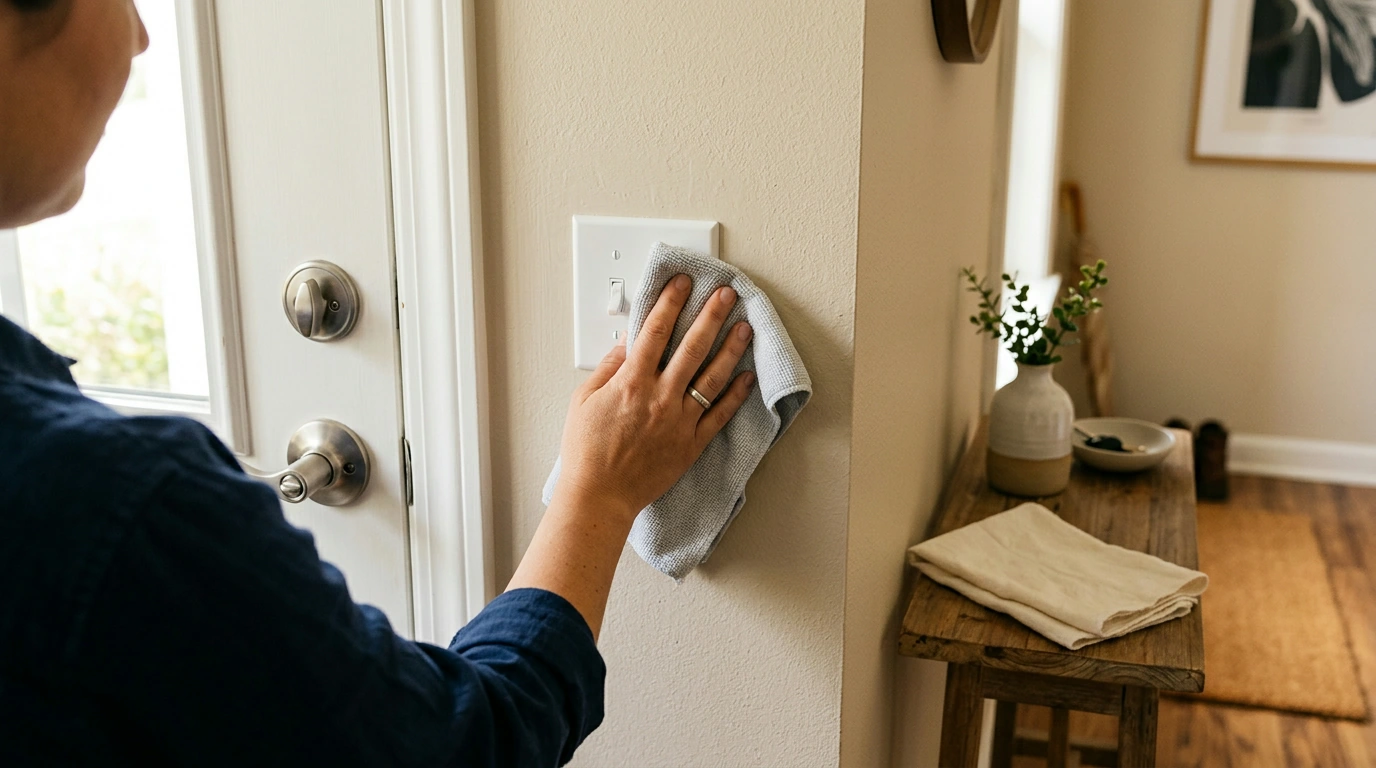
A brighter, more welcoming home can start with the surfaces you barely notice: the light switch by the door, the handle you reach for with full hands, and the cabinet pulls you use every day. A little attention to these small touchpoints can make a room feel fresher without adding a major task to your schedule.
Our Sparkle at Every Touch digital cleaning guide focuses on cleaning switches and handles. Below, our team shares a simple routine to help you care for these frequently touched surfaces safely.
Why Small Touchpoints Deserve Attention
Fingertips leave behind oils and smudges, while everyday activity can add dust, food residue, and other grime. A switch plate may look clean at a glance but show fingerprints around its edges. Door handles and cabinet pulls can collect buildup where fingers curl around them.
Cleaning and disinfecting are different tasks. Cleaning removes dirt and residue from a surface; disinfecting uses an appropriate product to kill germs according to its label. If you need to disinfect, clean the surface first and keep it wet for the full contact time stated on the disinfectant label. The CDC’s cleaning and disinfecting guidance explains when each approach may be useful.
For an everyday routine, focus on visible marks and the touchpoints your household uses most. Add them to your usual cleaning schedule, and wipe up spills or obvious grime promptly rather than waiting for a deep-cleaning day.
What to Gather Before You Start
You don’t need a crowded cleaning caddy for this job. Gather a soft cloth, mild soap, water, and a separate dry cloth. Keep another clean cloth handy for removing soap residue. Use only enough water to make the cleaning cloth lightly damp, not wet or dripping.
If disinfection is needed, choose a disinfectant suitable for the surface and follow its directions. The EPA’s disinfectant resources can help you find information about registered products. Product labels also tell you how long a surface needs to remain wet and whether any additional steps are required.
Before you begin, consult the manufacturer’s care instructions for delicate finishes, specialty hardware, and smart switches. Some coatings or electronic controls may have specific restrictions that differ from a basic soap-and-water routine.
How to Clean Light Switches Safely
Electricity and excess moisture don’t mix, so start by turning off power to the switch at the breaker. Never spray water, cleaner, or disinfectant directly onto a switch or plate.
- Mix a small amount of mild soap with water. Lightly dampen a soft cloth with the solution, then wring it out well.
- Gently wipe the switch and plate, paying attention to visible fingerprints. Keep moisture out of openings and avoid pressing liquid around the edges.
- Use a clean, lightly damp cloth to remove any soap residue without introducing excess moisture.
- Dry the switch and plate thoroughly with a dry cloth. Restore power only after the surface is dry.
For a smart switch or an unfamiliar finish, use the manufacturer’s instructions to decide which products and methods are appropriate. If liquid enters the switch or you notice damage, leave the power off and consult a qualified electrician.
Give Handles and Pulls a Fresh Finish
Door handles and cabinet pulls are straightforward to clean, but their finishes can vary. Start with a soft cloth lightly dampened with mild soapy water. Wipe the areas your hands touch, including the underside of a pull and the curve of a handle. Work gently around joints and mounting points rather than letting water collect there.
Use a clean, lightly damp cloth to remove soap residue, then dry the hardware thoroughly. For lacquered, plated, painted, or other specialty finishes, follow the hardware manufacturer’s care instructions before using any cleaner or disinfectant.
When disinfecting is appropriate, clean first and use a product approved for that surface. Follow the label’s application directions and required wet contact time; a quick swipe may not be enough to disinfect. Keep the product away from nearby materials it could damage.
A Quick Touchpoint Routine
| Surface | Everyday cleaning | Extra care |
|---|---|---|
| Light switches | Wipe with a lightly damp, soapy cloth | Turn off power first and keep moisture out of openings |
| Door handles | Wipe with mild soapy water and dry | Check finish care instructions before using disinfectant |
| Cabinet pulls | Clean fingerprints and residue with a soft cloth | Dry thoroughly, especially around joints |
Make a Brighter Routine Easy to Keep
Pair touchpoint cleaning with a task you already do, such as wiping kitchen counters or tidying an entryway. You can work room by room, starting with the handles and switches that show the most fingerprints. Keep a dry cloth nearby so finishing the job is as easy as starting it.
If you want a digital resource focused on these small surfaces, explore our Sparkle at Every Touch cleaning guide, available for $10.99. For a different kind of organizing project, our AI for Small Business Toolkit is also available as a digital download bundle.
FAQ
What is the best way to clean dirty light switches?
Turn off power at the breaker, then wipe the switch and plate with a lightly damp cloth and mild soapy water, keeping moisture out of openings. Remove residue with a clean, lightly damp cloth and dry thoroughly before restoring power.
Can you use Clorox wipes on light switches?
Check the wipe label and switch manufacturer’s instructions first. If both permit their use, turn off power, avoid excess liquid and openings, follow the label’s contact time, and let the switch dry before restoring power.
Recommended for you



Purrfectly Clean Ears: How to Clean Cat Ears Safely
Nov 19, 2026
Furla Women’s Leather Pumps: Style, Fit & Care
Nov 19, 2026













Leave a comment