-
Shop
- Advanced Technologies
- AI Skills
- Bathroom
- Best-Sellers
- Car Accessories
- Confidence
- Dating & Social Skills
- Digital Resources
- AI & Technology
- Beauty
- Budgeting & Saving
- Car Buying & Ownership
- Cozy Feast Collection
- Electronics & Technology
- Entrepreneurship & Business Growth
- Financial Education
- Financial Independence
- Financial Mindset & Psychology
- Goal Setting
- Home Styling & Organization
- Kitchen & Recipes
- Leadership
- Mindfulness
- Mindset
- Online Business
- Parenting & Child Development
- Personal Style & Fashion
- Pet Lifestyle & Wellness
- Positive Thinking
- Sleep Improvement
- Smart Life with AI
- Stress Management & Relaxation
- Travel Planning
- Wellness
- Yoga & Fitness
- Yoga & Mind-Body Practices
- Education & Learning
- Family & Parenting
- Fashion
- Accessories
- Alexander McQueen
- Bags
- Bags & Wallets
- Balenciaga
- Belts
- Blazers
- Bottega Veneta
- Bottoms
- Brunello Cucinelli
- Burberry
- Chanel
- Chloé
- Dior
- Dolce & Gabbana
- Dresses
- Etro
- Fendi
- Gucci
- Hats & Hair Accessories
- Hoodies & Sweatshirts
- Jacquemus
- Jewelry
- Jil Sander
- Kiton
- Luggage
- Miu Miu
- Off-White
- Outerwear
- Prada
- Rick Owens
- Saint Laurent
- Shoes
- Socks & Tights
- Sweaters & Cardigans
- The Row
- Tom Ford
- Tops & Shirts
- Valentino
- Valentino Garavani
- Versace
- Vivienne Westwood
- Watches
- Fashion Accessories
- Furniture
- Gadgets
- Health & Beauty
- Health & Wellness
- Home & Garden
- Home Decor
- Home Electronics
- Home Supplies
- Kids & Babies
- Kitchen
- Kitchen Best-Sellers
- Lighting
- Patio, Lawn & Garden
- Personal Growth
- Pet Care
- Pet Supplies
- Pets
- Sport & Outdoors
- Super Deals
- Travel
- Travel & Adventure
- Wealth
- Popular
- Best deals
Mind-Body Healing Techniques: 6 Practical Examples
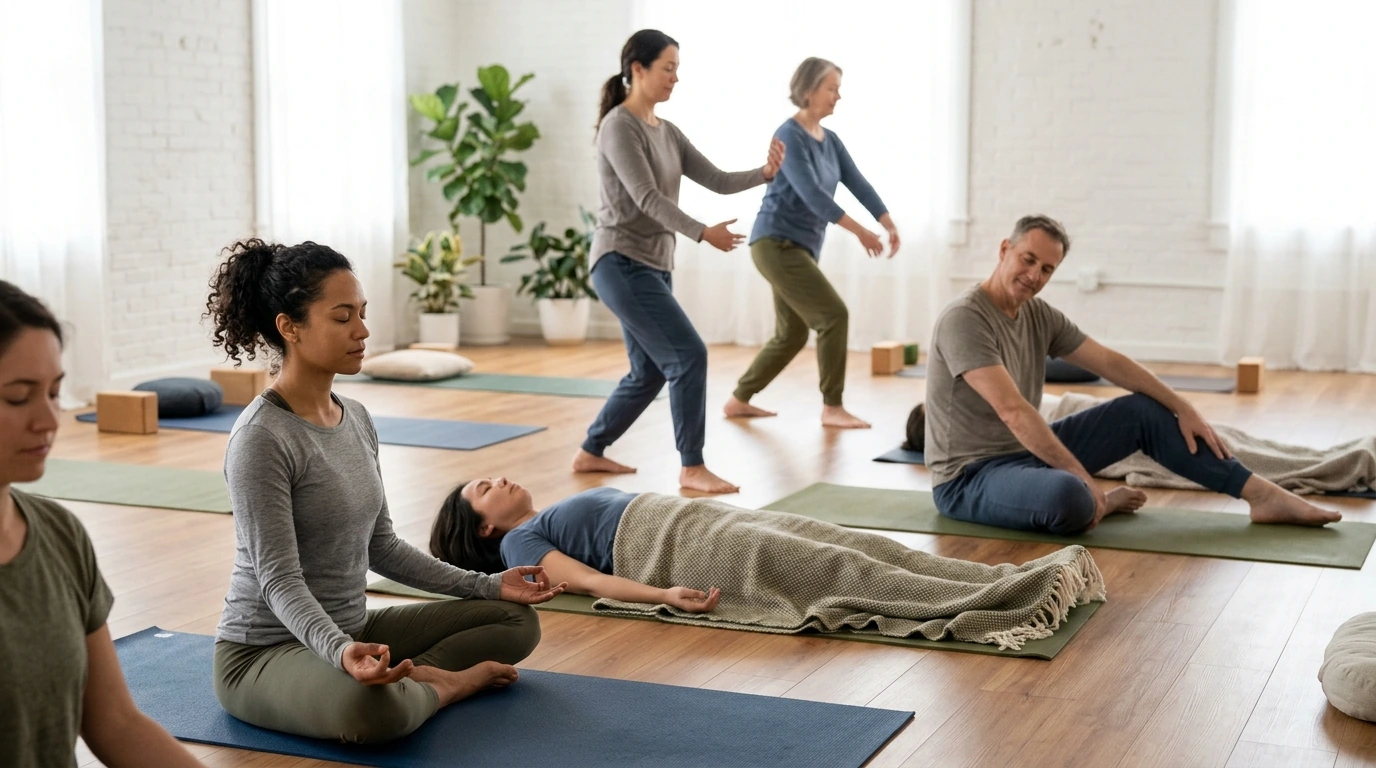
What are some examples of mind-body healing techniques?
Mind-body healing techniques are practical ways to calm your nervous system, steady your thoughts, and support physical recovery by working with breath, attention, movement, and self-awareness. Our team recommends starting with one or two methods you can repeat daily, then building a short routine that fits your schedule.
1) Breathwork (paced breathing)
Try inhaling through your nose for 4 counts and exhaling for 6 counts for 3–5 minutes. This longer exhale can help downshift stress responses and make it easier to relax your muscles and mind.
2) Body scan meditation
Lie down or sit comfortably and move your attention slowly from your forehead to your toes, noticing sensations without judging them. If you feel tension, soften that area on the next exhale rather than forcing it to “release.”
3) Progressive muscle relaxation (PMR)
Gently tense one muscle group (like fists or shoulders) for about 5 seconds, then relax for 10–15 seconds before moving on. PMR is especially useful if stress shows up as tightness, jaw clenching, or restlessness at bedtime.
4) Guided imagery
Use an audio track or your own script to visualize a calming place and add details (sounds, temperature, textures). Keeping the image sensory—rather than “perfect”—often makes it more soothing and easier to repeat.
5) Mindful movement (yoga, tai chi, or stretching)
Choose slow, controlled movements paired with steady breathing. Focus on how your body feels through each motion, stopping before sharp pain and aiming for gentle range-of-motion and balance.
6) Journaling for emotional processing
Set a 5-minute timer and write continuously about what’s on your mind, then end with one small action you can take today. This technique pairs well with breathing or a short walk to help you feel more settled afterward.
How to turn these into a simple daily routine
Pick one calming practice (like paced breathing) and one body-based practice (like stretching or PMR), and keep the total time to 10–15 minutes. If you want a ready framework, follow our step-by-step approach in our mind-body wellness 15-minute daily routine guide.
FAQ
How often should I practice mind-body techniques to notice benefits?
Most people do best with brief daily practice, even 5–15 minutes. Consistency matters more than intensity, so choose a schedule you can keep.
Recommended for you



Is Mind-Body Healing Real? A Simple Daily Routine
Oct 16, 2026













Leave a comment