-
Shop
- Advanced Technologies
- AI Skills
- Bathroom
- Best-Sellers
- Car Accessories
- Confidence
- Dating & Social Skills
- Digital Resources
- AI & Technology
- Beauty
- Budgeting & Saving
- Car Buying & Ownership
- Cozy Feast Collection
- Electronics & Technology
- Entrepreneurship & Business Growth
- Financial Education
- Financial Independence
- Financial Mindset & Psychology
- Goal Setting
- Home Styling & Organization
- Kitchen & Recipes
- Leadership
- Mindfulness
- Mindset
- Online Business
- Parenting & Child Development
- Personal Style & Fashion
- Pet Lifestyle & Wellness
- Positive Thinking
- Sleep Improvement
- Smart Life with AI
- Stress Management & Relaxation
- Travel Planning
- Wellness
- Yoga & Fitness
- Yoga & Mind-Body Practices
- Education & Learning
- Family & Parenting
- Fashion
- Accessories
- Alexander McQueen
- Bags
- Bags & Wallets
- Balenciaga
- Belts
- Blazers
- Bottega Veneta
- Bottoms
- Brunello Cucinelli
- Burberry
- Chanel
- Chloé
- Dior
- Dolce & Gabbana
- Dresses
- Etro
- Fendi
- Gucci
- Hats & Hair Accessories
- Hoodies & Sweatshirts
- Jacquemus
- Jewelry
- Jil Sander
- Kiton
- Luggage
- Miu Miu
- Off-White
- Outerwear
- Prada
- Rick Owens
- Saint Laurent
- Shoes
- Socks & Tights
- Sweaters & Cardigans
- The Row
- Tom Ford
- Tops & Shirts
- Valentino
- Valentino Garavani
- Versace
- Vivienne Westwood
- Watches
- Fashion Accessories
- Furniture
- Gadgets
- Health & Beauty
- Health & Wellness
- Home & Garden
- Home Decor
- Home Electronics
- Home Supplies
- Kids & Babies
- Kitchen
- Kitchen Best-Sellers
- Lighting
- Patio, Lawn & Garden
- Personal Growth
- Pet Care
- Pet Supplies
- Pets
- Sport & Outdoors
- Super Deals
- Travel
- Travel & Adventure
- Wealth
- Popular
- Best deals
Best Telescope for Viewing Galaxies: A Practical Guide
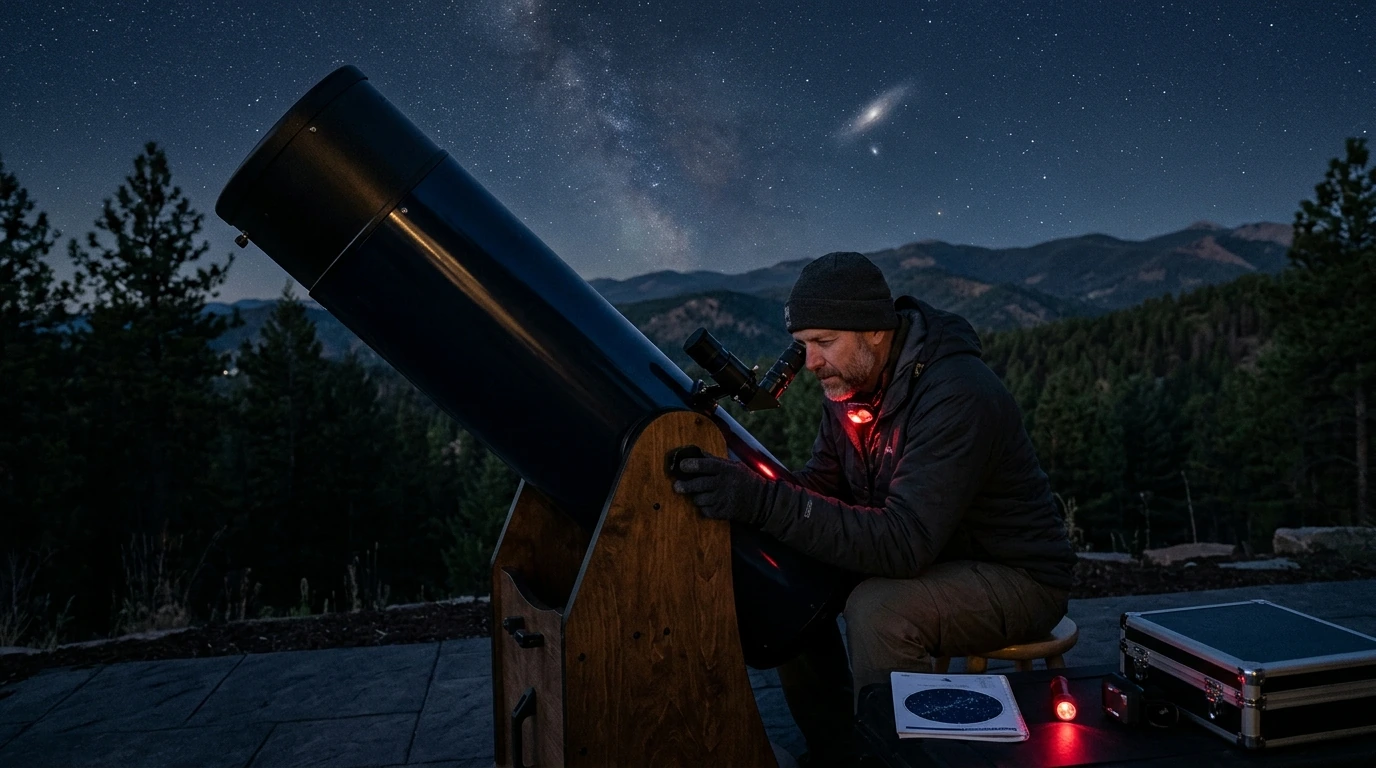
What type of telescope is best for viewing galaxies?
For most visual observers, a Dobsonian reflector with an 8-inch or 10-inch aperture is the best starting point for viewing galaxies. Its large mirror gathers more light than a smaller telescope, helping faint galaxies stand out, while its simple mount makes it practical to aim and use.
Our team recommends choosing as much aperture as you can comfortably transport and set up. A telescope that is easy for you to use regularly will give you more opportunities to explore the night sky.
Why does aperture matter for galaxies?
Galaxies are often dim and spread across a wide area of sky. A larger aperture collects more light, making faint objects easier to detect and potentially revealing details such as brighter cores or subtle variations in shape. An 8-inch Dobsonian offers a useful balance of light-gathering ability, cost, and portability; a 10-inch model can show more, but its larger tube and base are heavier.
Keep your expectations realistic: most galaxies appear as faint, gray patches through an eyepiece rather than the colorful, detailed images produced by long-exposure photography.
Can you see galaxies with a refractor?
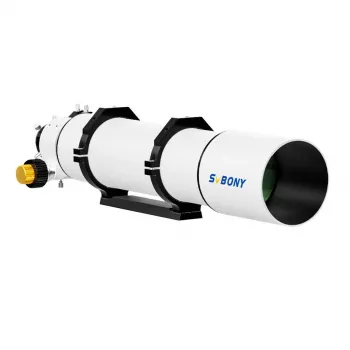
Yes. A 102mm refractor can show brighter galaxies, including the Andromeda Galaxy and its bright core, especially under dark skies. It is also a versatile choice if you want to observe the Moon, planets, and star clusters. Its smaller aperture generally makes faint galaxies harder to see than they would be through a larger Dobsonian.
For more on this type of telescope, explore our guide to 102mm achromatic refractors.
What else helps you see galaxies?
Dark skies make a substantial difference. Streetlights and other sources of light pollution can wash out a galaxy’s faint glow, so choose a dark observing site when possible and give your eyes time to adapt. A moonless night also helps.
Start with a low-power eyepiece to find your target, then try moderate magnification to see whether the view improves. A star chart or astronomy app can help you locate bright targets such as the Andromeda Galaxy, the Bode’s Galaxy pair, and the Whirlpool Galaxy.
FAQ
Can you see galaxies from a city?
You can see some brighter galaxies from a city, but light pollution makes them much harder to distinguish. Traveling to a darker location will usually improve the view more than changing eyepieces.














Leave a comment