-
Shop
- Advanced Technologies
- AI Skills
- Bathroom
- Best-Sellers
- Car Accessories
- Confidence
- Dating & Social Skills
- Digital Resources
- AI & Technology
- Beauty
- Budgeting & Saving
- Car Buying & Ownership
- Cozy Feast Collection
- Electronics & Technology
- Entrepreneurship & Business Growth
- Financial Education
- Financial Independence
- Financial Mindset & Psychology
- Goal Setting
- Home Styling & Organization
- Kitchen & Recipes
- Leadership
- Mindfulness
- Mindset
- Online Business
- Parenting & Child Development
- Personal Style & Fashion
- Pet Lifestyle & Wellness
- Positive Thinking
- Sleep Improvement
- Smart Life with AI
- Stress Management & Relaxation
- Travel Planning
- Wellness
- Yoga & Fitness
- Yoga & Mind-Body Practices
- Education & Learning
- Family & Parenting
- Fashion
- Accessories
- Alexander McQueen
- Bags
- Bags & Wallets
- Balenciaga
- Belts
- Blazers
- Bottega Veneta
- Bottoms
- Brunello Cucinelli
- Burberry
- Chanel
- Chloé
- Dior
- Dolce & Gabbana
- Dresses
- Etro
- Fendi
- Gucci
- Hats & Hair Accessories
- Hoodies & Sweatshirts
- Jacquemus
- Jewelry
- Jil Sander
- Kiton
- Luggage
- Miu Miu
- Off-White
- Outerwear
- Prada
- Rick Owens
- Saint Laurent
- Shoes
- Socks & Tights
- Sweaters & Cardigans
- The Row
- Tom Ford
- Tops & Shirts
- Valentino
- Valentino Garavani
- Versace
- Vivienne Westwood
- Watches
- Fashion Accessories
- Furniture
- Gadgets
- Health & Beauty
- Health & Wellness
- Home & Garden
- Home Decor
- Home Electronics
- Home Supplies
- Kids & Babies
- Kitchen
- Kitchen Best-Sellers
- Lighting
- Patio, Lawn & Garden
- Personal Growth
- Pet Care
- Pet Supplies
- Pets
- Sport & Outdoors
- Super Deals
- Travel
- Travel & Adventure
- Wealth
- Popular
- Best deals
A Gentle Weekly Cat Training Routine and Checklist
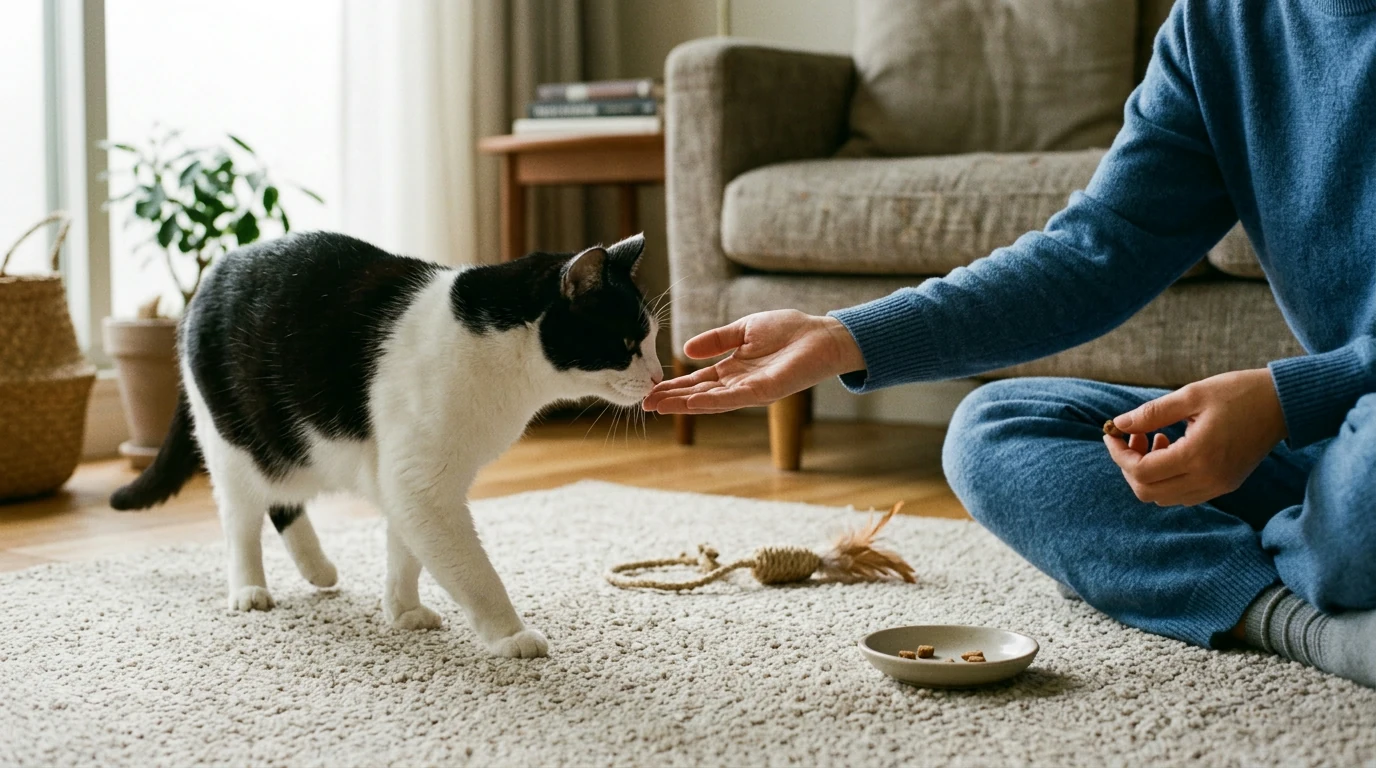
A few calm minutes with your cat can become a rewarding part of your week. Short, positive sessions give you opportunities to build trust, practice simple cues, and discover what motivates your cat without turning training into a chore.
Our Weekly Cat Training Routine Checklist is a printable digital download for organizing that routine. At $5.99, it gives you a simple way to plan practice, make room for rest, and keep track of what works for your cat.
Start with trust and a comfortable space
Choose a quiet spot where your cat can move freely and leave whenever they want. A familiar room with few interruptions is often a good place to start. Pick a time when your cat is relaxed and interested in a treat or a favorite toy, rather than waking them up or interrupting a meal.
Let your cat approach you at their own pace. You can reward a glance in your direction, a step toward you, or a relaxed investigation of your hand. These small choices matter: voluntary engagement gives your cat a reason to see training as a pleasant experience.
Keep the first sessions brief. If your cat walks away, let them go instead of following or trying to bring them back. Pause if you notice signs of discomfort, such as flattened ears, a twitching tail, or a tense body. You can try again later in a quieter setting.
Give the week a gentle rhythm
A weekly plan helps you decide what to practice without expecting your cat to master a new skill every day. The schedule below is an example, not a guaranteed timeline. Your cat may enjoy several days of trust-building before trying a cue, or need extra repetitions before moving on.
| Day | Focus | Simple activity |
|---|---|---|
| Monday | Build trust | Reward your cat for approaching or looking at you. |
| Tuesday | Introduce a cue | Reward a nose touch to your hand. |
| Wednesday | Practice | Repeat the hand target in a quiet space. |
| Thursday | Rest and play | Offer gentle play without a training goal. |
| Friday | Try a trick | Use a treat to guide a sit and reward the movement. |
| Saturday | Review | Practice an easy cue your cat enjoys. |
| Sunday | Reflect | Note what worked and choose a focus for next week. |
For a hand target, hold your hand close enough for your cat to investigate. When their nose touches it, reward them promptly. If they are hesitant, reward an interested look or a small movement toward your hand first. Repeat an easy step as often as needed, and leave space in the week for rest.
Make each training session positive
Reward the behavior you want as soon as it happens so your cat can connect the action with the outcome. A small treat may work well, but some cats prefer praise or a brief chance to play. Experiment with rewards to see what keeps your cat interested without making them overly excited.
Break a trick into steps. For a sit, you might slowly move a treat slightly upward and back from your cat’s nose, rewarding even a small shift toward sitting at first. If your cat backs away or reaches upward instead, reset and try a smaller movement. Never push them into position, punish mistakes, or force participation.
Training treats count toward your cat’s daily food intake, so keep portions small and consider how many you use. Ask your veterinarian for guidance if you are unsure how to balance treats with meals. For more positive training ideas, see Cats Protection’s guide to training your cat.
Use the checklist to stay consistent
A plan can remind you to practice, but it can also remind you to stop. Use the checklist to make room for short sessions, play, and observations instead of treating every day as a deadline. If your cat enjoys a simple hand target for a whole week, repeating it is still useful practice.
Note which cues you tried, which rewards held your cat’s interest, and what time of day seemed most comfortable. You might notice that play works better than treats, or that your cat is more attentive before a regular meal. Those observations can help you make the next session easier for both of you.
Our printable checklist is designed to help you organize a trust-building routine on your own schedule. Because it is a digital download, it is not a physical planner.
Adjust the routine to your cat
If your cat loses interest, reduce distractions or return to a step they already enjoy. You can also switch rewards or end the session and offer another opportunity later. Progress may look like a relaxed approach today and a completed trick weeks from now.
Pause when your cat seems uncomfortable. If you notice a sudden behavior change, seek veterinary advice rather than assuming your cat simply needs more practice. The ASPCA’s overview of common cat behavior issues offers additional context for recognizing concerns.
When you are ready to make a plan, explore our Weekly Cat Training Routine Checklist and build a routine at your cat’s pace. If you also run a small business, our AI for Small Business Toolkit is a separate digital resource you can explore.
FAQ
How long should a cat training session last?
Keep sessions short and end while your cat is still engaged. Adjust the length to their attention and comfort.
Can an older cat learn tricks?
Yes. Cats can learn at different ages, though their pace and motivation vary. Choose comfortable activities and ask your veterinarian if mobility or health is a concern.
Is the weekly cat training checklist a physical product?
No. It is a printable digital download, not a physical product.
Recommended for you



Men’s Luxury Sports Chronograph: Steel & Quartz
Nov 19, 2026













Leave a comment