-
Shop
- Advanced Technologies
- AI Skills
- Bathroom
- Best-Sellers
- Car Accessories
- Confidence
- Dating & Social Skills
- Digital Resources
- AI & Technology
- Beauty
- Budgeting & Saving
- Car Buying & Ownership
- Cozy Feast Collection
- Electronics & Technology
- Entrepreneurship & Business Growth
- Financial Education
- Financial Independence
- Financial Mindset & Psychology
- Goal Setting
- Home Styling & Organization
- Kitchen & Recipes
- Leadership
- Mindfulness
- Mindset
- Online Business
- Parenting & Child Development
- Personal Style & Fashion
- Pet Lifestyle & Wellness
- Positive Thinking
- Sleep Improvement
- Smart Life with AI
- Stress Management & Relaxation
- Travel Planning
- Wellness
- Yoga & Fitness
- Yoga & Mind-Body Practices
- Education & Learning
- Family & Parenting
- Fashion
- Accessories
- Alexander McQueen
- Bags
- Bags & Wallets
- Balenciaga
- Belts
- Blazers
- Bottega Veneta
- Bottoms
- Brunello Cucinelli
- Burberry
- Chanel
- Chloé
- Dior
- Dolce & Gabbana
- Dresses
- Etro
- Fendi
- Gucci
- Hats & Hair Accessories
- Hoodies & Sweatshirts
- Jacquemus
- Jewelry
- Jil Sander
- Kiton
- Luggage
- Miu Miu
- Off-White
- Outerwear
- Prada
- Rick Owens
- Saint Laurent
- Shoes
- Socks & Tights
- Sweaters & Cardigans
- The Row
- Tom Ford
- Tops & Shirts
- Valentino
- Valentino Garavani
- Versace
- Vivienne Westwood
- Watches
- Fashion Accessories
- Furniture
- Gadgets
- Health & Beauty
- Health & Wellness
- Home & Garden
- Home Decor
- Home Electronics
- Home Supplies
- Kids & Babies
- Kitchen
- Kitchen Best-Sellers
- Lighting
- Patio, Lawn & Garden
- Personal Growth
- Pet Care
- Pet Supplies
- Pets
- Sport & Outdoors
- Super Deals
- Travel
- Travel & Adventure
- Wealth
- Popular
- Best deals
How to Think Positive with Anxiety: A Balanced Guide
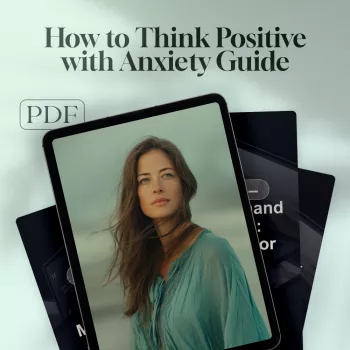
Thinking positively does not mean pretending anxiety isn’t there. You can acknowledge a difficult feeling and still leave room for an outcome other than the worst one your mind suggests.
Our digital guide, Bright Side in the Storm, focuses on reframing thoughts, managing worry, and building daily positivity. It offers a starting point for exploring a more balanced outlook—one that doesn’t require you to be cheerful all the time.
What a Brighter Outlook Can Mean When You Feel Anxious
Anxiety can make uncertainty feel urgent. A small mistake may seem like evidence that everything is unraveling, or an upcoming decision may feel as though it has only one acceptable outcome. In those moments, a brighter outlook doesn’t have to mean telling yourself that everything will be perfect.
Instead, it can mean recognizing that a feared outcome is possible without treating it as certain. You might still feel worried, but you can also consider what you know, what remains uncertain, and what you can do next.
We offer Bright Side in the Storm as a supportive resource for exploring responses to worry. It’s not about judging yourself for anxious thoughts; it’s about making a little more room for other perspectives.
Meet Bright Side in the Storm
Our Bright Side in the Storm digital guide centers on three themes: reframing thoughts, managing worry, and building daily positivity. It is listed at $6.99 USD; visit the product page for current purchase details.
The guide may appeal to you if you want a self-help resource to explore at your own pace. It does not promise to cure anxiety, and it is not a replacement for professional care. You can use it alongside other forms of support that suit your needs.
Reframing Worry Without Forcing Positivity
A balanced thought doesn’t have to sound enthusiastic to be useful. It can simply be more complete than the anxious prediction that came first. Try noticing the thought, asking yourself what is known, and considering an alternative that accounts for uncertainty as well as your ability to respond.
For example, if you catch yourself thinking, “This conversation will be a disaster,” you might pause and ask what you actually know about the conversation. A balanced alternative could be: “I don’t know how it will go, but I can prepare what I want to say.”
The examples below are general ideas for reframing worry, not confirmed exercises from the guide.
| Anxious thought | Balanced alternative |
|---|---|
| Everything will go wrong. | Some things may be difficult, but I can respond one step at a time. |
| I have to solve this right now. | I can decide what needs attention today and revisit the rest later. |
| Feeling anxious means I cannot cope. | Anxiety is uncomfortable, and I can still take a small next step. |
If an alternative feels unbelievable, make it smaller. “I will handle everything perfectly” may feel forced, while “I can ask for help with the next step” may be easier to accept. The goal is not to win an argument with yourself; it’s to respond to the situation with a little more flexibility.
Making Room for Positivity in Daily Life
Small habits can give you opportunities to practice a balanced perspective without adding another demanding task to your day. Choose one that feels manageable, and let it be brief:
- Notice one helpful moment, such as a reassuring message or a task you completed.
- Pause when you hear “always” or “never” in a worried thought and ask whether there are exceptions.
- Identify one action within your control, even if the larger situation remains unresolved.
- Give yourself permission to return to a problem later when no immediate decision is needed.
Some days, noticing that you are having a hard time may be enough. Use the guide at a comfortable pace, and don’t turn positivity into another obligation you can fail to meet.
If business decisions are one source of pressure, practical organization may also be useful alongside emotional support. Our AI for Small Business Toolkit is a separate digital bundle for business tasks, not an anxiety resource or a substitute for care. Consider it only if its business focus matches what you need.
When to Seek Additional Support
If anxiety persists or interferes with your work, relationships, sleep, or everyday activities, consider discussing it with a qualified healthcare professional. You don’t have to wait until things feel unmanageable to ask for help. A professional can help you understand your symptoms and discuss appropriate options.
Self-help resources may complement that support, but they cannot provide a diagnosis or replace treatment. For more information about anxiety and available care, see the National Institute of Mental Health’s guide to anxiety disorders and the NHS Every Mind Matters resource on anxiety.
FAQ
Can positive thinking make anxiety go away?
No approach guarantees that anxiety will disappear. A more balanced perspective may help some people respond differently to anxious thoughts, and professional support can also be important.
What does Bright Side in the Storm cover?
The digital guide focuses on reframing thoughts, managing worry, and building daily positivity. It is intended as a self-help resource you can explore at your own pace.
Is the guide a replacement for therapy?
No. The guide is a digital self-help resource and should not replace professional diagnosis or treatment.
Recommended for you


Gold Foil Fruit Washi Tape Ideas for Creative Pages
Nov 19, 2026













Leave a comment