-
Shop
- Advanced Technologies
- AI Skills
- Bathroom
- Best-Sellers
- Car Accessories
- Confidence
- Dating & Social Skills
- Digital Resources
- AI & Technology
- Beauty
- Budgeting & Saving
- Car Buying & Ownership
- Cozy Feast Collection
- Electronics & Technology
- Entrepreneurship & Business Growth
- Financial Education
- Financial Independence
- Financial Mindset & Psychology
- Goal Setting
- Home Styling & Organization
- Kitchen & Recipes
- Leadership
- Mindfulness
- Mindset
- Online Business
- Parenting & Child Development
- Personal Style & Fashion
- Pet Lifestyle & Wellness
- Positive Thinking
- Sleep Improvement
- Smart Life with AI
- Stress Management & Relaxation
- Travel Planning
- Wellness
- Yoga & Fitness
- Yoga & Mind-Body Practices
- Education & Learning
- Family & Parenting
- Fashion
- Accessories
- Alexander McQueen
- Bags
- Bags & Wallets
- Balenciaga
- Belts
- Blazers
- Bottega Veneta
- Bottoms
- Brunello Cucinelli
- Burberry
- Chanel
- Chloé
- Dior
- Dolce & Gabbana
- Dresses
- Etro
- Fendi
- Gucci
- Hats & Hair Accessories
- Hoodies & Sweatshirts
- Jacquemus
- Jewelry
- Jil Sander
- Kiton
- Luggage
- Miu Miu
- Off-White
- Outerwear
- Prada
- Rick Owens
- Saint Laurent
- Shoes
- Socks & Tights
- Sweaters & Cardigans
- The Row
- Tom Ford
- Tops & Shirts
- Valentino
- Valentino Garavani
- Versace
- Vivienne Westwood
- Watches
- Fashion Accessories
- Furniture
- Gadgets
- Health & Beauty
- Health & Wellness
- Home & Garden
- Home Decor
- Home Electronics
- Home Supplies
- Kids & Babies
- Kitchen
- Kitchen Best-Sellers
- Lighting
- Patio, Lawn & Garden
- Personal Growth
- Pet Care
- Pet Supplies
- Pets
- Sport & Outdoors
- Super Deals
- Travel
- Travel & Adventure
- Wealth
- Popular
- Best deals
250 ft Galvanized Steel Wire Cable Rope: Selection Guide
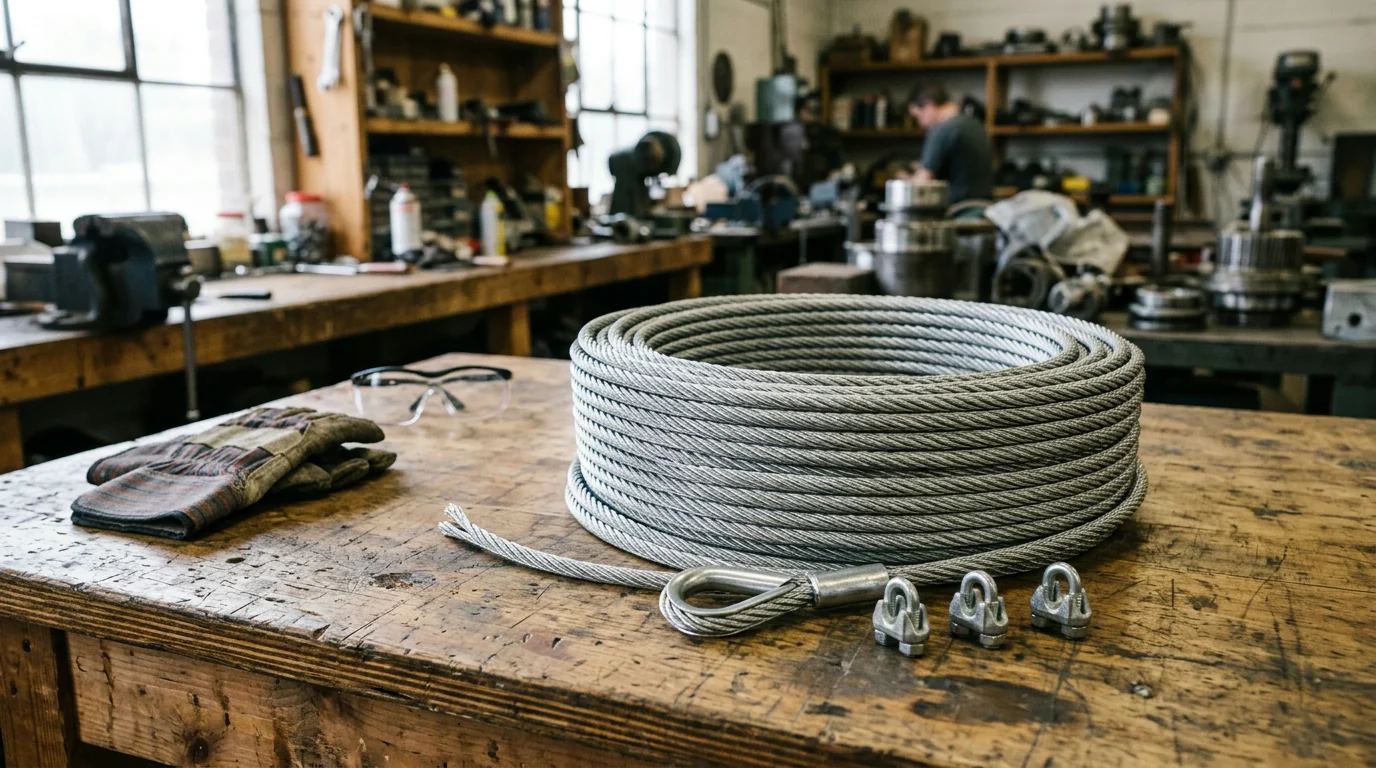
A 250 ft length of galvanized steel wire cable rope gives you material for a long run or several smaller projects. Before you buy, match the cable’s specifications and compatible fittings to the job. Length is only one part of the decision: diameter, construction, working load limit, and exposure conditions all affect whether a cable is appropriate.
What the 250 ft Cable Offers
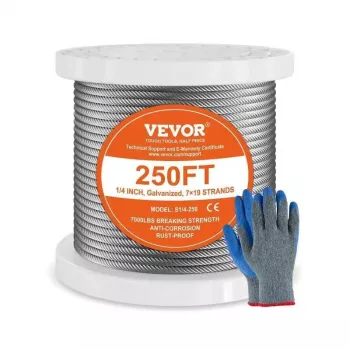
Our 250 ft galvanized steel wire cable rope is supplied in a 250 ft length and is listed at $75.01. Visit the product page for current pricing and availability, and confirm the specifications you need before ordering.
Galvanizing adds a zinc coating to steel to help protect it from corrosion. That protection is useful, but it does not make wire rope immune to rust. The coating can wear, and moisture or corrosive conditions can still affect the cable over time. The American Galvanizers Association explains how zinc protects galvanized steel.
When planning a run, remember that the full 250 ft may not be available as a finished span. Terminations, routing, and cutting waste all use some of the supplied length.
Match the Cable to Your Project
Wire rope may be useful for securing or supporting materials when the cable, fittings, anchor points, and complete assembly are rated for the intended application. A suitable cable for one job is not automatically suitable for another, even when the visible load appears similar.
Start with the cable’s diameter and construction. Diameter affects which clips, thimbles, and other fittings can be used. Construction influences characteristics such as flexibility and abrasion resistance. Confirm both before selecting hardware or routing the rope around bends.
Next, identify the working load limit and the forces the assembly will encounter. The weight of an object is not always the only force involved: tension, angles, movement, and sudden loading can change the demand on the cable and its connections. Every component and anchor point must be appropriate for the intended load.
Cable Selection Checklist
| Factor | What to check |
|---|---|
| Length | Allow for the required run, terminations, and any cutting waste. |
| Load | Confirm the working load limit and account for forces in the application. |
| Fittings | Choose clips, thimbles, and other hardware compatible with the cable diameter and intended load. |
| Environment | Consider moisture, salt exposure, and abrasion when selecting cable and inspecting it. |
Do not assume this cable is suitable for lifting people or overhead loads. Those applications have specific requirements for the rope, fittings, equipment, and use. If the necessary specifications or ratings are unavailable, do not use the cable for that purpose.
Handling, Installation and Care
Wear gloves and eye protection when handling or cutting wire rope. Cut ends and broken wires can be sharp, so control the rope as you uncoil it and handle cut sections carefully. Use suitable tools and follow the cable manufacturer’s cutting guidance.
Install and terminate the rope according to the cable and fitting manufacturers’ instructions. Compatible parts still need to be assembled correctly; for example, clips must be installed and maintained as their manufacturer directs. Avoid sharp bends that can damage the rope or interfere with its performance.
Inspect the cable and fittings regularly for broken wires, corrosion, kinks, wear, and other damage. Remove damaged cable from service rather than relying on it to support or secure a load. Inspection frequency and removal criteria depend on the application; OSHA’s wire rope inspection requirements provide a reference for applicable crane and derrick operations in construction.
Store unused cable in a dry location, away from conditions that encourage corrosion or abrasion. Keep it arranged so it can be handled without introducing kinks or tight bends.
When Galvanized Cable May Not Be the Best Fit
Galvanized steel is worth considering when corrosion protection is important, but its zinc coating can wear or corrode in demanding conditions. Salt exposure, repeated abrasion, and frequent movement can all influence service life. For those projects, compare cable materials, construction, and verified ratings rather than choosing on coating alone.
Critical loads deserve particular care. Select an assembly designed for the application, including its fittings and anchor points, and follow applicable requirements. If you cannot verify the necessary specifications, choose another product whose suitability you can confirm.
Our team encourages you to review the product details before choosing the 250 ft cable. If you are also looking for general business resources, we offer the separate AI for Small Business Toolkit – 5-in-1 Digital Download Bundle; it is a digital product, not a cable installation guide.
Before choosing, compare the product details with your daily routine, available space, care needs, and preferred setup. The strongest option is usually the one that fits the intended use clearly and remains simple to clean, store, and check before repeat use.
FAQ
What is the downside of galvanized steel?
The zinc coating can wear or degrade over time, leaving the steel vulnerable to corrosion. Exposure and maintenance affect its service life.
How much does a 4X8 sheet of galvanized steel cost?
Prices vary by thickness, coating, and seller. Sheet steel is a different product from wire rope, so its price is not a direct comparison with cable.
Can this wire rope be used for overhead lifting?
Do not assume it is suitable. Confirm the cable’s rating and construction, compatible fittings, and applicable lifting requirements before any overhead use.














Leave a comment