-
Shop
- Advanced Technologies
- AI Skills
- Bathroom
- Best-Sellers
- Car Accessories
- Confidence
- Dating & Social Skills
- Digital Resources
- AI & Technology
- Beauty
- Budgeting & Saving
- Car Buying & Ownership
- Cozy Feast Collection
- Electronics & Technology
- Entrepreneurship & Business Growth
- Financial Education
- Financial Independence
- Financial Mindset & Psychology
- Goal Setting
- Home Styling & Organization
- Kitchen & Recipes
- Leadership
- Mindfulness
- Mindset
- Online Business
- Parenting & Child Development
- Personal Style & Fashion
- Pet Lifestyle & Wellness
- Positive Thinking
- Sleep Improvement
- Smart Life with AI
- Stress Management & Relaxation
- Travel Planning
- Wellness
- Yoga & Fitness
- Yoga & Mind-Body Practices
- Education & Learning
- Family & Parenting
- Fashion
- Accessories
- Alexander McQueen
- Bags
- Bags & Wallets
- Balenciaga
- Belts
- Blazers
- Bottega Veneta
- Bottoms
- Brunello Cucinelli
- Burberry
- Chanel
- Chloé
- Dior
- Dolce & Gabbana
- Dresses
- Etro
- Fendi
- Gucci
- Hats & Hair Accessories
- Hoodies & Sweatshirts
- Jacquemus
- Jewelry
- Jil Sander
- Kiton
- Luggage
- Miu Miu
- Off-White
- Outerwear
- Prada
- Rick Owens
- Saint Laurent
- Shoes
- Socks & Tights
- Sweaters & Cardigans
- The Row
- Tom Ford
- Tops & Shirts
- Valentino
- Valentino Garavani
- Versace
- Vivienne Westwood
- Watches
- Fashion Accessories
- Furniture
- Gadgets
- Health & Beauty
- Health & Wellness
- Home & Garden
- Home Decor
- Home Electronics
- Home Supplies
- Kids & Babies
- Kitchen
- Kitchen Best-Sellers
- Lighting
- Patio, Lawn & Garden
- Personal Growth
- Pet Care
- Pet Supplies
- Pets
- Sport & Outdoors
- Super Deals
- Travel
- Travel & Adventure
- Wealth
- Popular
- Best deals
Daily Habits That Stick: Build a Consistent Routine

A routine does not have to begin with a dramatic reset. One small action, connected to something you already do, can give you a practical place to start. When a day gets busy or you miss your habit, the goal is not to make up for lost time. It is to make returning easy.
We created this approach around a simple idea: your habits should fit your life, not the other way around. Our digital guide and checklist can support your practice as you choose an action, notice what works, and adjust along the way.
Make consistency easier to start
A complete routine overhaul asks you to change several decisions at once. A small, repeatable action is often easier to fit into a crowded day and gives you a clear way to practice. Writing down one priority, for example, takes less planning than redesigning your entire morning.
Start with one habit that serves a current priority. If your days feel scattered, try a brief planning habit. If you want more movement, choose a short walk at a time that is usually convenient. You can always expand the action later, but it helps to begin with a version you can do even on a busy day.
Next, attach it to an existing cue. Finishing breakfast, closing your laptop, or making a morning drink can remind you to take the next step. The National Institutes of Health’s guidance on creating healthy habits also emphasizes noticing patterns and planning for obstacles.
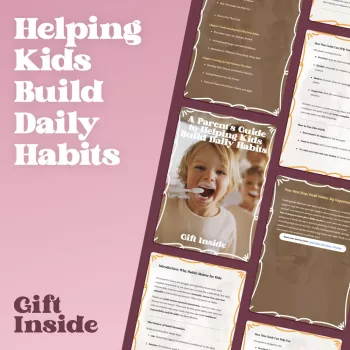
Meet the Daily Habits That Actually Stick guide
Our Daily Habits That Actually Stick digital guide and checklist brings together a guide, eBook, and checklist for building consistent routines, supporting productivity, and working toward self-improvement.
At a listed price of $3.99 USD, it is an affordable option if you want a dedicated resource alongside your own habit-building practice. Use it to give your efforts some structure while keeping your choice of habit, pace, and priorities personal.
Choose a habit that fits your day
You do not need to adopt every habit on this list. Pick the goal that matters most right now, then choose an action and cue that make sense in your actual schedule. If your mornings are unpredictable, an after-lunch cue may be more useful than a morning one.
| Goal | Small action | Possible cue |
|---|---|---|
| Plan the day | Write down one priority | After making a morning drink |
| Move more | Take a short walk | After lunch |
| Create focus | Clear the workspace | Before starting work |
| Wind down | Put the phone aside | Before getting ready for bed |
Make your action specific enough to recognize when it is done. “Write one priority on a sticky note” is easier to track than “be more organized.” For movement ideas and general activity guidance, see the CDC’s physical activity basics.
Use a checklist without chasing perfection
A checklist is a way to notice patterns, not a test of your character. Record whether your chosen action happened each day, then look back after a week. You might find that your cue works on weekdays but disappears on weekends, or that your action takes longer than you expected.
If you repeatedly miss the habit, change one part of the plan. Move the cue to a more reliable moment, put a reminder where you can see it, or make the action smaller. A walk around the block might become a few minutes outside; a planning session might become one sentence.
When you miss a day, start again at the next opportunity. You do not need to erase the gap or double the effort. Returning to the action is part of building a routine that can handle real life.
Build a routine around what matters
Keep your first habit manageable before adding another. Once it feels familiar, consider whether a second action would solve a real problem or simply fill more of your day. A short planning habit, for example, can help you identify a useful priority while leaving space for breaks, changing needs, and rest.
If your priority is running a small business, you may also want to explore our AI for Small Business Toolkit as a separate resource for your work. It is not necessary for building a daily habit; choose resources that match the goals you actually have.
Ready to start with one small action? Explore our daily habits guide and checklist on the product page, and choose a cue you can try today.
Before choosing, compare the product details with your daily routine, available space, care needs, and preferred setup. The strongest option is usually the one that fits the intended use clearly and remains simple to clean, store, and check before repeat use.
FAQ
What are 10 good daily habits?
Ten adaptable examples are drinking water, moving, eating nourishing meals, planning one priority, taking breaks, connecting with someone, tidying a small space, reflecting, winding down, and keeping a regular sleep schedule. Start with one that fits your needs.
What are the 7 daily habits?
There is no single universal list of seven daily habits. Useful categories include hydration, movement, nourishing food, focused work, breaks, connection, and sleep-supporting routines.
Recommended for you


Racing Grille Emblem: Metal Badge Placement Guide
Nov 19, 2026
Silicone Non-Stick Cooking Spoon: Everyday Uses
Nov 19, 2026













Leave a comment