-
Shop
- Advanced Technologies
- AI Skills
- Bathroom
- Best-Sellers
- Car Accessories
- Confidence
- Dating & Social Skills
- Digital Resources
- AI & Technology
- Beauty
- Budgeting & Saving
- Car Buying & Ownership
- Cozy Feast Collection
- Electronics & Technology
- Entrepreneurship & Business Growth
- Financial Education
- Financial Independence
- Financial Mindset & Psychology
- Goal Setting
- Home Styling & Organization
- Kitchen & Recipes
- Leadership
- Mindfulness
- Mindset
- Online Business
- Parenting & Child Development
- Personal Style & Fashion
- Pet Lifestyle & Wellness
- Positive Thinking
- Sleep Improvement
- Smart Life with AI
- Stress Management & Relaxation
- Travel Planning
- Wellness
- Yoga & Fitness
- Yoga & Mind-Body Practices
- Education & Learning
- Family & Parenting
- Fashion
- Accessories
- Alexander McQueen
- Bags
- Bags & Wallets
- Balenciaga
- Belts
- Blazers
- Bottega Veneta
- Bottoms
- Brunello Cucinelli
- Burberry
- Chanel
- Chloé
- Dior
- Dolce & Gabbana
- Dresses
- Etro
- Fendi
- Gucci
- Hats & Hair Accessories
- Hoodies & Sweatshirts
- Jacquemus
- Jewelry
- Jil Sander
- Kiton
- Luggage
- Miu Miu
- Off-White
- Outerwear
- Prada
- Rick Owens
- Saint Laurent
- Shoes
- Socks & Tights
- Sweaters & Cardigans
- The Row
- Tom Ford
- Tops & Shirts
- Valentino
- Valentino Garavani
- Versace
- Vivienne Westwood
- Watches
- Fashion Accessories
- Furniture
- Gadgets
- Health & Beauty
- Health & Wellness
- Home & Garden
- Home Decor
- Home Electronics
- Home Supplies
- Kids & Babies
- Kitchen
- Kitchen Best-Sellers
- Lighting
- Patio, Lawn & Garden
- Personal Growth
- Pet Care
- Pet Supplies
- Pets
- Sport & Outdoors
- Super Deals
- Travel
- Travel & Adventure
- Wealth
- Popular
- Best deals
How Long Do Sensor Trash Cans Last? Care and Lifespan
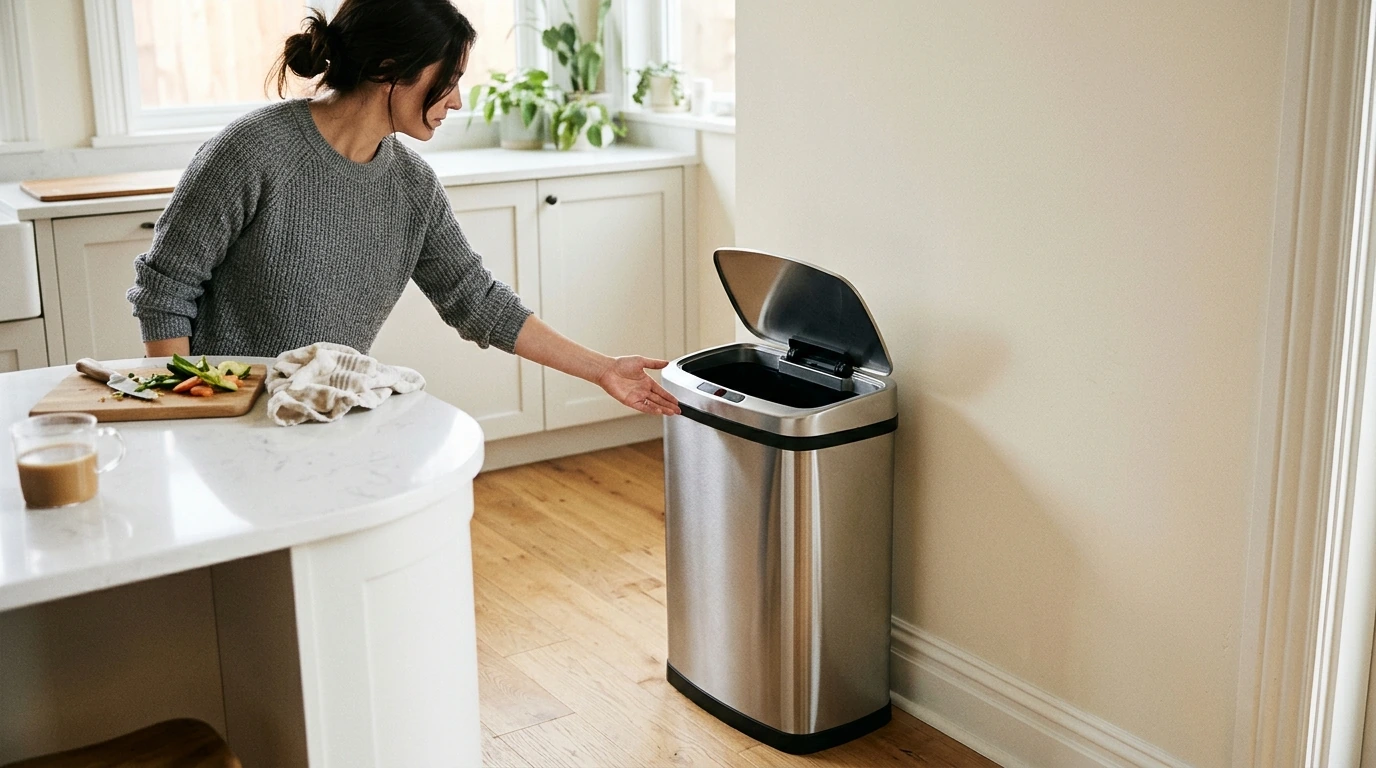
How long do sensor trash cans last?
A sensor trash can can last several years with regular care, although its lifespan depends on the quality of its lid mechanism, how often you use it, and where you keep it. The body may remain usable long after the batteries or electronic components need attention.
In a busy kitchen, the lid may open dozens of times a day. A lightly used office can may experience less wear. Keeping the sensor clean and replacing batteries promptly can help you get reliable use from either one.
What affects a sensor trash can’s lifespan?
How often the lid opens
Each opening cycle puts a little wear on the motor, gears, and hinges. Frequent use is normal, but forcing the lid open or closed can strain the mechanism. Use the manual controls if your can has them, and avoid piling trash so high that it blocks the lid.
Moisture and residue
Food splashes, dust, and fingerprints can interfere with the sensor. Wipe the sensor and lid with a soft, lightly damp cloth, then dry them. Avoid soaking the lid or spraying cleaner directly into the sensor, battery compartment, or moving parts.
Battery care
Weak batteries can cause a slow lid, inconsistent sensing, or failure to open. Replace them with the type recommended for your can, and change the full set at the same time. If you will not use the can for an extended period, remove the batteries to reduce the risk of leakage.
When should you replace a sensor trash can?
Start with simple maintenance if the lid stops responding: clean the sensor, install fresh batteries, and make sure nothing blocks the lid. If the motor still struggles, the hinge is damaged, or the electronics no longer work, a replacement lid may be an option for your model.
Replace the whole can when the body is cracked, the lid cannot close securely, or repair parts are unavailable. For help choosing a practical replacement, explore our guide to smart automatic sensor trash cans for the kitchen and office.
FAQ
Can you use a sensor trash can without batteries?
The automatic lid generally needs batteries or another power source to operate. Some models allow manual opening, so you may still be able to use the can while the automatic feature is unavailable.
Recommended for you


Is a Motion Sensor Trash Can Worth It? Pros and Cons
Nov 13, 2026













Leave a comment