-
Shop
- Advanced Technologies
- AI Skills
- Bathroom
- Best-Sellers
- Car Accessories
- Confidence
- Dating & Social Skills
- Digital Resources
- AI & Technology
- Beauty
- Budgeting & Saving
- Car Buying & Ownership
- Cozy Feast Collection
- Electronics & Technology
- Entrepreneurship & Business Growth
- Financial Education
- Financial Independence
- Financial Mindset & Psychology
- Goal Setting
- Home Styling & Organization
- Kitchen & Recipes
- Leadership
- Mindfulness
- Mindset
- Online Business
- Parenting & Child Development
- Personal Style & Fashion
- Pet Lifestyle & Wellness
- Positive Thinking
- Sleep Improvement
- Smart Life with AI
- Stress Management & Relaxation
- Travel Planning
- Wellness
- Yoga & Fitness
- Yoga & Mind-Body Practices
- Education & Learning
- Family & Parenting
- Fashion
- Accessories
- Alexander McQueen
- Bags
- Bags & Wallets
- Balenciaga
- Belts
- Blazers
- Bottega Veneta
- Bottoms
- Brunello Cucinelli
- Burberry
- Chanel
- Chloé
- Dior
- Dolce & Gabbana
- Dresses
- Etro
- Fendi
- Gucci
- Hats & Hair Accessories
- Hoodies & Sweatshirts
- Jacquemus
- Jewelry
- Jil Sander
- Kiton
- Luggage
- Miu Miu
- Off-White
- Outerwear
- Prada
- Rick Owens
- Saint Laurent
- Shoes
- Socks & Tights
- Sweaters & Cardigans
- The Row
- Tom Ford
- Tops & Shirts
- Valentino
- Valentino Garavani
- Versace
- Vivienne Westwood
- Watches
- Fashion Accessories
- Furniture
- Gadgets
- Health & Beauty
- Health & Wellness
- Home & Garden
- Home Decor
- Home Electronics
- Home Supplies
- Kids & Babies
- Kitchen
- Kitchen Best-Sellers
- Lighting
- Patio, Lawn & Garden
- Personal Growth
- Pet Care
- Pet Supplies
- Pets
- Sport & Outdoors
- Super Deals
- Travel
- Travel & Adventure
- Wealth
- Popular
- Best deals
Best Corner Protectors for Babies: How to Choose
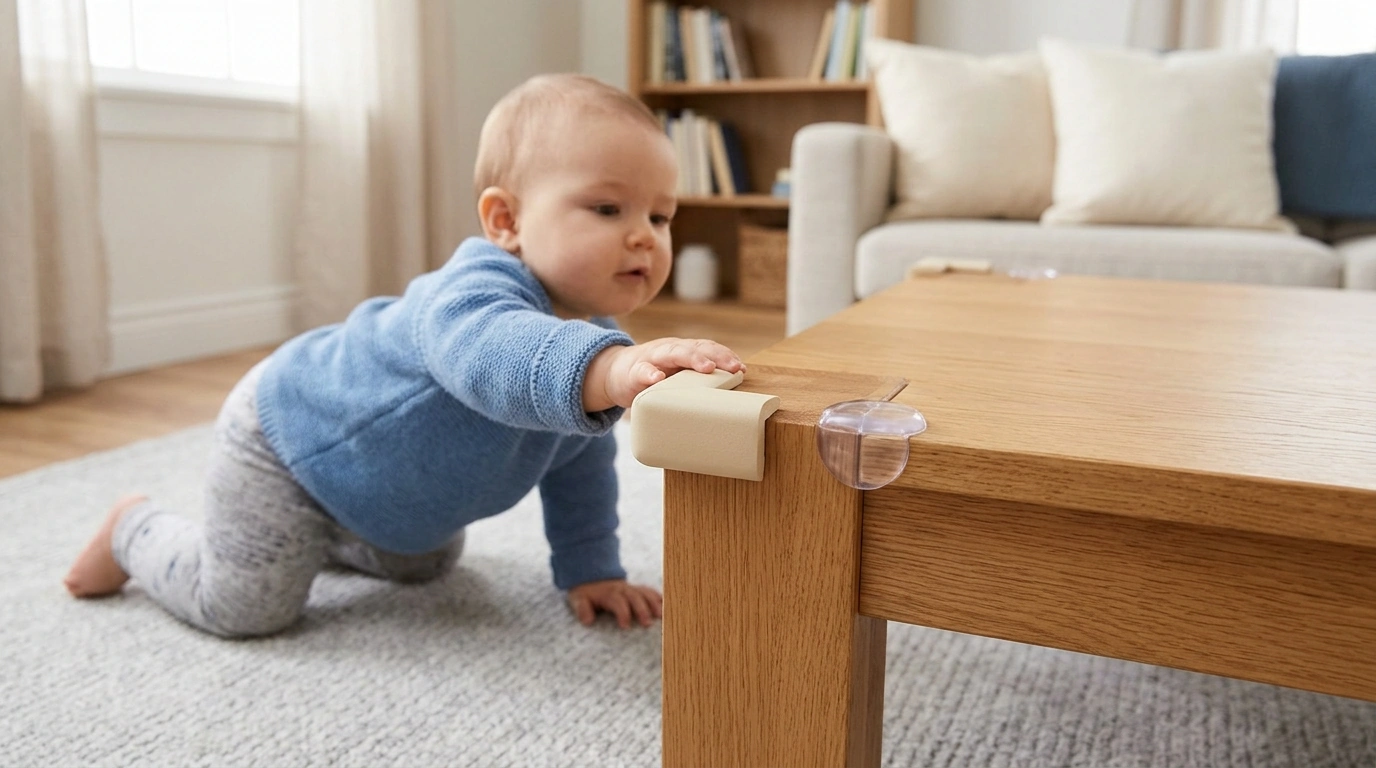
What is the best corner protector for babies?
The best corner protector is a soft, securely attached guard that fits the corner your baby can reach. For most living rooms, we recommend rounded silicone or dense foam protectors for sharp coffee-table and end-table corners. A good fit matters more than a particular shape: the protector should cover the point and adjacent edges without gaps, stay put when tugged, and have no small parts that can detach.
Corner protectors can soften an accidental bump, but they do not make a sharp-edged table safe on their own. If a table has several exposed edges, a continuous edge guard may cover more of the hazard than four separate corner pieces. For a lightweight or unstable table, focus on securing or moving the furniture first.
How should you choose one for your furniture?
Start with the corner’s shape. A rounded protector should sit flush on a standard right-angle corner; a curved or unusually thick tabletop may need a more flexible guard. Choose a material with enough cushioning to soften contact without creating a bulky piece that is easy for your baby to grab and peel away.
Next, consider the surface. Adhesive-backed protectors generally hold best on a clean, dry, smooth tabletop. Textured finishes, dust, and furniture polish can weaken the bond. Follow the adhesive’s application and curing instructions before letting your baby near the furniture, and consider whether removing it later could affect the finish.
We favor simple, one-piece designs over guards with removable caps or decorative pieces. Once installed, pull gently from different directions. If a protector shifts, lifts, or comes off, it is not ready to use. Keep detached protectors and adhesive materials out of your baby’s reach.
Where should you use corner protectors?
Get down to your baby’s eye level and look for hard corners along crawling, cruising, and play routes. Coffee tables, low shelves, TV stands, and end tables are common places to start. Pay attention to corners near a sofa, where a baby may pull up and turn quickly.
Our team treats corner guards as one part of a broader setup: anchor furniture that could tip, manage cords, and keep climbable items away from windows. For a room-by-room starting point, see our living room baby-proofing checklist. Recheck guards regularly, especially as your baby becomes more curious and mobile.
FAQ
How do you keep corner protectors from coming loose?
Apply them to clean, dry surfaces and allow the adhesive to set for the time specified in the instructions. Test each guard with a gentle tug and replace it if the bond weakens rather than pressing a loose guard back into place.
Recommended for you


Best AI Travel Planner: ChatGPT or Wanderlog?
Oct 26, 2026













Leave a comment