-
Shop
- Advanced Technologies
- AI Skills
- Bathroom
- Best-Sellers
- Car Accessories
- Confidence
- Dating & Social Skills
- Digital Resources
- AI & Technology
- Beauty
- Budgeting & Saving
- Car Buying & Ownership
- Cozy Feast Collection
- Electronics & Technology
- Entrepreneurship & Business Growth
- Financial Education
- Financial Independence
- Financial Mindset & Psychology
- Goal Setting
- Home Styling & Organization
- Kitchen & Recipes
- Leadership
- Mindfulness
- Mindset
- Online Business
- Parenting & Child Development
- Personal Style & Fashion
- Pet Lifestyle & Wellness
- Positive Thinking
- Sleep Improvement
- Smart Life with AI
- Stress Management & Relaxation
- Travel Planning
- Wellness
- Yoga & Fitness
- Yoga & Mind-Body Practices
- Education & Learning
- Family & Parenting
- Fashion
- Accessories
- Alexander McQueen
- Bags
- Bags & Wallets
- Balenciaga
- Belts
- Blazers
- Bottega Veneta
- Bottoms
- Brunello Cucinelli
- Burberry
- Chanel
- Chloé
- Dior
- Dolce & Gabbana
- Dresses
- Etro
- Fendi
- Gucci
- Hats & Hair Accessories
- Hoodies & Sweatshirts
- Jacquemus
- Jewelry
- Jil Sander
- Kiton
- Luggage
- Miu Miu
- Off-White
- Outerwear
- Prada
- Rick Owens
- Saint Laurent
- Shoes
- Socks & Tights
- Sweaters & Cardigans
- The Row
- Tom Ford
- Tops & Shirts
- Valentino
- Valentino Garavani
- Versace
- Vivienne Westwood
- Watches
- Fashion Accessories
- Furniture
- Gadgets
- Health & Beauty
- Health & Wellness
- Home & Garden
- Home Decor
- Home Electronics
- Home Supplies
- Kids & Babies
- Kitchen
- Kitchen Best-Sellers
- Lighting
- Patio, Lawn & Garden
- Personal Growth
- Pet Care
- Pet Supplies
- Pets
- Sport & Outdoors
- Super Deals
- Travel
- Travel & Adventure
- Wealth
- Popular
- Best deals
Baby-Proof Furniture Corners: A Practical Guide
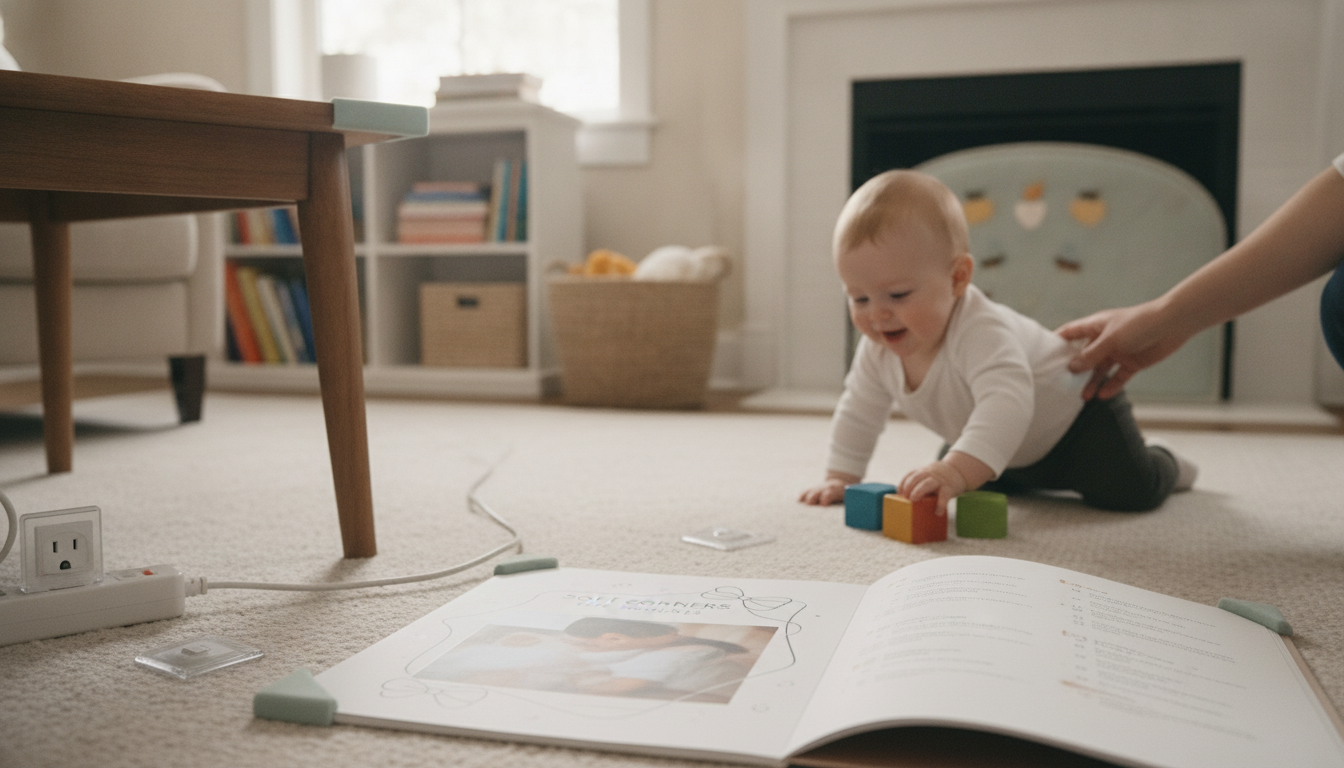
How can you baby proof the corners of your furniture?
Start with the corners your baby can reach while crawling, pulling up, or cruising. Coffee tables, side tables, TV stands, and low shelves are common places to look. We recommend getting down to your baby’s eye level and checking both corners and edges: a sharp tabletop edge can be a hazard even when its corners are covered.
Choose guards that fit your furniture
Soft corner guards cushion individual corners, while continuous edge guards cover a longer stretch of a hard edge. Choose a guard that sits flush against the furniture rather than leaving a gap your baby could grip. For a glass table or a particularly sharp edge, consider a continuous guard along with corner protection. If a guard does not fit securely, choose another style rather than trimming it into a shape that may come loose.
Install and inspect them carefully
Clean and dry the surface before applying an adhesive-backed guard, and follow the product’s installation and curing directions. Make sure the adhesive is compatible with the furniture finish, especially on painted, lacquered, or delicate wood surfaces. Once installed, gently tug on each guard and look for loose edges. Repeat that check regularly: a detached guard can become a small object your baby may put in their mouth.
If you use a guard with a strap or other attachment, keep every part secured and out of reach. Replace guards that tear, peel, or no longer stay firmly in place. Our team also recommends checking protection again as your baby grows taller and begins reaching furniture that was previously out of range.
Address the furniture, not just its corners
Corner guards reduce the impact of a bump; they do not prevent a table from tipping or a child from climbing. Anchor furniture that could tip, and avoid placing climbable items near windows. Move unstable side tables out of your baby’s play area when possible, and keep heavy or breakable objects away from low surfaces. You can use our living room baby-proofing checklist to review the rest of the space, including cords, outlets, and other reachable hazards.
As you make these changes, leave room for your baby to explore without relying on guards as a substitute for supervision. A quick walk through the room at your baby’s current height will help you spot the next corner that needs attention.
FAQ
When should you remove corner guards?
Keep them in place while your child is likely to bump into reachable hard corners. Remove a guard sooner if it becomes loose or damaged, and reassess the room as your child’s height and habits change.
Recommended for you



How to Baby-Proof Corners and Sharp Furniture Edges
Oct 26, 2026













Leave a comment