-
Shop
- Advanced Technologies
- AI Skills
- Bathroom
- Best-Sellers
- Car Accessories
- Confidence
- Dating & Social Skills
- Digital Resources
- AI & Technology
- Beauty
- Budgeting & Saving
- Car Buying & Ownership
- Cozy Feast Collection
- Electronics & Technology
- Entrepreneurship & Business Growth
- Financial Education
- Financial Independence
- Financial Mindset & Psychology
- Goal Setting
- Home Styling & Organization
- Kitchen & Recipes
- Leadership
- Mindfulness
- Mindset
- Online Business
- Parenting & Child Development
- Personal Style & Fashion
- Pet Lifestyle & Wellness
- Positive Thinking
- Sleep Improvement
- Smart Life with AI
- Stress Management & Relaxation
- Travel Planning
- Wellness
- Yoga & Fitness
- Yoga & Mind-Body Practices
- Education & Learning
- Family & Parenting
- Fashion
- Accessories
- Alexander McQueen
- Bags
- Bags & Wallets
- Balenciaga
- Belts
- Blazers
- Bottega Veneta
- Bottoms
- Brunello Cucinelli
- Burberry
- Chanel
- Chloé
- Dior
- Dolce & Gabbana
- Dresses
- Etro
- Fendi
- Gucci
- Hats & Hair Accessories
- Hoodies & Sweatshirts
- Jacquemus
- Jewelry
- Jil Sander
- Kiton
- Luggage
- Miu Miu
- Off-White
- Outerwear
- Prada
- Rick Owens
- Saint Laurent
- Shoes
- Socks & Tights
- Sweaters & Cardigans
- The Row
- Tom Ford
- Tops & Shirts
- Valentino
- Valentino Garavani
- Versace
- Vivienne Westwood
- Watches
- Fashion Accessories
- Furniture
- Gadgets
- Health & Beauty
- Health & Wellness
- Home & Garden
- Home Decor
- Home Electronics
- Home Supplies
- Kids & Babies
- Kitchen
- Kitchen Best-Sellers
- Lighting
- Patio, Lawn & Garden
- Personal Growth
- Pet Care
- Pet Supplies
- Pets
- Sport & Outdoors
- Super Deals
- Travel
- Travel & Adventure
- Wealth
- Popular
- Best deals
How to Plan a Personalized Trip with AI

A useful itinerary fits your budget, pace, and priorities—not just a list of popular attractions. AI can help turn those preferences into a workable first draft, but it cannot confirm that a museum will be open, a train will run on time, or a reservation is available. We use it to organize possibilities, then make the final decisions with current information in hand.
Start with the trip you actually want
Before you ask for a day-by-day plan, make a short trip brief. Include your destination and dates, who is traveling, an approximate budget, and the activities you care about most. Add practical details that change the shape of a day: where you are staying, whether you will have a car, accessibility needs, and any tickets or meals already booked.
Describe your pace in terms you would actually use on vacation. “One major activity each morning, a long lunch, and flexible afternoons” gives more direction than “not too busy.” If your group has different energy levels, ask for a shared plan with optional ways to split up and meet again.
Finally, separate nonnegotiables from nice-to-haves. A concert ticket on Thursday belongs in the first group; a second museum can stay optional. That distinction makes it easier to revise the itinerary when costs, weather, or available time change.
Give AI enough detail to make a useful draft
Ask for an itinerary that includes approximate travel time between stops, meal breaks, and open space. Request nearby activities on the same day rather than a route that crisscrosses the city. You can also ask for a lower-cost version, a rainy-day alternative, or a slower version of a particularly full day.
For example: “Plan four days in [destination] for two adults in [month]. Keep mornings flexible, group nearby activities, allow time for meals and transit, and flag details I need to verify before booking.” Treat the result as a set of suggestions, not a reservation or a promise that every stop will work.
Turn broad requests into useful planning details
| Instead of asking | Try adding |
|---|---|
| “Plan my trip” | Dates, destination, group size, budget, and travel pace |
| “Find things to do” | Interests, must-see places, and activities to avoid |
| “Make an itinerary” | Starting location, fixed bookings, transportation preferences, and breaks |
Check the details before you book
Once you have a draft, verify its most important claims directly. Confirm opening hours, admission prices, reservation rules, and accessibility information with each venue. Check routes, schedules, and fares with the relevant transportation provider. A plausible-looking itinerary may rely on outdated hours or underestimate how long a transfer takes.
For international travel, use official guidance that applies to your nationality and destination. U.S. travelers can start with the U.S. Department of State Travel Advisories and review destination-specific health information from CDC Travelers’ Health. These resources complement—not replace—current entry rules from the destination’s government and instructions from your transportation provider.
Put the proposed stops on a map, too. Two attractions may appear close in a list but sit in different neighborhoods or require an inconvenient transfer. If a day feels difficult to navigate, move one stop to another day or drop it. A shorter plan you can enjoy is more useful than a packed plan you cannot follow.
Make the itinerary easy to live with
Build each day around a small number of priorities. Group nearby stops, allow enough time to eat without rushing, and leave a buffer before anything with a fixed start time. Keep extra ideas on an optional list so a delay does not feel like a failure. Free time also gives you room to follow a recommendation you hear once you arrive.
Keep confirmed bookings separate from suggestions. A simple note with confirmation numbers, addresses, start times, and cancellation terms helps everyone in your group see what is settled. Your draft itinerary can then change without obscuring a reservation you must keep.
Equipment decisions deserve the same practical approach. If a paddling day is on your wish list, first determine where you can paddle, how you will get there, and whether renting or bringing equipment makes more sense. Our 3.6M Thickened PVC Inflatable Kayak is one purchase option to consider if you are planning to bring your own; confirm transportation arrangements and local paddling requirements before committing to that part of the trip.
Keep a process you can reuse
When a trip brief produces a helpful draft, save the format. Next time, change the destination, dates, budget, and priorities rather than starting from scratch. Keep the verification step in the process every time: even a familiar destination can have new schedules, prices, or rules.
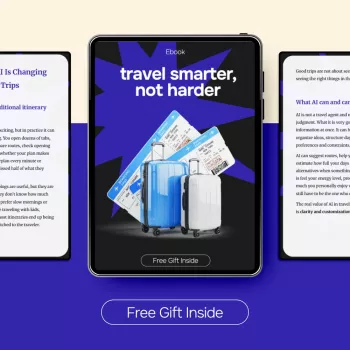
If you want a dedicated resource for organizing this approach, our Travel Smarter, Not Harder AI travel planning eBook focuses on building personalized trips faster. However you build your draft, the goal stays the same: let AI arrange the possibilities while you decide which experiences deserve your time.
FAQ
Can AI make a complete travel itinerary?
AI can make a useful draft, but you should verify schedules, costs, routes, and booking requirements before relying on it.
What information should I give AI to plan a trip?
Include your dates, destination, budget, group needs, interests, preferred pace, transportation preferences, and fixed plans.
How do I keep an AI-generated itinerary from feeling too packed?
Ask for nearby stops to be grouped together, travel time and breaks to be included, and extra activities to be labeled optional.
Recommended for you


What Month Is Hardest With a Puppy? Stages Explained
Oct 26, 2026
Can I Use ChatGPT to Plan a Trip? A Practical Guide
Oct 26, 2026













Leave a comment