-
Shop
- Advanced Technologies
- AI Skills
- Bathroom
- Best-Sellers
- Car Accessories
- Confidence
- Dating & Social Skills
- Digital Resources
- AI & Technology
- Beauty
- Budgeting & Saving
- Car Buying & Ownership
- Cozy Feast Collection
- Electronics & Technology
- Entrepreneurship & Business Growth
- Financial Education
- Financial Independence
- Financial Mindset & Psychology
- Goal Setting
- Home Styling & Organization
- Kitchen & Recipes
- Leadership
- Mindfulness
- Mindset
- Online Business
- Parenting & Child Development
- Personal Style & Fashion
- Pet Lifestyle & Wellness
- Positive Thinking
- Sleep Improvement
- Smart Life with AI
- Stress Management & Relaxation
- Travel Planning
- Wellness
- Yoga & Fitness
- Yoga & Mind-Body Practices
- Education & Learning
- Family & Parenting
- Fashion
- Accessories
- Alexander McQueen
- Bags
- Bags & Wallets
- Balenciaga
- Belts
- Blazers
- Bottega Veneta
- Bottoms
- Brunello Cucinelli
- Burberry
- Chanel
- Chloé
- Dior
- Dolce & Gabbana
- Dresses
- Etro
- Fendi
- Gucci
- Hats & Hair Accessories
- Hoodies & Sweatshirts
- Jacquemus
- Jewelry
- Jil Sander
- Kiton
- Luggage
- Miu Miu
- Off-White
- Outerwear
- Prada
- Rick Owens
- Saint Laurent
- Shoes
- Socks & Tights
- Sweaters & Cardigans
- The Row
- Tom Ford
- Tops & Shirts
- Valentino
- Valentino Garavani
- Versace
- Vivienne Westwood
- Watches
- Fashion Accessories
- Furniture
- Gadgets
- Health & Beauty
- Health & Wellness
- Home & Garden
- Home Decor
- Home Electronics
- Home Supplies
- Kids & Babies
- Kitchen
- Kitchen Best-Sellers
- Lighting
- Patio, Lawn & Garden
- Personal Growth
- Pet Care
- Pet Supplies
- Pets
- Sport & Outdoors
- Super Deals
- Travel
- Travel & Adventure
- Wealth
- Popular
- Best deals
How to Help Kids Build Daily Habits, One Step at a Time
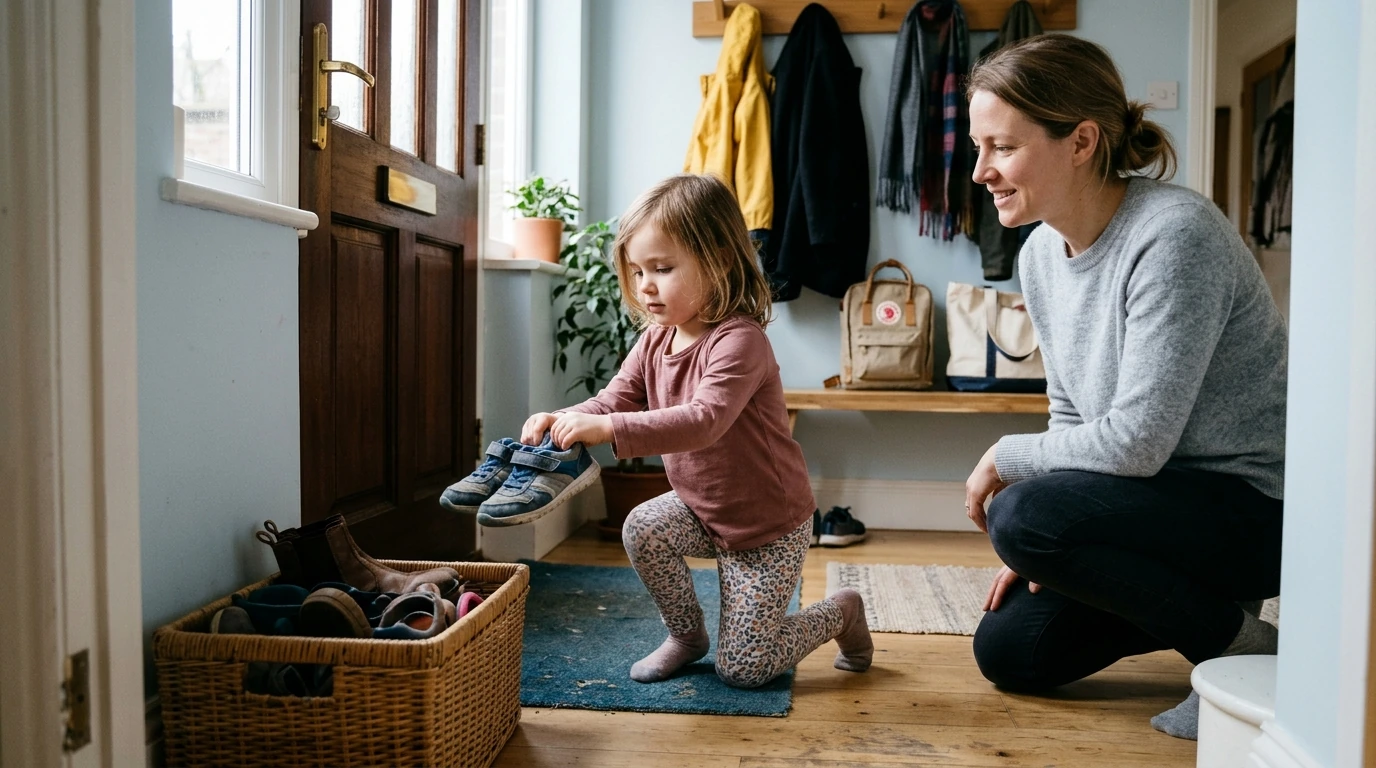
Your child knows the morning routine. Breakfast is over, clothes are ready, and there is time to get dressed—yet you find yourself giving the same reminder three times. That does not mean your child cannot learn the routine, or that you need a perfect schedule. Daily habits grow through small, repeatable steps, patient support, and responsibilities a child can reasonably manage.
We created A Parent’s Guide to Helping Kids Build Daily Habits as a practical eBook for parents who want a starting point. You can begin even more simply: choose one moment that regularly causes friction and make the next step easier for your child to notice and do.
Start with one habit your child can practice
“Get ready for school” contains a lot of separate tasks. “Put your shoes by the door after getting dressed” is one action your child can practice. A small target also lets you see what gets in the way. If the shoes are hard to find or the entryway is crowded, changing the setup may help more than adding another reminder.
Choose a step that fits your child’s age, abilities, and the support you can give. A younger child might place shoes in a basket while you stay nearby; an older child might be ready to gather everything needed for the next day. Neither needs to master the entire morning at once. Try attaching the action to something that already happens daily, such as putting shoes by the door right after getting dressed.
Make the routine easy to see and repeat
A short sequence gives your child a clear next step: breakfast, get dressed, brush teeth, then shoes. You can put those steps on a picture checklist or a written list, depending on what your child can use independently. Keep it where the routine happens. When your child pauses, you can point to the list instead of repeating the whole set of instructions.
The table below is an adaptable example, not a schedule every family needs to follow. Choose the moments that make sense in your home, and leave out steps that add more work than they solve.
| Moment | Small action | Parent’s support |
|---|---|---|
| After breakfast | Put the dish by the sink | Give one calm reminder, then point to the checklist |
| Before leaving | Place shoes by the door | Keep shoes in the same easy-to-reach spot |
| Before bed | Put one item away | Do the first few repetitions together |
There is no need to fill every part of the day with a task. One visible, repeatable action is enough to start. The CDC’s Positive Parenting Tips offer additional age-based ideas as you decide what level of responsibility fits your child.
Shift from reminders toward responsibility
At first, show your child exactly what the step looks like. Then do it together a few times. When it becomes familiar, let your child try while you remain available to help. That gradual handoff makes the goal clearer than suddenly expecting independence after a single explanation.
Notice the action rather than labeling the child: “You put your shoes by the door without my reminding you,” or “You came back and finished putting your dish away.” Specific acknowledgment helps your child recognize what they did and can repeat. It also avoids making a missed step feel like a judgment about whether they are “good.”
Some days will be rushed or difficult. If the habit keeps falling apart, treat that as useful information. Could you make the step smaller, move it to a calmer time, or keep the supplies closer? Adjusting the routine is not giving up; it is making practice more realistic.
When a child gets upset, pause the habit practice
If your child becomes overwhelmed, the immediate goal is not to win the reminder battle. Stay calm, reduce demands, and allow time to settle before talking about the routine. You might say, “We can take a moment. I’m here when you’re ready.” You do not need to press for an explanation right then.
When your child is ready, return to one manageable next step: “Let’s put one shoe by the door.” A shutdown is not automatically defiance, and pushing through it may make the routine harder to approach tomorrow. If shutdowns are frequent or concerning, a pediatrician can help you think through what support your child may need.
Find a starting point that fits your family
Pick one recurring friction point and try a small routine for a week before changing it. Notice whether your child can see the next step, reach what they need, and complete the action with a reasonable amount of help. If not, simplify one part and try again.
For more guidance on routines and gradually building responsibility, our A Parent’s Guide to Helping Kids Build Daily Habits is an optional practical eBook. Our team also offers an AI for Small Business Toolkit for a different kind of planning; it is not a parenting resource, so choose the habits guide if your focus is your child’s daily routine.
Consistency matters more than following a timetable perfectly. Keep the step small enough to practice, offer help when it is needed, and let the routine change as your child grows.
FAQ
How to help a child who shuts down when upset?
Pause the task and offer a calm presence without pressing for an immediate answer. When your child is ready, revisit one small step. If shutdowns are frequent or concerning, consider asking a pediatrician for guidance.
What do parents help their kids with?
Parents help children learn daily skills by setting up clear routines, modeling steps, providing reminders, and gradually allowing more independence.
Recommended for you



When Your Child Shuts Down: How to Help
Oct 25, 2026













Leave a comment