-
Shop
- Advanced Technologies
- AI Skills
- Bathroom
- Best-Sellers
- Car Accessories
- Confidence
- Dating & Social Skills
- Digital Resources
- AI & Technology
- Beauty
- Budgeting & Saving
- Car Buying & Ownership
- Cozy Feast Collection
- Electronics & Technology
- Entrepreneurship & Business Growth
- Financial Education
- Financial Independence
- Financial Mindset & Psychology
- Goal Setting
- Home Styling & Organization
- Kitchen & Recipes
- Leadership
- Mindfulness
- Mindset
- Online Business
- Parenting & Child Development
- Personal Style & Fashion
- Pet Lifestyle & Wellness
- Positive Thinking
- Sleep Improvement
- Smart Life with AI
- Stress Management & Relaxation
- Travel Planning
- Wellness
- Yoga & Fitness
- Yoga & Mind-Body Practices
- Education & Learning
- Family & Parenting
- Fashion
- Accessories
- Alexander McQueen
- Bags
- Bags & Wallets
- Balenciaga
- Belts
- Blazers
- Bottega Veneta
- Bottoms
- Brunello Cucinelli
- Burberry
- Chanel
- Chloé
- Dior
- Dolce & Gabbana
- Dresses
- Etro
- Fendi
- Gucci
- Hats & Hair Accessories
- Hoodies & Sweatshirts
- Jacquemus
- Jewelry
- Jil Sander
- Kiton
- Luggage
- Miu Miu
- Off-White
- Outerwear
- Prada
- Rick Owens
- Saint Laurent
- Shoes
- Socks & Tights
- Sweaters & Cardigans
- The Row
- Tom Ford
- Tops & Shirts
- Valentino
- Valentino Garavani
- Versace
- Vivienne Westwood
- Watches
- Fashion Accessories
- Furniture
- Gadgets
- Health & Beauty
- Health & Wellness
- Home & Garden
- Home Decor
- Home Electronics
- Home Supplies
- Kids & Babies
- Kitchen
- Kitchen Best-Sellers
- Lighting
- Patio, Lawn & Garden
- Personal Growth
- Pet Care
- Pet Supplies
- Pets
- Sport & Outdoors
- Super Deals
- Travel
- Travel & Adventure
- Wealth
- Popular
- Best deals
Pantry Foods to Keep for Quick, Flexible Meals
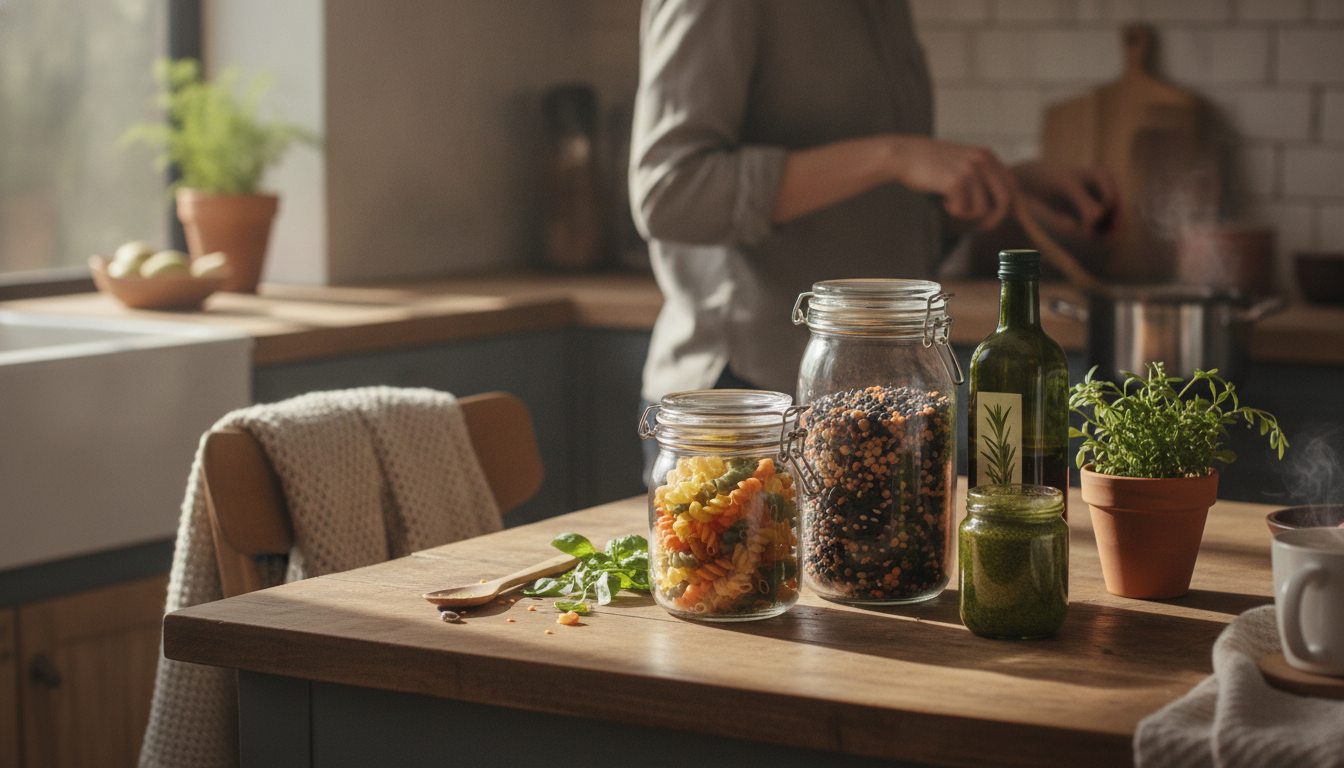
What Are Some Good Pantry Foods?
A good pantry gives you options when you need dinner without another grocery run. We like to build ours around foods that last well, work in several meals, and pair easily with fresh or frozen ingredients. You do not need to stock every shelf at once. Start with the meals you already make, then add a few staples that help you put them together.
Start With Filling Basics
Rice, pasta, oats, and other dry grains are useful foundations. Rice can go into bowls or soups, pasta makes a quick dinner, and oats work for breakfast or baking. Keep a few forms you enjoy rather than buying a large assortment you may not use. Tortillas and crackers can also be handy, though their shelf lives are often shorter than those of dry grains.
Add Protein and Vegetables
Canned beans, lentils, tuna, salmon, and chicken can turn a simple grain or salad into a meal. Canned tomatoes, corn, and other vegetables help you make soups, sauces, and skillet dinners. Choose no-salt-added or lower-sodium versions if you want more control over seasoning, and rinse canned beans when that suits your recipe.
Keep Flavor Within Reach
Olive oil or another cooking oil, vinegar, broth, and a few favorite spices make pantry meals more flexible. Garlic powder, chili powder, cumin, and dried herbs can take the same beans and rice in different directions. Nut or seed butter, dried fruit, and nuts are useful for snacks, oatmeal, and simple sauces. If anyone in your household has a food allergy, choose products and storage practices that fit their needs.
Make Your Pantry Work for You
Store dry foods in a cool, dry place, and follow package directions after opening. Put newer purchases behind older ones so you use what you have first. A short list of reliable combinations can help: pasta with canned tomatoes and beans, rice with tuna and vegetables, or lentils simmered with broth and spices.
For more ideas on building a practical collection of staples, explore our guide to a smart pantry kit for cozy meals year-round. Our team recommends starting with a week’s worth of familiar meals, then adjusting your pantry as you learn what you reach for most.
FAQ
How often should you rotate pantry foods?
Review your pantry every few months and use older items before newer ones. Follow the dates and storage directions on each package, and discard food that shows signs of spoilage or damaged packaging.
Recommended for you


Easy, Affordable Pantry Meals for Any Night
Oct 20, 2026
What Can ChatGPT Help With? Practical Everyday Tasks
Oct 20, 2026













Leave a comment