-
Shop
- Advanced Technologies
- AI Skills
- Bathroom
- Best-Sellers
- Car Accessories
- Confidence
- Dating & Social Skills
- Digital Resources
- AI & Technology
- Beauty
- Budgeting & Saving
- Car Buying & Ownership
- Cozy Feast Collection
- Electronics & Technology
- Entrepreneurship & Business Growth
- Financial Education
- Financial Independence
- Financial Mindset & Psychology
- Goal Setting
- Home Styling & Organization
- Kitchen & Recipes
- Leadership
- Mindfulness
- Mindset
- Online Business
- Parenting & Child Development
- Personal Style & Fashion
- Pet Lifestyle & Wellness
- Positive Thinking
- Sleep Improvement
- Smart Life with AI
- Stress Management & Relaxation
- Travel Planning
- Wellness
- Yoga & Fitness
- Yoga & Mind-Body Practices
- Education & Learning
- Family & Parenting
- Fashion
- Accessories
- Alexander McQueen
- Bags
- Bags & Wallets
- Balenciaga
- Belts
- Blazers
- Bottega Veneta
- Bottoms
- Brunello Cucinelli
- Burberry
- Chanel
- Chloé
- Dior
- Dolce & Gabbana
- Dresses
- Etro
- Fendi
- Gucci
- Hats & Hair Accessories
- Hoodies & Sweatshirts
- Jacquemus
- Jewelry
- Jil Sander
- Kiton
- Luggage
- Miu Miu
- Off-White
- Outerwear
- Prada
- Rick Owens
- Saint Laurent
- Shoes
- Socks & Tights
- Sweaters & Cardigans
- The Row
- Tom Ford
- Tops & Shirts
- Valentino
- Valentino Garavani
- Versace
- Vivienne Westwood
- Watches
- Fashion Accessories
- Furniture
- Gadgets
- Health & Beauty
- Health & Wellness
- Home & Garden
- Home Decor
- Home Electronics
- Home Supplies
- Kids & Babies
- Kitchen
- Kitchen Best-Sellers
- Lighting
- Patio, Lawn & Garden
- Personal Growth
- Pet Care
- Pet Supplies
- Pets
- Sport & Outdoors
- Super Deals
- Travel
- Travel & Adventure
- Wealth
- Popular
- Best deals
Round vs Square Bathroom Sinks: Which One’s Better?
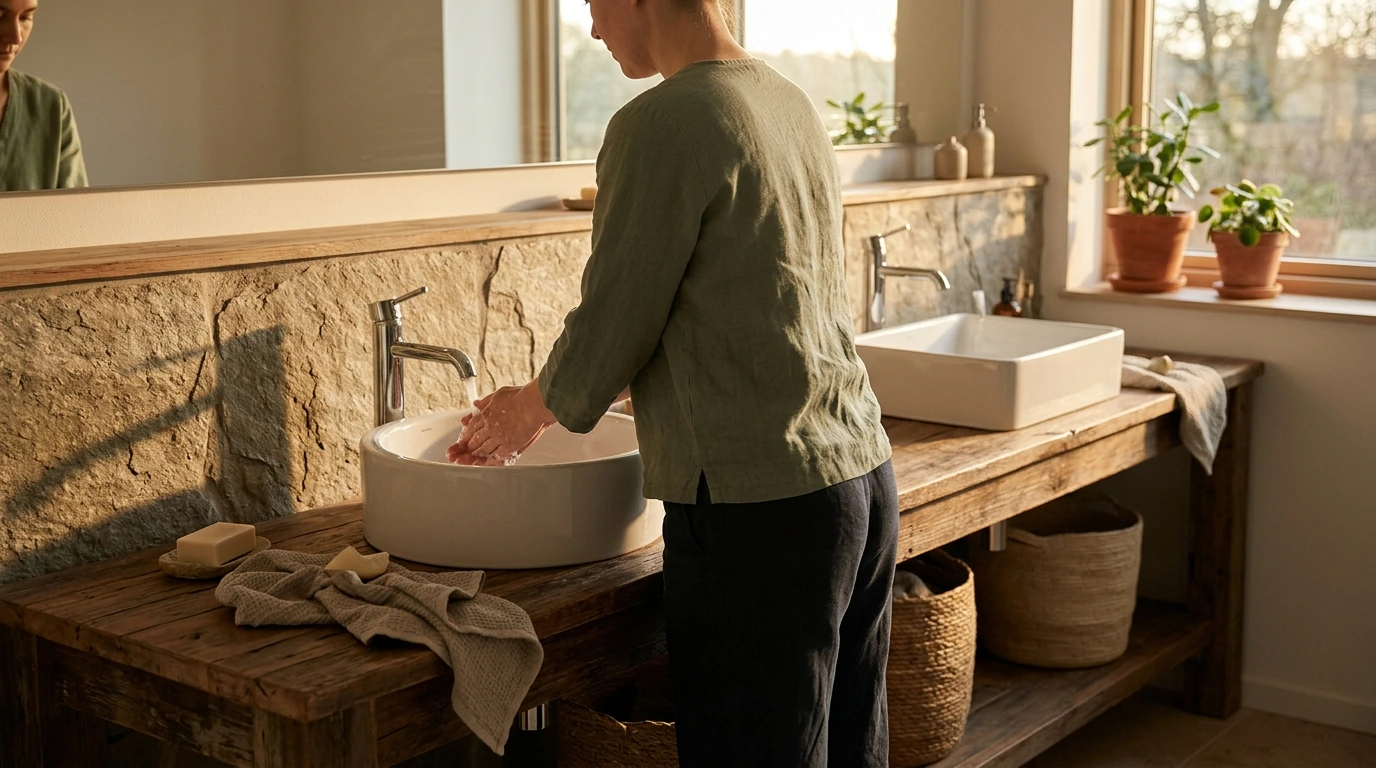
Are round or square bathroom sinks better?
“Better” depends on how you use your vanity every day, how much counter space you have, and the style you want to land on. Our team typically narrows it down by matching the sink shape to your room size, faucet reach, and cleaning preferences—because those three details affect satisfaction more than trends.
When a round sink is the better pick
Round (and oval) sinks are great when you want softer lines and easier movement around the bowl. In tighter bathrooms, the curved perimeter feels less intrusive and can reduce hip-bumps at the vanity edge. If you’re pairing with an antique or warm-metal faucet, round basins also complement vintage silhouettes nicely. For daily use, the continuous curve usually wipes down quickly with fewer corners where residue can hang up.
When a square sink is the better pick
Square or rectangular sinks shine when you want a more architectural look and a little more “usable” basin footprint, especially for washing hands without splashing up the back wall. The straighter walls can create a deeper-feeling bowl, which is helpful in busy powder rooms. If your vanity is already boxy and modern, a square sink keeps everything cohesive and intentional.
Fit and faucet details that matter either way
First, confirm the sink’s dimensions leave enough landing space for soap and elbow room in front of mirrors or medicine cabinets. Next, match faucet spout reach to the bowl so water lands near the drain—not on the rim—to reduce splash and mineral buildup. Finally, consider overflow and drain placement: a centered drain is generally easiest for consistent water flow, while a well-glazed surface makes any shape simpler to maintain.
Need a style-forward upgrade?
If you’re leaning round and want a luxe, timeless pairing idea, see our guide here: https://bestsellis.com/guide-round-ceramic-sink-antique-brass-faucet-luxe-upgrade/.
FAQ
What sink shape is easiest to clean?
Round sinks are usually easiest because they have fewer tight corners where grime can collect. Square sinks can be just as manageable if you stay on top of the corners and choose a smooth, high-gloss finish.
Recommended for you

Boiling Water in a Ceramic Sink: Safe or Risky?
Oct 18, 2026













Leave a comment