-
Shop
- Advanced Technologies
- AI Skills
- Bathroom
- Best-Sellers
- Car Accessories
- Confidence
- Dating & Social Skills
- Digital Resources
- AI & Technology
- Beauty
- Budgeting & Saving
- Car Buying & Ownership
- Cozy Feast Collection
- Electronics & Technology
- Entrepreneurship & Business Growth
- Financial Education
- Financial Independence
- Financial Mindset & Psychology
- Goal Setting
- Home Styling & Organization
- Kitchen & Recipes
- Leadership
- Mindfulness
- Mindset
- Online Business
- Parenting & Child Development
- Personal Style & Fashion
- Pet Lifestyle & Wellness
- Positive Thinking
- Sleep Improvement
- Smart Life with AI
- Stress Management & Relaxation
- Travel Planning
- Wellness
- Yoga & Fitness
- Yoga & Mind-Body Practices
- Education & Learning
- Family & Parenting
- Fashion
- Accessories
- Alexander McQueen
- Bags
- Bags & Wallets
- Balenciaga
- Belts
- Blazers
- Bottega Veneta
- Bottoms
- Brunello Cucinelli
- Burberry
- Chanel
- Chloé
- Dior
- Dolce & Gabbana
- Dresses
- Etro
- Fendi
- Gucci
- Hats & Hair Accessories
- Hoodies & Sweatshirts
- Jacquemus
- Jewelry
- Jil Sander
- Kiton
- Luggage
- Miu Miu
- Off-White
- Outerwear
- Prada
- Rick Owens
- Saint Laurent
- Shoes
- Socks & Tights
- Sweaters & Cardigans
- The Row
- Tom Ford
- Tops & Shirts
- Valentino
- Valentino Garavani
- Versace
- Vivienne Westwood
- Watches
- Fashion Accessories
- Furniture
- Gadgets
- Health & Beauty
- Health & Wellness
- Home & Garden
- Home Decor
- Home Electronics
- Home Supplies
- Kids & Babies
- Kitchen
- Kitchen Best-Sellers
- Lighting
- Patio, Lawn & Garden
- Personal Growth
- Pet Care
- Pet Supplies
- Pets
- Sport & Outdoors
- Super Deals
- Travel
- Travel & Adventure
- Wealth
- Popular
- Best deals
AI Guided Meditation Scripts: Calm, Personalized Sessions Fast
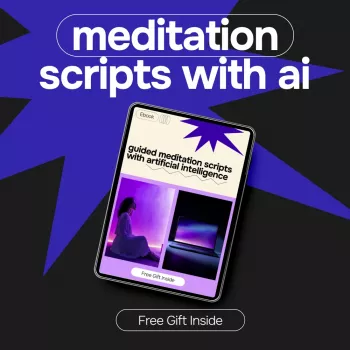
Guided Meditation Scripts with Artificial Intelligence: Create Calm, Personalized Meditations Fast
A great guided meditation can feel effortless: warm words, steady pacing, and a clear path from tension to ease. What your listeners don’t see is the structure underneath—sequencing, timing, and language choices that keep the experience soothing instead of distracting. Our team created Guided Meditation Scripts with Artificial Intelligence to help you draft scripts quickly and then shape them into calm, human-centered sessions that match a specific goal, audience, and tone.
Whether you’re building a library for classes or recording short “reset” audios for a membership, the goal is the same: consistent, listener-first language that supports attention and safety. For research-backed context on mindfulness and meditation benefits and safety considerations, you can also reference the National Center for Complementary and Integrative Health (NCCIH) and the American Psychological Association (APA).
Who this ebook is for (and what it helps you produce)
This approach works best when you want speed without sacrificing steadiness. You’ll feel at home with this ebook if you’re creating guided practices for real people in real moments.
- Meditation teachers who need fresh scripts for classes, workshops, and themed series (sleep, stress, confidence, gratitude).
- Therapists, counselors, and coaches who want grounding, breathwork, and visualization language that can be adapted to different client needs (without turning into a rigid script).
- Content creators building audio tracks, videos, newsletters, apps, or membership libraries who need consistent output without repeating the same phrasing.
- Beginners who want a clear template so each meditation has a beginning, middle, and gentle landing.
What you can produce faster: body scans, breath meditations, progressive muscle relaxation, nature visualizations, affirmation-based sessions, short “reset” scripts (3–7 minutes), and longer practices (10–30 minutes).
A dependable script framework that keeps meditations calming—not rambling
Calm usually comes from clarity. Instead of trying to “sound meditative,” use a consistent sequence so your listener always knows what to do next.
Our go-to flow
- Arrival: orient to the surface supporting the body and offer posture options.
- Breath cueing: simple pacing, often with a longer exhale (only if comfortable).
- Body awareness: a clean scan order and neutral sensation words.
- Main theme: one focus (steady mind, self-compassion, letting go, confidence).
- Integration: connect the felt sense to daily life in one or two lines.
- Closing: reorient to sound, touch points, and the room; invite eyes open when ready.
Two details make scripts feel more spacious: (1) present tense, simple sentences, and (2) pauses you actually write into the script (for example, “pause here for three slow breaths”).
Using AI to draft a meditation script that still sounds like you
Speed is helpful, but voice matters. The fastest way to keep your tone intact is to define a few constraints up front, then refine like you would any first draft.
- Shape tone and pacing: name the audience (beginners/experienced), duration, setting (bedtime/classroom/outdoors), and emotional target (grounding, reassurance, motivation).
- Generate variations: ask for one softer version, one more direct version, and one imagery-rich version. Choose the best backbone and refine.
- Stay trauma-informed: use choice-based language—“if it feels comfortable,” “when you’re ready,” “you might notice.”
- Add your signature elements: familiar phrases, your preferred breath count, your style of closing, your pacing marks.
- Do a read-aloud edit: remove tongue-twisters, shorten long sentences, and replace abstractions with concrete sensations (warmth in hands, weight in feet, air at the nostrils).
Script-building inputs that improve output
Clear inputs reduce generic filler and help you land the right level of simplicity. Here’s a set of script-building inputs our team uses as a repeatable checklist.
| Input | What to include | Example detail |
|---|---|---|
| Listener + setting | Experience level, where they are, posture options | Beginner, lying in bed, optional side-lying support |
| Goal | One clear emotional/mental aim | Settle racing thoughts and invite sleep |
| Anchors | Breath, body area, sound, or sensation | Feel the weight of the body; notice the exhale lengthening |
| Boundaries | Words/claims to avoid; invitation-based language | Avoid medical promises; use “if it feels comfortable” |
| Structure | Sections and timing | 2 min arrival, 4 min body scan, 3 min imagery, 1 min closing |
What to say during a guided meditation (phrases that reliably work)
If you ever freeze mid-script, return to simple, sensory language. These phrase types are dependable across most themes and audiences.
From draft to delivery: a workflow you can repeat
Get the ebook (and a couple of add-ons that support creators)
- AI for Small Business Toolkit – 5-in-1 Digital Download Bundle
- Choosing the Right Payment Solution for Your Business: Stripe vs Square Which Is Better – Complete eBook Guide for Small Business Owners
FAQ
Where can I find free guided meditation scripts?
You can often find free scripts through public libraries, reputable mindfulness organizations, and established teacher blogs, but quality and licensing vary widely. If you want consistent pacing and original wording tailored to your audience, a structured guide can help you create your own scripts quickly and reliably.
How to write a guided meditation script?
Start by defining your audience and one clear goal, choose a single anchor (breath, body area, or sound), outline a simple sequence (arrival, breath, body, theme, closing), and write invitation-based cues with planned pauses. AI can speed up the first draft when you specify duration, tone, and structure, then you refine for clarity and your voice.
What to say during a guided meditation?
Use grounded arrival language, simple breath instructions, gentle redirection for wandering thoughts, and sensory words for body awareness, then close by reorienting to the room. Keep wording straightforward, permission-based, and paced with intentional silence.
Recommended for you


What Word Calms Dogs? Teach a Reliable “Settle” Cue
Oct 16, 2026
Is Mind-Body Healing Real? A Simple Daily Routine
Oct 16, 2026













Leave a comment